


Liliya Zhirnova
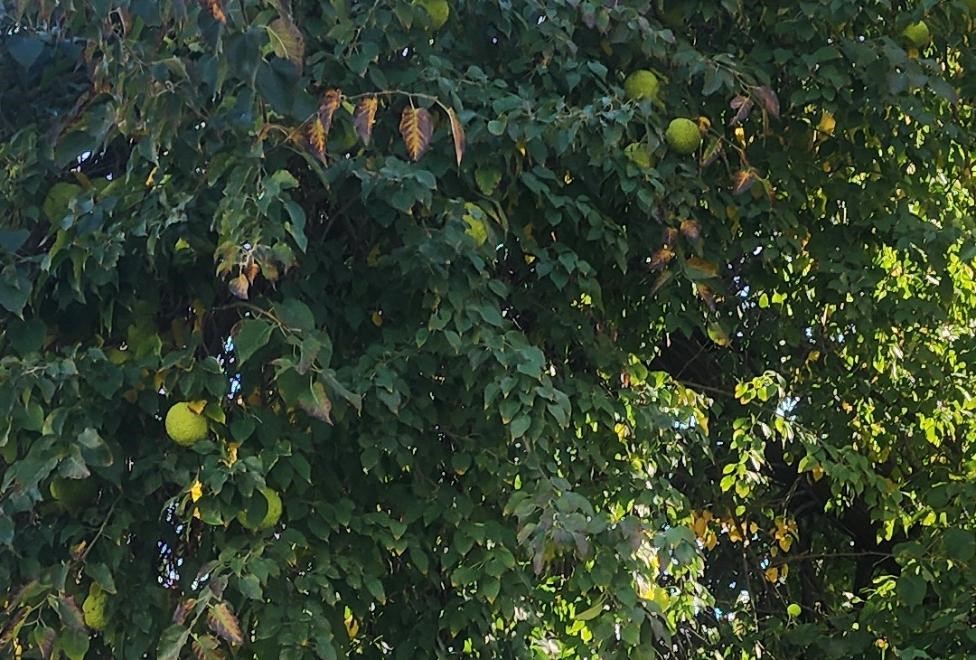
As late October brings a crisp turn to the autumn air in Ashgabat, walk avenues, public parks, or residential microdistricts and you will inevitably encounter a curious seasonal spectacle: heavy, textured, yellowish-green globes falling from the canopy to the pavements below.
Equally sized to a large orange, bumpy like a citrus brain, and weighted with surprising density, these fallen fruits are the signature of Maclura pomifera—widely known across North America as the Osage orange, and locally in post-Soviet urban botanical tradition as Adam’s Apple (Адамово яблоко).
To the casual passerby, these inedible, sticky fruits might appear as mere urban clutter—a minor inconvenience on pedestrian walkways. But nature is never frivolous. Behind every introduced species lies a deliberate historical purpose, an understated ecological function, and a wealth of practical utility waiting to be recognized and preserved.
A Botanical Journey: From Samarkand to the Karakum Oasis
The presence of Maclura pomifera in Turkmenistan is no historical accident. Native to the river valleys of North America’s central red-bed plains, the tree was carried across continents for its remarkable hardiness.
Its introduction to Turkmenistan dates back to approximately 1900, when foresters and urban planners imported its seeds from established cultivation nurseries in Samarkand. Early botanical pioneers quickly recognized that the Osage orange possessed an uncanny adaptability to the demanding climate of the Karakum margin.
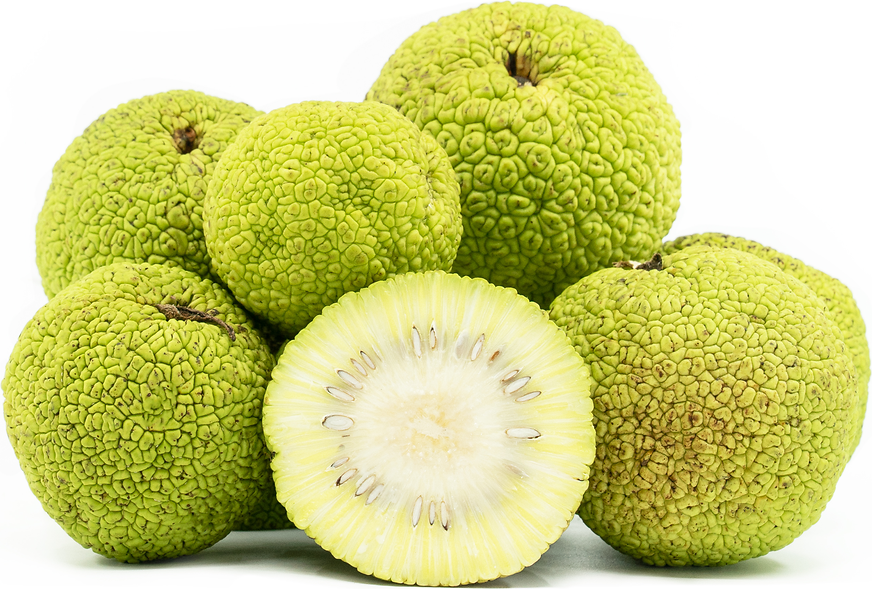
With deep, aggressive taproots, high tolerance for soil salinity, resistance to extreme summer heat, and fortitude against winter frosts, the tree flourished. Over the decades, municipal planners integrated it heavily into Ashgabat’s urban green belts, windbreaks, and parklands.
Where other ornamental trees withered under harsh dry winds, Maclura stood firm, stabilizing soils and creating lush, shady canopies across the city.
An Asset in Multi-Media and Artistic Composition
Beyond its ecological toughness, the Osage orange holds a distinctive ornamental and visual value that appeals to artists, floral designers, and multi-media creators.
- Sculptural Texture and Form: The fruit’s deep, labyrinthine surface folds and vibrant chartreuse-to-golden hue offer a striking organic contrast when juxtaposed against sleek architectural elements, dark wood, or modern metal installations.
- Seasonal Color Dynamics: In floral arrangements, seasonal autumn displays, and multi-media visual compositions, the fruit serves as a heavy, grounding element. Its transformation from bright green to deep golden yellow mirrors the turning canopy, providing a rich focal point for autumn-themed installations.
- Textural Longevity: Unlike soft fruits that rot quickly, the tough, fiber-rich husk of the Osage orange holds its shape and color for weeks after falling, making it a durable natural medium for temporary public art pieces, photography set design, and rustic interior arrangements.
A Storehouse of Practical Utility
While the fruit is inedible in the traditional sense, its biochemical and physical composition makes it anything but useless:
- Natural Pest & Insect Repellent: The fruit secretes complex organic compounds—including isoflavones and elemene—that naturally deter spiders, cockroaches, and nuisance insects. Halved or whole fruits placed near doorways or basements have long served as a folk repellent, while extracted seed oil demonstrates repellency against mosquitoes comparable to synthetic formulations.
- Traditional Topical Remedies: In Eastern European and Central Asian folk medicine, the cut fruit steeped in alcohol yields a topical tincture widely applied to relieve joint inflammation, arthritis, and muscle soreness. Its white latex resin and seed oil are rich in anti-inflammatory antioxidants, historically used to soothe external skin afflictions.
- Indestructible Timber: The wood of the tree itself is legendary. Exceptionally dense, rot-resistant, and high in heat value, it has historically provided virtually decay-proof posts, tool handles, and traditional archery bows.
- Natural Textile Dyes: The inner bark and fruit pulp yield vibrant yellow and khaki dyes—a resource heavily relied upon during times when commercial dyes were unobtainable.
Cherishing a Living Heritage
In an era of rapid urban development and modern landscape architecture, it is easy to undervalue mature, long-established trees whose benefits are subtle rather than immediate.
The Osage orange trees of Ashgabat are living witnesses to over a century of urban forestry design. They protect our urban microclimate, shelter city soils from erosion, and yield fruit rich in natural chemistry.
Every fallen fruit is a reminder that in the natural design, nothing is wasted, and no living thing is without purpose. To care for, nurture, and cherish these resilient trees is not merely an act of environmental conservation—it is an acknowledgment of our shared botanical history and a commitment to respecting the practical wisdom embedded in the natural world. /// nCa 28 October 2026