


Tariq Saeedi
It is easy to treat the Sustainable Development Goals (SDGs) as bureaucratic jargon or repetitive headlines. Over a decade into the 2030 Agenda, a sense of “SDG numbness” has set in. When people hear the acronym repeated endlessly in policy forums without clear connections to their daily lives, the goals risk becoming abstract background noise.
Yet, to lose sight of why the SDGs were created in the first place is to forget the scale of the human and planetary stakes involved.
1. Why We Needed the SDGs: The Blueprint for Shared Survival
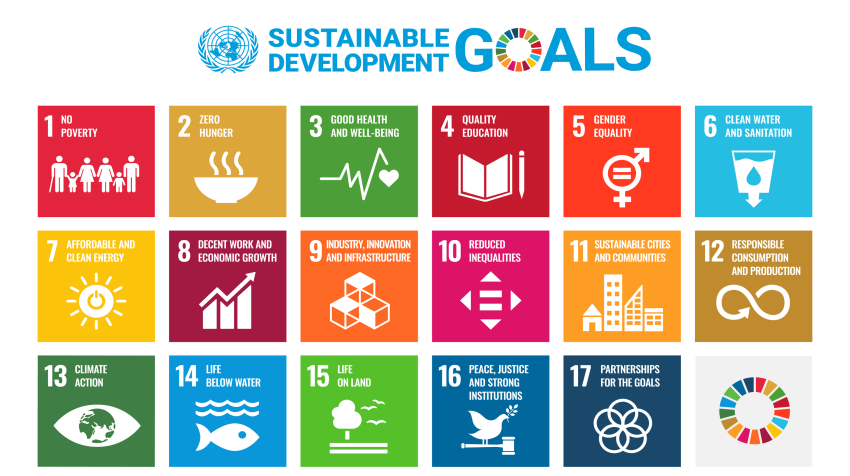
Adopted in 2015 by all 193 UN Member States, the 17 Goals were designed not as a set of separate targets, but as an interconnected survival plan. They were born from a critical realization: economic growth alone does not guarantee human well-being, social equity, or environmental sustainability.
The SDGs provided a universal blueprint to address systemic global crises—ending extreme poverty and hunger, guaranteeing quality education and healthcare, tackling climate change, and reducing inequality—recognizing that no nation can solve these interconnected challenges in isolation.
2. Where the World Lacks Progress: A Reality Check
Midway to the 2030 deadline, the sober truth is that the world is severely falling behind:
- Off-Track Targets: Climate shocks, economic instability, and geopolitical conflicts have reversed years of hard-won progress. A vast majority of SDG targets are either stalling or regressing globally.
- Widening Inequality: The gap between vulnerable communities and developed regions continues to widen, particularly regarding food security, digital access, clean energy transition, and public health infrastructure.
- The Implementation Gap: While high-level commitments exist on paper, financing shortfalls and structural delays prevent policies from translating into fast, meaningful action on the ground.
3. What Is at Stake If We Fail?
Failing to meet the 2030 Agenda is not a matter of missing a diplomatic deadline—it carries severe, real-world consequences:
- Humanitarian & Climate Crises: Accelerated climate disruption will lead to severe resource scarcity, displacement, and environmental degradation.
- Economic Strain: Unaddressed poverty, health crises, and inequality destabilize economies and strain social safety nets globally.
- Social Unrest & Instability: Deepening disparities fuel frustration and conflict, undermining peace, justice, and effective governance.
4. Overcoming Numbness: Rekindling Interest at the Grassroots Level
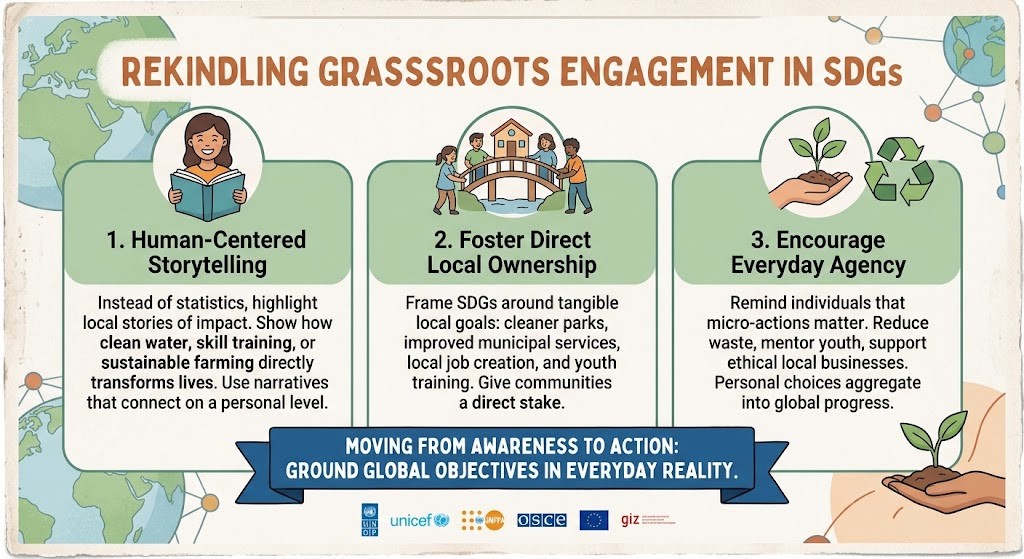
To overcome collective fatigue, the SDGs must be re-translated from international rhetoric into local relevance. Rekindling genuine enthusiasm at the individual and community level requires a shift in approach:
- Focus on Human-Centered Storytelling: Instead of focusing strictly on statistics and target numbers, highlight local stories of impact—showing how clean water, skill training, or sustainable farming directly transforms an individual’s life.
- Foster Direct Local Ownership: People care about issues that affect their immediate surroundings. Frame the SDGs around tangible local goals: cleaner town parks, improved municipal services, local job creation, and youth training.
- Encourage Everyday Agency: Remind individuals that micro-actions matter. From reducing waste and mentoring youth to supporting ethical local businesses, personal choices aggregate into global progress.
- Engage Youth and Educators: Embed practical, hands-on sustainability projects into schools, vocational training, and local entrepreneurship hubs to empower the next generation as active problem-solvers rather than passive observers.
Moving from Awareness to Action
The SDGs were never meant to belong solely to international institutions or national ministries—they belong to every individual, community, and city. By grounding global objectives in everyday local reality, we can replace policy fatigue with active ownership, ensuring the 2030 Agenda fulfills its promise to leave no one behind. /// nCa, 13 October 2026