


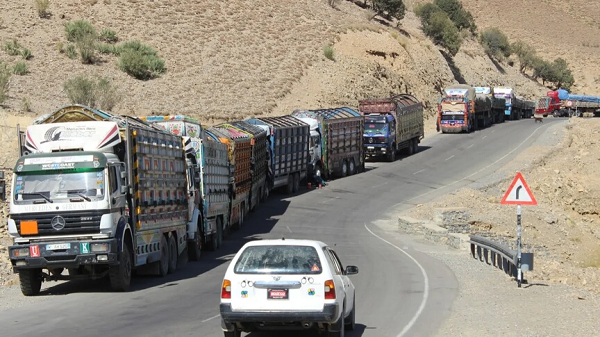
Afghan authorities have officially inaugurated a 121-kilometer (75-mile) gravel road stretching across the remote Wakhan Corridor in Badakhshan province to the border of China’s Xinjiang region.
The opening marks the completion of a two-year infrastructure project aimed at establishing Afghanistan’s first direct overland road connection with China. However, key questions remain over whether the route can be used for regular commercial cargo and passenger travel in the near future.
Key Highlights of the Opening
- Infrastructure Specs: The unpaved route connects Sarhad-e Broghil in Badakhshan directly to the Chinese border at the eastern edge of the narrow Wakhan Strip.
- Independent Execution: The dirt and gravel transit route was funded and built under the Afghan administration as part of effort to boost connectivity and domestic infrastructure despite international isolation.
- Transit & Tourism Potential: Authorities envision the road serving as a regional trade gateway and a potential tourist route into the Pamir mountains.
Has China Agreed to Regular Commercial & Passenger Traffic?
Despite the completion of the Afghan side of the road, China has not yet agreed to open the border for regular commercial cargo or passenger transit.
| Parameter | Current Status | Challenges / Next Steps |
| Border Crossing Operations | Closed / Restricted | No official port of entry or customs infrastructure currently exists at the Wakhjir Pass border point. |
| Commercial Cargo Transit | Pending Official Agreement | China has yet to establish full trade or border control facilities; Afghan officials are continuing discussions with Beijing. |
| Passenger & Civilian Travel | Restricted | China maintains strict security protocols along the Xinjiang border, limiting open border movements. |
| Road Conditions | Unpaved / Gravel | High elevation and harsh winter weather make year-round commercial haulage difficult without significant paving upgrades. |
Security & Diplomatic Context
While Beijing maintains diplomatic engagement and commercial investments in Afghanistan, Chinese officials have traditionally treated the border crossing with caution due to national security considerations in Xinjiang.
Until formal bilateral agreements are reached to establish customs posts, immigration facilities, and paved connections on both sides, the route will primarily serve local access rather than act as a bustling international trade highway. /// nCa, 12 October 2026