


From Galkynysh to TAPI, a new generation of energy and infrastructure projects could reshape how investors view Turkmenistan—and Central Asia
For much of the international investment community, Turkmenistan has traditionally been defined by one characteristic: natural gas.
That description remains important, but it is becoming incomplete.
A combination of new upstream investment, cross-border infrastructure, long-standing Asian energy partnerships and growing emphasis on industrial diversification is gradually creating a different proposition.
Turkmenistan’s resources are increasingly relevant not only because of what can be extracted, but because of the infrastructure, industry and regional connectivity that can be developed around them.
That distinction matters for Central Asia.
From resource producer to infrastructure hub
Two projects illustrate the shift.
The first is Phase IV of Galkynysh, launched in April 2026.
The development includes new production wells and a gas-processing facility with annual design capacity of 10 bcm.
The second is TAPI.
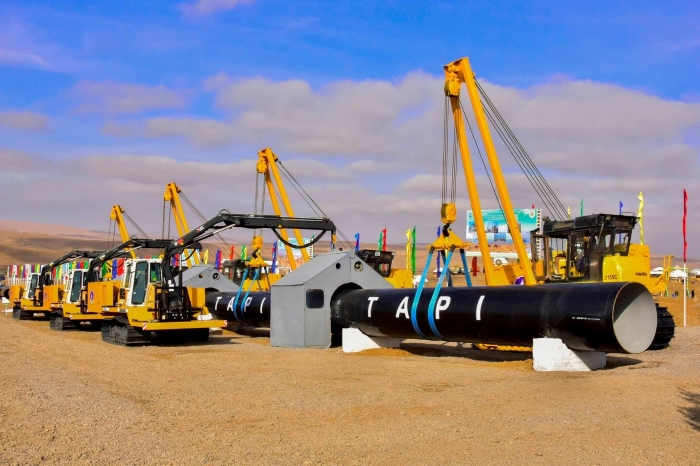
After years in which the Turkmenistan–Afghanistan–Pakistan–India pipeline was discussed largely in terms of its future potential, construction activity in western Afghanistan is becoming increasingly visible.
In July, Afghanistan’s Ministry of Mines and Petroleum reported 101 km of pipeline laid, 126 km of corridor prepared, 108 km of connecting and monitoring roads constructed and 36 km of pipeline buried.
For investors, physical progress matters.
It begins to shift TAPI from geopolitical concept towards infrastructure under implementation.
Why TAPI matters beyond gas
TAPI has always had an energy-security rationale.
But its economic implications could be considerably broader.
A major infrastructure corridor crossing Afghanistan towards Pakistan and India can potentially stimulate associated investment in transport, logistics, power generation, industrial development, telecommunications and services.
This is particularly relevant at a time when Central Asian governments are placing increasing emphasis on connectivity.
The region’s traditional geography—landlocked and distant from major seaborne markets—is gradually being reframed around corridors connecting China, the Caspian, the Caucasus, Europe, Afghanistan and South Asia.
Turkmenistan occupies an unusual position within that map.
It has access to the Caspian Sea, borders both Iran and Afghanistan, is a major supplier of natural gas to China and sits at the intersection of several potential east-west and north-south routes.
TAPI adds a southward dimension to that connectivity.
Investors look for evidence, not narratives
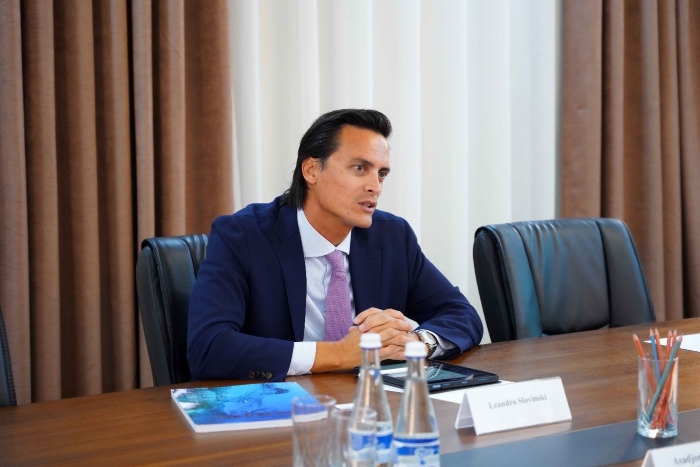
For Leandro Slovinski, Global Editorial Director of The Investor, the critical issue is implementation.
“Institutional investors do not respond to marketing narratives; they respond to evidence of long-term direction, economic stability and implementation.”
Turkmenistan can increasingly point to a record of long-term international energy cooperation.
Its gas relationship with China has now reached the 20-year milestone, while PETRONAS marks 30 years of operations in Turkmenistan in 2026.
Those relationships matter because institutional investors frequently assess a market not simply through current opportunities but through its historical ability to sustain large international projects.
Slovinski’s assessment is that the combination of long-term partnerships and major projects such as Galkynysh provides tangible evidence of continuity.
The diversification question
The larger question is whether Turkmenistan can use its energy sector as a foundation for wider economic diversification.
That means moving progressively from exporting resources towards creating more value domestically.
Gas processing and petrochemicals are obvious examples, but the opportunity extends further—to manufacturing, industrial services, logistics, digital technologies and infrastructure.
This mirrors a wider challenge across Central Asia.
Resource wealth can finance development, but long-term economic transformation depends on whether it generates productive capacity beyond the extractive industries.
In Turkmenistan’s case, the scale of its resource base means that even incremental progress in downstream processing and associated industries could have substantial economic effects.
A changing investment conversation
As Turkmenistan prepares to celebrate 35 years of Independence, its international investment narrative therefore has an opportunity to evolve.
The country does not need to move away from energy to diversify.
Instead, energy itself can become the foundation from which new industries develop.
Galkynysh can support additional production and processing.
TAPI can support regional connectivity.
Long-standing relationships with CNPC and PETRONAS provide evidence that international partnerships can endure.
Infrastructure can create access to new markets.
And technology and private-sector development can create new layers of economic activity around those foundations.
OGT 2026 and the next phase
These questions will be central to OGT 2026 in Ashgabat on 21–23 October.
The conference programme reflects the changing conversation. Alongside conventional energy themes, it includes export corridors and market access, gas monetisation and petrochemicals, critical infrastructure, methane reduction, investment and technology.
Slovinski, who has attended OGT previously, says the event has developed into one of the region’s important platforms for engagement between government, energy companies, investors, financial institutions and technology providers.
That may be particularly significant in 2026.
Turkmenistan’s investment proposition is no longer simply a story about the size of its gas reserves.
It is increasingly a story about what those resources can enable: new infrastructure, new industries, new export corridors and stronger economic links between Central Asia and the markets surrounding it.
If that transformation continues, Turkmenistan’s importance to investors may increasingly be measured not only by the energy beneath its territory, but by the economic connections that pass through it. ///nCa, 20 Aug 2026 (the material provided by OGT 2026 Organizers)