


Elvira Kadyrova and Liliya Zhirnova
Turkmenistan, a largely arid Central Asian nation bordered by the Caspian Sea, Iran, Afghanistan, Uzbekistan, and Kazakhstan, is far more than a desert landscape of sand dunes and sparse vegetation.
It is a significant biodiversity hotspot, home to a rich and distinctive flora that includes more than 450 endemic vascular plant species—plants found nowhere else on Earth. This high level of endemism, concentrated especially in its mountain ranges, underscores the country’s importance for global plant conservation and highlights the unique evolutionary history of its ecosystems.
A Diverse Flora in an Arid Land
Turkmenistan’s vascular plant flora comprises roughly 2,900 to 3,100 species belonging to about 140 families and more than 870 genera. Herbaceous plants dominate, reflecting adaptations to the country’s extreme continental climate, with hot summers, cold winters, and limited rainfall across much of the Karakum Desert and surrounding lowlands.
Yet the flora is far from uniform. Mountain systems—particularly the Kopetdag range along the southern border with Iran—create cooler, wetter microclimates that support far greater diversity.
These mountains form part of two internationally recognized biodiversity hotspots: the Mountains of Central Asia and the Irano-Anatolian region. The Kopetdag alone harbors around 1,800 plant species, of which approximately 332 (nearly 13%) are endemic. This is among the highest levels of endemism recorded in the mountains of Central Asia.
Overall national estimates of endemic vascular plants range from about 400 to more than 460 species (roughly 13–15% of the total flora), with many additional rare or relict taxa.
Centers of Endemism and Notable Species
Endemism is highest in isolated mountain ecosystems such as the Kopetdag, the Greater and Lesser Balkhans, and the Turkmen portion of the Koytendag (Kugitang) range. These areas preserve ancient floristic elements linked to the Hyrcanian and Irano-Turanian regions, including relict species that survived climatic shifts over millennia.
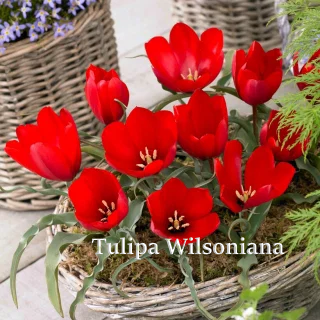
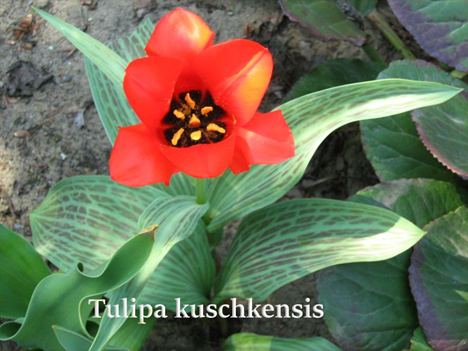
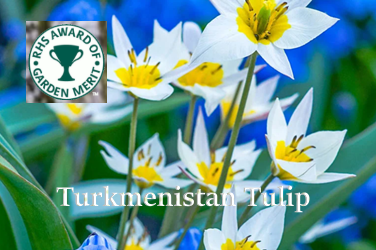
Among the most striking endemic flowering plants are several tulip species. Of the 16 tulip species recorded in Turkmenistan, four are considered national endemics: the Turkmen tulip, Gug’s tulip, Wilson’s tulip (Tulipa wilsoniana), and Bochantseva’s tulip. These spring-blooming bulbs produce vibrant red, white, yellow, or cream flowers and are often restricted to specific mountain slopes or foothills. Many are listed in the national Red Book due to small populations and habitat pressures.
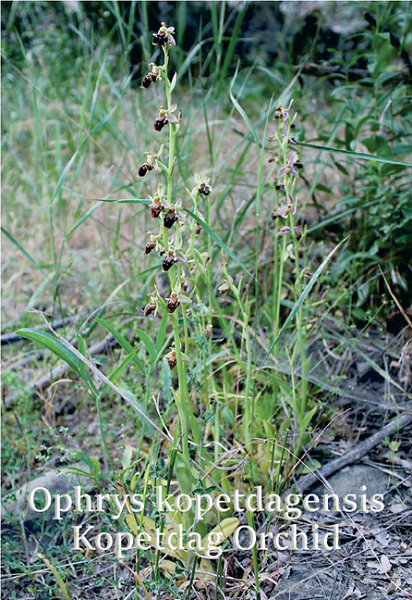
Other notable endemics include orchids such as Ophrys kopetdagensis, a rare species of the southwestern Kopetdag whose status as a distinct endemic has been confirmed by Turkmen botanists. Genera rich in endemics include Astragalus (milkvetches, with dozens of local species), Cousinia, various Allium (wild onions), Eremurus (desert candles or foxtail lilies), and members of the Asteraceae, Fabaceae, Apiaceae, and Lamiaceae families.
Desert and semi-desert endemics also occur, though at lower rates than in the mountains, including specialized shrubs and herbs adapted to sandy or saline soils.
Conservation Challenges and Importance
Many of these endemic and rare plants face threats from habitat degradation, overgrazing, climate change, and limited water resources. Turkmenistan’s Red Book includes numerous tulips, orchids, and other threatened species, and protected areas such as the Syunt-Hasardag, Kopetdag, and Badhyz reserves play a critical role in safeguarding populations. Botanical research and monitoring continue to document new or poorly known taxa, while efforts to cultivate and study endemics in botanical gardens help support ex situ conservation.
The high concentration of unique plants makes Turkmenistan’s flora not only a national treasure but also a global priority. Protecting these species helps preserve evolutionary lineages, supports ecosystem resilience in a region vulnerable to desertification, and maintains genetic resources that could prove valuable for future research, horticulture, or medicine.
In short, Turkmenistan’s more than 450 endemic vascular plants reveal a landscape of surprising botanical richness. From the scarlet cups of endemic tulips lighting up spring mountainsides to rare orchids hidden in remote gorges, this arid country stands as a vital center of plant diversity whose conservation merits continued international attention and support. /// nCa, 1 August 2026