


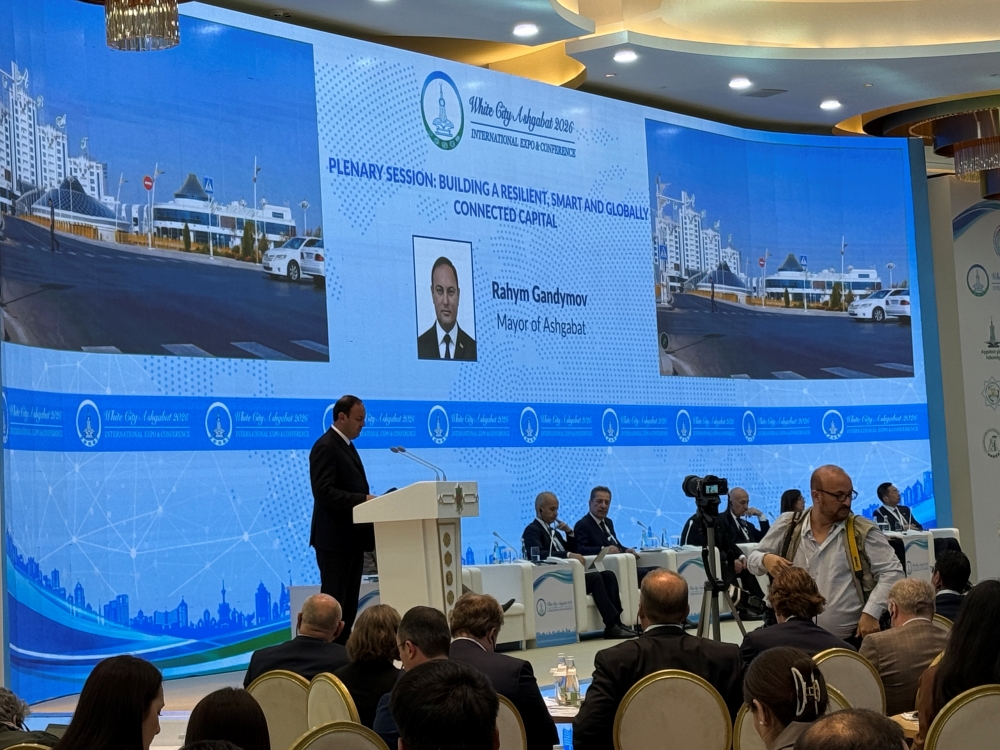
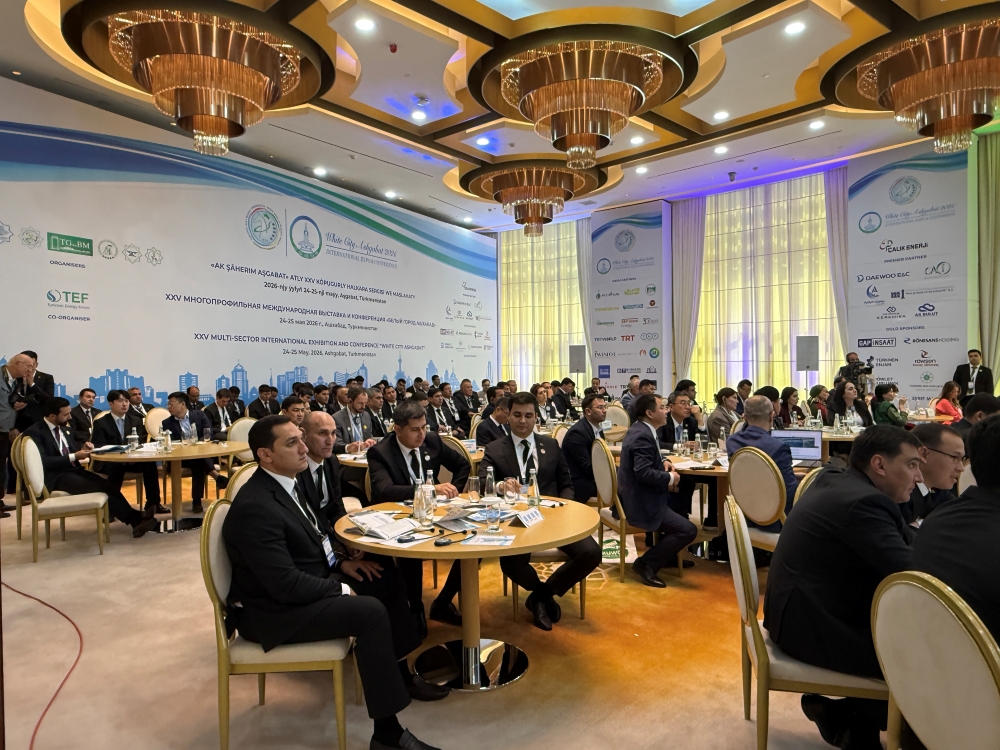
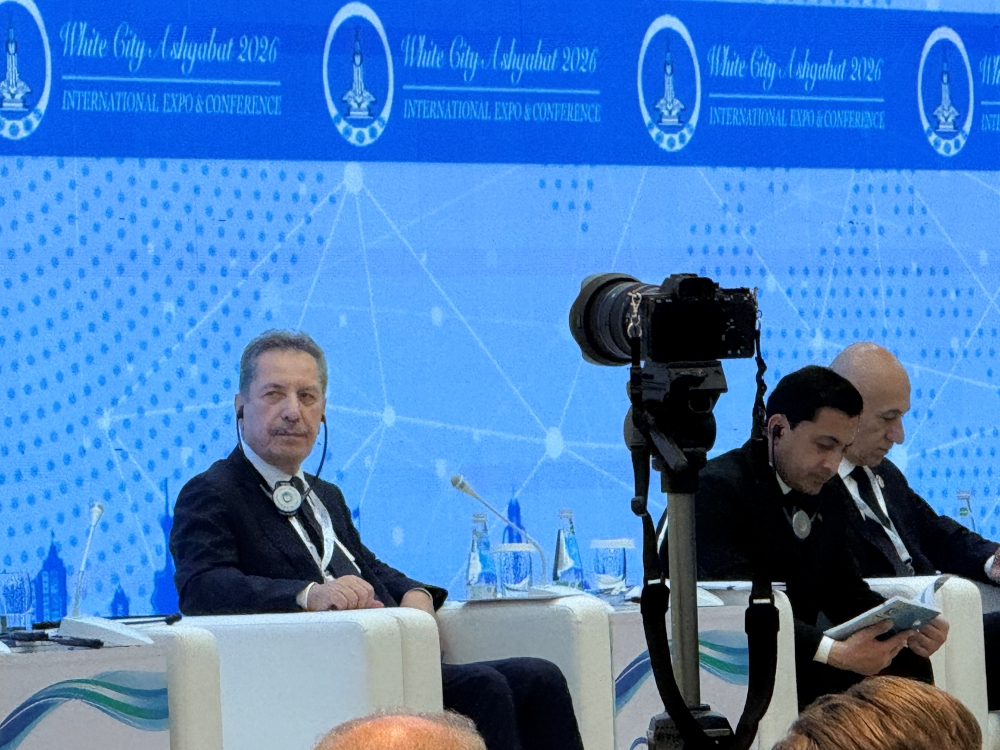
Ashgabat, 24 May 2026 — Large-scale plans for the socio-economic and infrastructural development of Turkmenistan’s capital were announced, and key results of the state investment program were outlined during the ongoing international conference “White City Ashgabat 2026.”
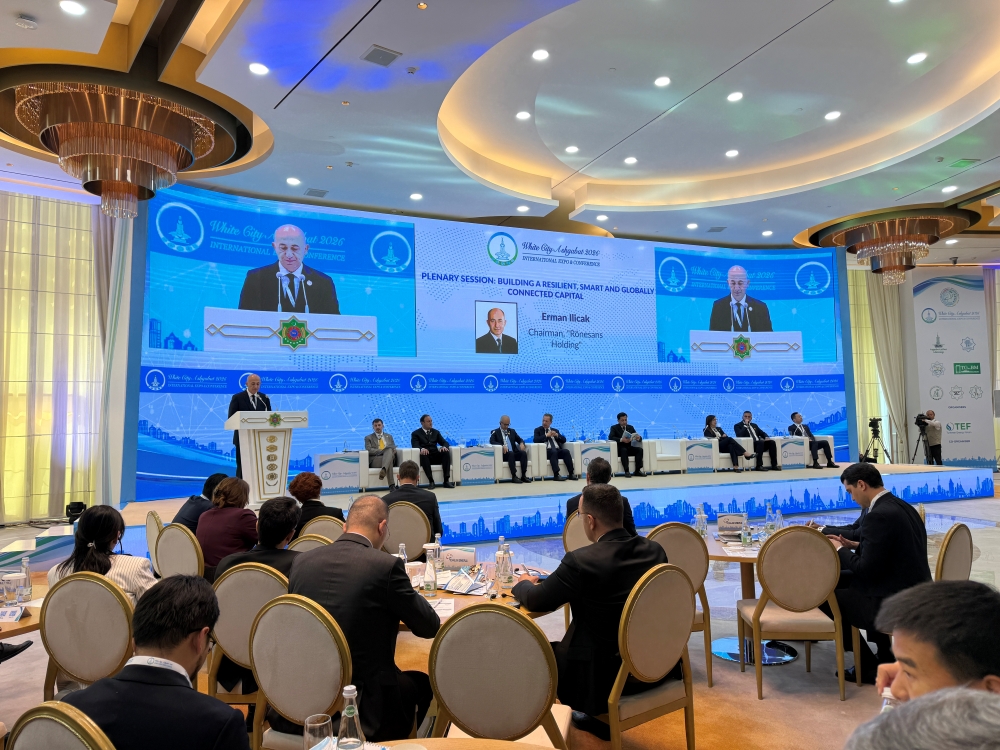
The capital of Turkmenistan continues its large-scale transformation under the “Ashgabat–2045” conceptual strategy. The main vectors for developing the country’s principal city, aimed at creating a comfortable urban environment and introducing advanced technologies, became the key topics of the specialized forum’s plenary session.
New Residential Areas and Social Facilities
Speaking at the plenary session, the Mayor of Ashgabat, Rahym Gandymov, emphasized that large-scale construction of cultural, community, administrative, and residential facilities is underway in the capital.
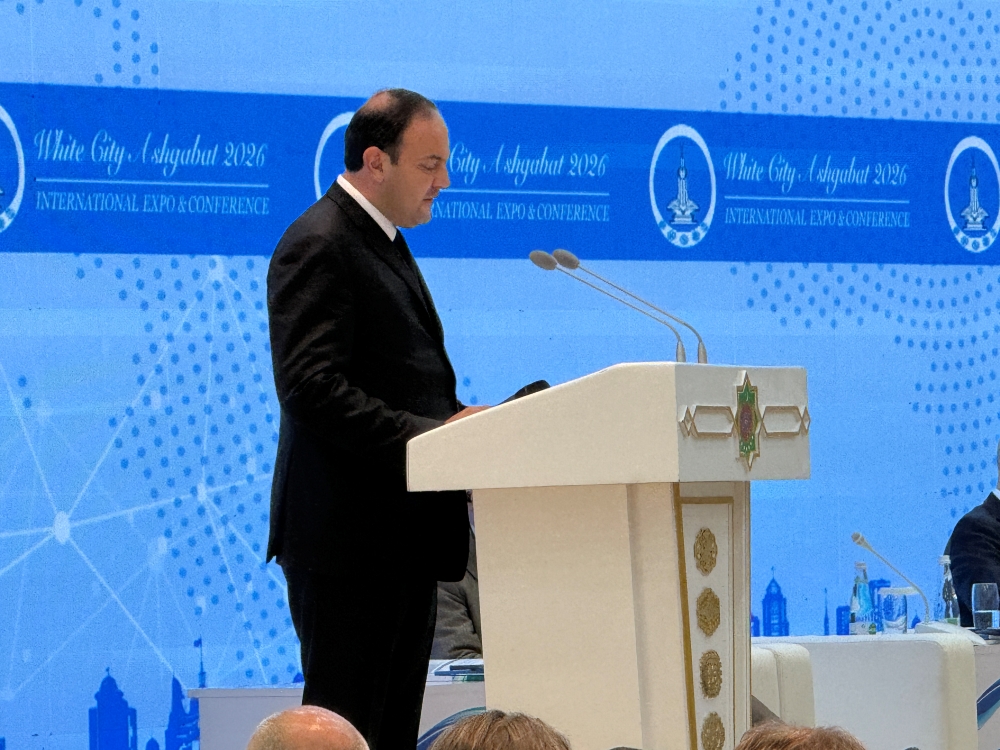
According to the mayor’s address, 820,400 square meters of modern housing are scheduled for commissioning in Ashgabat this year, allowing 4,100 families to move into new homes.
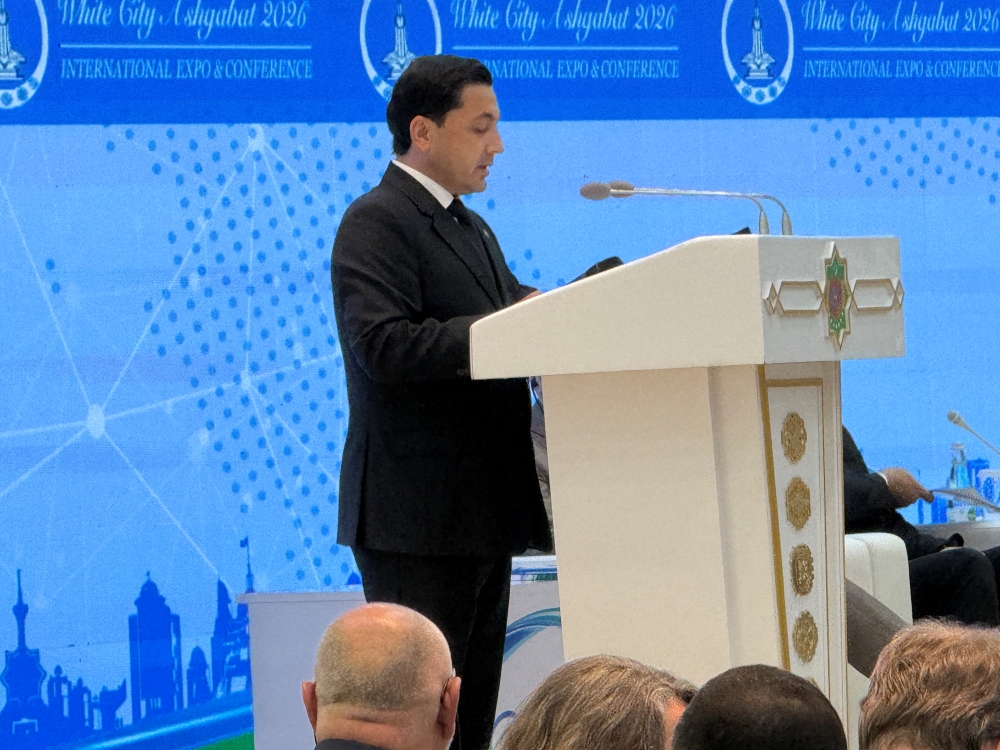
Deputy Prime Minister Baymyrat Annamammedov shared important details regarding the urban development. He announced that the “Parahat-7” residential complex features plans for 30 residential buildings alongside an extensive network of retail and service centers. Meanwhile, the Buzmeyin district will see the construction of 46 modern houses and a multi-profile cultural center with a capacity of 4,000 seats.
Furthermore, the City Day celebrations will be marked by the opening of 78 two-story cottages in the Bagtyyarlyk district and two apartment buildings in the Berkararlyk district.
By the end of this year — the year marking the 35th anniversary of the sacred Independence of the Motherland — the commissioning of major healthcare and education facilities is expected, including:
- The International Pediatric Center;
- The International Scientific and Clinical Oncology Center;
- The Dental Center;
- The new building complex of the Turkmen State Architecture and Construction Institute.
Billion-Dollar Investments and Economic Growth
High macroeconomic indicators are being recorded in 2026. The total volume of planned investments for the city of Ashgabat will reach US $ 2.5 billion. These investment flows are being actively directed into the non-production sphere and municipal programs.
Consumer markets are also showing dynamic growth. Production of consumer goods is increasing and is expected to reach US $ 2 billion in 2026. In the total volume of consumer goods production, food products account for 45% (or 900 million USD), while non-food products account for 55% (or 1.1 billion USD). The volume of retail trade turnover across all sectors is projected to reach US $ 30 billion in 2026.
Concurrently, advanced digital standards and high-performance equipment are being successfully introduced across the capital’s key industrial sectors, including electric power engineering, light and food industries, metalworking, and the building materials industry.
Scale of Nationwide Transformations
The development of the capital fits organically into the broader picture of major construction and infrastructure achievements taking place across the country. As noted in DPM Annamammedov’s report, in accordance with the State Investment Program for 2026, Turkmenistan plans to utilize funds totaling 41.2 billion manats (68.5% directed to production facilities and 31.5% to non-production projects). Nationwide, more than 900,000 square meters of housing, schools for 3,380 places, and kindergartens for 1,080 places will be delivered this year.
The most important milestones of the year include already completed mega-projects:
- The commissioning of the Mary — Turkmenabat section, which serves as the final segment of the strategic Ashgabat — Turkmenabat high-speed highway.
- The laying of the foundation for a new modern settlement designed for 4,500 households in the Yoloten etrap of the Mary velayat (province).
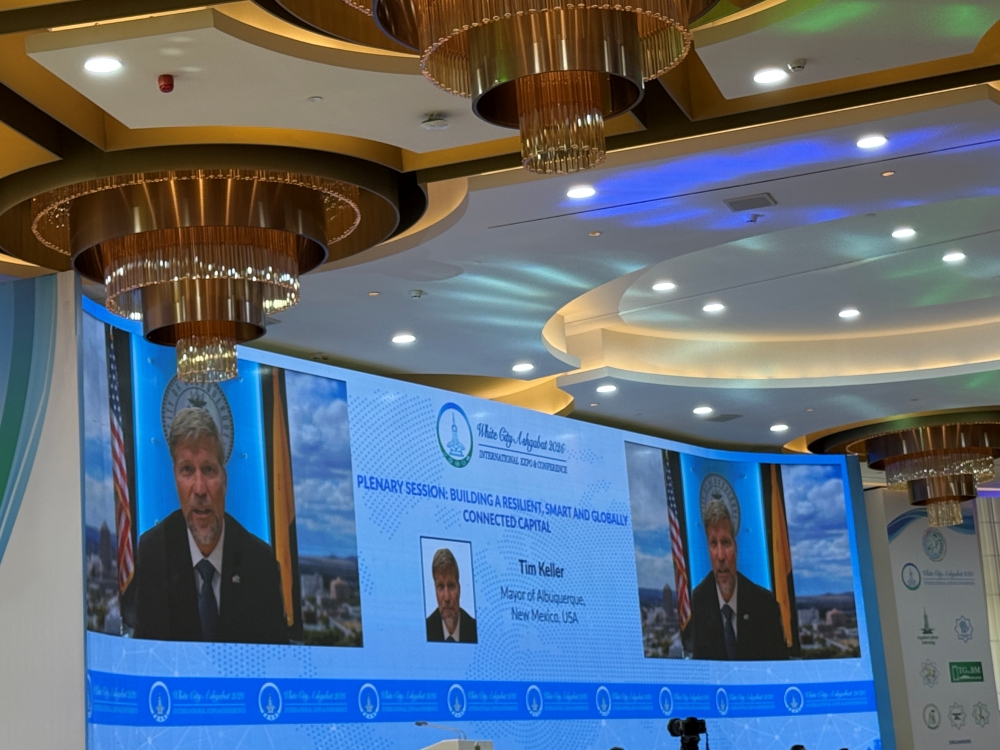
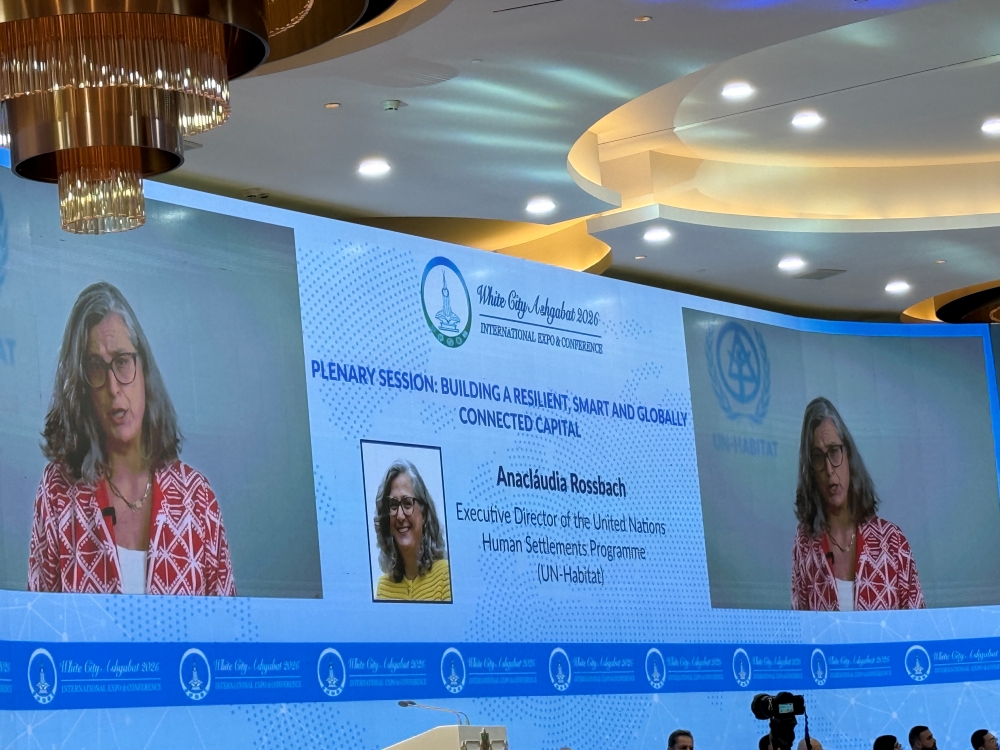
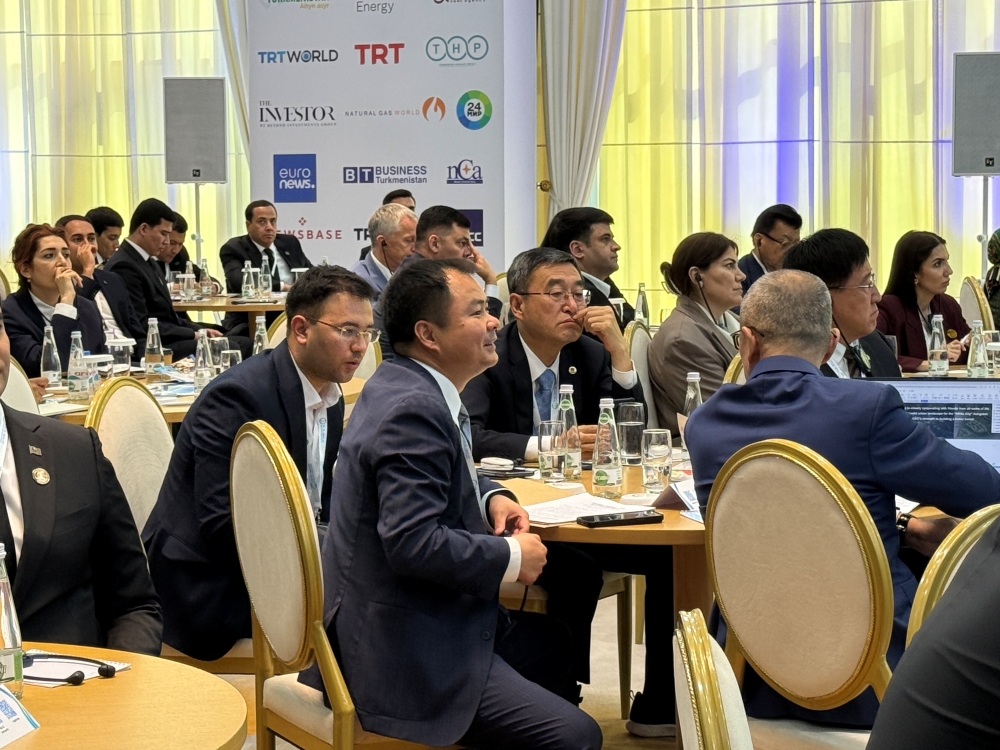
Conference participants agreed that Ashgabat stands today as an exemplary model of a harmonious combination of unique national architecture, economic stability, and high innovative technologies. ///nCa, 24 May 2026