In a rapidly evolving geopolitical landscape, the United States continues to deepen its engagement with Central Asia, prioritizing economic connectivity, energy security, and regional stability.
This exclusive interview with Elizabeth Rood, the U.S. Ambassador to Turkmenistan, offers rare insights into Washington’s national interests in the region, the outcomes of the landmark C5+1 Summit hosted by President Trump in November 2025, and the burgeoning bilateral ties with Turkmenistan.
Conducted by nCa, the discussion highlights key priorities such as trade expansion, critical minerals development, and counterterrorism cooperation, while addressing challenges like Afghanistan’s stability and the transformative potential of projects like the TAPI pipeline.
Ambassador Rood, who has served in Ashgabat for about 18 months, emphasizes a pragmatic, results-driven approach rooted in mutual respect for sovereignty. As the U.S. prepares to celebrate the 250th anniversary of its Declaration of Independence in 2026, her remarks underscore a forward-looking partnership aimed at fostering innovation, people-to-people ties, and shared prosperity across Central Asia.
Here is the full transcript of this in-depth conversation.
nCa: What are the national interests of the USA in Central Asia? What are the priority areas, and what kind of interaction does the USA pursue in those areas?
ER: Our engagement in the region is guided by a commitment to advancing security, economic prosperity, and regional stability—for the benefit of both the American people and our partners across Central Asia.
Economic growth and trade connectivity are central to our approach. We are working to expand trade, investment, and connectivity with specific focus on sectors such as energy, critical minerals, transportation, and digital infrastructure. The November C5+1 Summit in Washington, D.C. and recent bilateral meetings resulted in billions of dollars in commercial deals, bringing advanced U.S. technology and expertise to the region, supporting American jobs, and opening new export markets for Central Asian goods.
Energy security and critical minerals are also top priorities. The United States is committed to helping Central Asian countries secure resilient, transparent supply chains for energy and critical minerals—resources that are essential for innovation and clean energy. We support development of a Trans-Caspian Gas Pipeline and encourage regional cooperation to ensure reliable, diversified energy supplies and responsible resource management.
Security and regional stability remain at the heart of our partnership. The United States works closely with Central Asian countries to counter terrorism, prevent violent extremism, and combat transnational crime. We support border security, law enforcement cooperation, and information sharing to address shared security challenges, including illegal migration, drug trafficking, and trafficking in persons.
People-to-people ties and education are another important focus. We believe that investing in the next generation is essential for long-term stability and prosperity. The United States conducts academic exchanges, English language programs, cultural heritage preservation, and other cultural and educational initiatives, which create opportunities for emerging leaders.
Finally, regional cooperation and connectivity are vital to our shared future. Through platforms like the C5+1 and the Trump Route for International Peace and Prosperity (TRIPP), we are promoting greater regional integration—facilitating trade, transportation, and people-to-people exchanges across Central Asia and beyond. We support harmonized customs regimes, improved aviation connectivity, and the development of the Trans-Caspian Trade Route.
In all these areas, the United States pursues a mix of bilateral and multilateral engagement, tailored to the needs and aspirations of each partner. Our approach is pragmatic, results-driven, and anchored in respect for sovereignty, independence, and mutual benefit.
nCa: Building further on the first question, what are the outcomes of the C5+1 summit hosted by President Trump in Washington DC, on 6 November 2025? We have reported on the outcomes of the summit but it would be enlightening to learn about your point of view – your take. What are the discernible and/or subtle changes taking place now and may take place in the coming months? What is the new content in the USA-Central Asia partnership?
ER: The C5+1 summit hosted by President Trump in Washington, D.C. on November 6, 2025 marked a significant milestone in the evolution of the U.S.-Central Asia partnership. One of the more notable developments was Secretary of State Marco Rubio’s announcement of his intent to visit all five Central Asian countries this year. This commitment signals a new era of sustained, high-level U.S. engagement in the region and underscores our dedication to building stronger bilateral and regional ties. Secretary Rubio’s remarks at the summit captured the spirit of this moment: he emphasized that our countries now have an exciting opportunity to work together—both bilaterally and regionally—on issues where our national interests are aligned.
Two key documents emerged from the summit: the Joint Statement of Intent on Economic Cooperation and the Joint Statement of Intent on Cultural Heritage. These statements are not just symbolic; they lay out concrete commitments and a forward-looking agenda for the region.
On the economic front, the statement on economic cooperation reaffirms the importance of healthy, sovereign economies and highlights the B5+1 business forum as vital to the diplomatic platform. It also outlines a comprehensive set of actions, including regulatory reforms to improve the business environment, support for small and medium-sized enterprises, and the promotion of innovation and joint ventures.
In the area of cultural heritage, there is a renewed emphasis on integrating cultural heritage into economic and tourism strategies, supporting artisans and traditional crafts, and fostering academic and research collaboration. The United States and Central Asian countries have agreed to strengthen information sharing, build regional networks to prevent illicit trafficking, and expand institutional partnerships in conservation, curation, and education.
Looking ahead, I expect to see tangible progress in several areas: greater ease of doing business, increased investment in critical sectors, expanded educational and cultural exchanges, and stronger regional connectivity. The B5+1 Forum scheduled for February 2026 in Bishkek will be an important next step in advancing economic cooperation.
nCa: Now, let’s zoom in to the relations of the USA with Turkmenistan. You have been here for about 18 months already. What are your priorities? What are the immediate goals? What kind of milestones do you hope to achieve in the mid-term (3-5 years)?
ER: My immediate priority is to build on the momentum established during President Trump’s meeting with President Berdimuhamedov on the sidelines of the C5+1 Summit last November. We are entering a new era in U.S.-Turkmen relations, focused on deepening our ties, enhancing trade connectivity, and expanding cooperation in energy. Throughout all of our engagements, we respect Turkmenistan’s permanent, positive neutrality as well as the country’s sovereignty and territorial integrity.
We are working to promote a favorable business climate for American companies in Turkmenistan. U.S. companies like Boeing, GE, and John Deere have played a key role in Turkmenistan’s economic development, and they will remain major players on the scene. We also have many other companies eager to contribute to our economic partnership and enter the Turkmen market. We also support the expansion and diversification of international markets for Turkmen natural gas. An important first step is for Turkmenistan and Azerbaijan to reach agreement on delimitation of the Caspian seabed. This would clear the way for development of a Trans-Caspian natural gas pipeline, a project the United States has long encouraged. Such a project could transform regional energy dynamics and contribute to reliable energy supplies to Europe via Türkiye.
We are also focused on promoting technology as an enabler of liberty, security, and prosperity. The United States is committed to ensuring that U.S. technology and standards—especially in areas like artificial intelligence, biotech, and quantum computing—drive innovation and economic growth in Turkmenistan. We encourage the adoption of trusted technologies that respect human rights and fundamental freedoms, and we are working to sensitize our partners to the risks of technologies that could be misused.
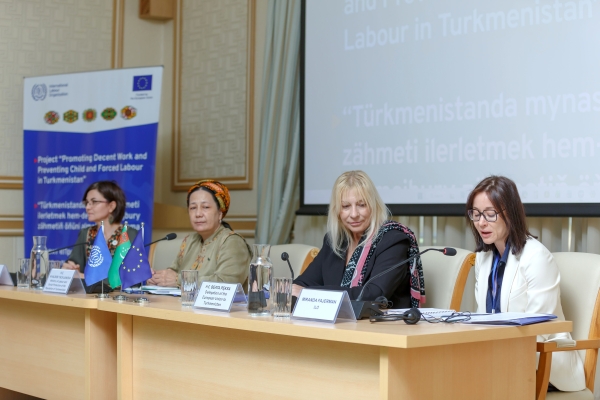
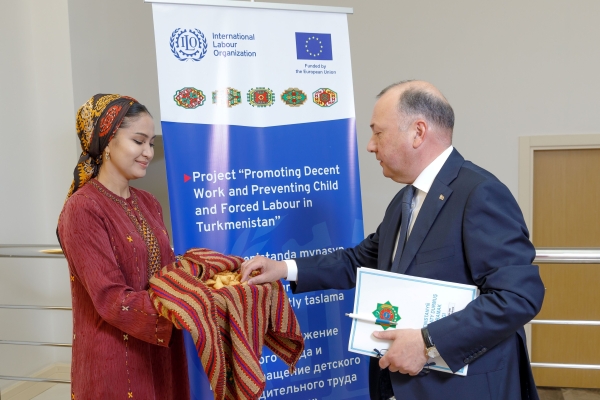
We are also supporting Turkmenistan’s efforts to combat trafficking in persons. The Government of Turkmenistan has taken concrete steps, in cooperation with the ILO, to address child and forced labor in the cotton harvest, and we have been proud to provide financial support for this work. This is a crucial year for Turkmenistan to show further efforts to combat TIP. The Department of State is providing continuing support to this work.
Over the mid-term, I hope to achieve several milestones. First, I aim to see American innovation and business expand further into Turkmenistan, with new investments and trade agreements that create jobs and export opportunities for both our countries. We would like to see Turkmenistan’s further integration into multi-modal road and rail networks that will connect Central Asia with countries to the west of the Caspian Sea – including through the TRIPP. This will foster new opportunities for trade and transportation across the Central Asia-Caucasus region. We also hope to increase cooperation in education, cultural exchange, and people-to-people ties, which are essential for building mutual understanding and long-term stability.
Ultimately, my goal is to maintain a productive and forward-looking relationship with Turkmenistan—one that allows us to engage on issues of vital importance, deliver tangible benefits to our peoples, and demonstrate what is possible when nations work together toward common goals.
nCa: Which American companies are preparing to interact with Turkmenistan, and in what areas? Are there any specific developments here? We are talking of the newcomers because we are aware of the traditional partners and their success stories.
ER: Since Turkmenistan’s independence, U.S. companies have played a significant role in the country’s economic development, and we are proud of the longstanding partnerships that have contributed to growth and innovation across a range of sectors. Greater commercial engagement not only creates new opportunities for American businesses but also brings tangible benefits to Turkmen citizens—through the introduction of advanced technologies, workforce training, and the opening of new export markets. We were particularly encouraged by the participation of the largest Turkmen delegation ever in the most recent SelectUSA Investment Summit. The United States continues to support regional connectivity and efforts to attract investment in areas such as energy efficiency, downstream petrochemical production, and the deployment of U.S. technology to reduce methane emissions and expand renewable energy.
American companies have made many important contributions to Turkmenistan this year and in years past. For example, U.S. tech firms, including Palo Alto, Fortinet, CISCO, and Hewlett-Packard, provided cutting-edge cybersecurity solutions to support Turkmenistan’s constitutional neutrality. GE Vernova continues to supply powerful, efficient generators to electrify Turkmenistan. John Deere, Caterpillar, and Case New Holland machines have built roads and waterways, and harvest Turkmenistan’s rich bounty of cotton and wheat. Energy firms like SLB, Baker Hughes, Halliburton, and Gateway Ventures International provide vital support in developing Turkmenistan’s energy wealth, and deploying next-generation technology to support its infrastructure and human capacity. The above examples are not all-encompassing but highlight some contributions of U.S. businesses to Turkmen society.
Looking ahead, the United States remains committed to working with Turkmenistan to identify new areas for collaboration and to support Turkmen companies in accessing international markets, improving product quality, and participating in global trade. I truly am excited for what 2026 will bring for our cooperation.
nCa: Further on this question, are there any talks, or prospects, for any joint projects between Turkmenistan and the USA in bilateral or multilateral format?
ER: As we look to the future, our approach is guided by the principle of innovation. We have an opportunity to launch new, forward-looking initiatives that will define the next decade of U.S. engagement with Turkmenistan and the broader region. Our Annual Bilateral Consultations and regular working groups with the Ministry of Foreign Affairs provide a strong foundation for strategic dialogue and collaboration. Through these mechanisms, we welcome input from the Government of Turkmenistan to promote new partnerships, investment opportunities, and joint projects—both bilaterally and within multilateral frameworks such as the C5+1.
One area of particular promise is sports diplomacy. Sports diplomacy will guide our public diplomacy efforts during the Decade of Sport in America (2024–2034). As the United States prepares to host major global sporting events—including the 2026 FIFA World Cup and the 2028 Summer Olympic and Paralympic Games—we are eager to work with Turkmen partners to promote excellence, culture, and leadership in sports, attract investment and tourism, and support opportunities for women and girls in athletics. Our American Spaces, Sports Envoys, and exchange programs will play a key role in these efforts, and we encourage Turkmen institutions to consider proposals for sports diplomacy exchanges in 2026.
Education cooperation is another area where our partnership is expanding rapidly. Our English Language Capacity Development program has provided free English classes to Mejlis members, aviation industry workers, and other Turkmen government officials. In October, a Turkmen delegation from the Ministry of Education visited the United States to strengthen academic ties, sign memoranda of understanding, and explore joint projects in education, science, and technology. This visit included meetings with several U.S. universities and colleges, focusing on online education, technological diplomacy, and the development of modern educational programs. Innovation, technology, and educational transformation are increasingly shaping our partnership.
Our American Spaces in Turkmenistan remain a cornerstone of our engagement. With centers in Ashgabat, Dashoguz, Mary, and Turkmenabat, these spaces welcome over 100,000 visitors and 83,000 program participants annually—some of the highest numbers globally. American Spaces serve as hubs for English language learning, professional development, and cultural exchange, providing Turkmen communities with access to U.S. resources, technology, and ideas. They are vital platforms for promoting English language and expanding partnerships between our countries.
nCa: As you know, Afghanistan is one of the very important neighbors of Central Asia. Afghanistan has about 2300km of common border with Central Asia, of which 800km is shared with Turkmenistan. Stability in Afghanistan is of utmost importance not only for Central Asia but for the USA too. After more than 40 years of chaos, there is some semblance of stability in Afghanistan only since mid-2021. What can the USA do to bolster this stability? Can the US embassy in Ashgabat play any role in strengthening the stability in Afghanistan?
ER: Turkmenistan’s nearly 800-kilometer shared border with Afghanistan, as well as its long border with Iran, places Turkmenistan at the heart of regional security dynamics. We recognize the vital role Turkmenistan plays in advancing stability across the region. The United States is committed to deepening security cooperation with Turkmenistan, and we view our partnership as essential to promoting not only border security, but also broader regional stability.
Stability is not just about security—it also encompasses disaster preparedness, emergency response, and resilience against threats such as violent extremist organizations. Our efforts are multifaceted, and the U.S. Embassy in Ashgabat plays an active role in these efforts. We are working with the Government of Turkmenistan to cooperate on security through programs such as the State Partnership Program with the Montana National Guard. Through bilateral programs and regional initiatives like the C5+1 Security Working Group, we are working to expand information sharing, improve border security, prevent illegal immigration, and counter terrorism and radicalization.
Turkmenistan’s strategic location as a transportation, humanitarian, and economic link to Afghanistan and the South Asian subcontinent makes its stability crucial for the region.
nCa: The importance of TAPI (Turkmenistan-Afghanistan-Pakistan-India) gas pipeline goes far beyond its role as a conduit for the supply of natural gas to Afghanistan and South Asia. Does the USA support this project unconditionally because it makes economic sense and promises betterment in the living conditions of millions of people? If the US support is conditional, what are those conditions?
ER: The United States recognizes the significance of the Turkmenistan-Afghanistan-Pakistan-India (TAPI) gas pipeline, not only as a conduit for natural gas but also as a potential driver of economic growth and regional stability. We understand that TAPI holds promise for improving the lives of millions across Central and South Asia by enhancing energy access and fostering cooperation. U.S. support for TAPI is rooted in our broader support for regional energy security and diversification of Turkmenistan’s energy exports. With that said, we work closely with the Government of Turkmenistan to ensure that all activities related to the pipeline, including those involving the Taliban, are consistent with U.S. counterterrorism and sanctions policies. We appreciate Turkmenistan’s commitment to abide by U.S. and international sanctions and to maintain open lines of communication with us on these issues.
nCa: Is there anything else you would like to add?
ER: Looking ahead to July 4, 2026, the United States is preparing to commemorate a truly historic milestone: the 250th anniversary of the signing of our Declaration of Independence. This anniversary is not only a celebration of our nation’s founding, but also a moment to reflect on the enduring values of freedom, democracy, and the rule of law that have guided us for two and a half centuries. Under President Trump’s leadership, the United States has launched a year-long series of festivities that began in May of last year and will continue through July 4 of this year, our Independence Day. Our goal is to inspire a renewed appreciation for American history, invite all to experience the beauty of our nation, and ignite a spirit of adventure and innovation.
Importantly, these celebrations are not limited to the United States. Here in Turkmenistan, we are excited to invite Turkmen audiences to join us in marking this significant anniversary. Over the next several months, our American Spaces across Turkmenistan will host special programs and events highlighting the history, culture, and values that define the United States. We will also launch interactive campaigns on our social media platforms, offering participants opportunities to engage with American stories, engage in discussions, and share perspectives on the themes of freedom and innovation.
We are sharing America’s rich history and honoring the vital role of U.S. diplomacy in securing peace and stability around the world. This milestone reminds us that the American experiment—a journey shaped by generations of Americans at home and abroad—remains a living story, continually renewed by our commitment to a more perfect union. We are forging new partnerships, championing innovation, and defining a new era of diplomacy that will carry us forward for the next 250 years. ///nCa, 28 January 2026