


Tariq Saeedi
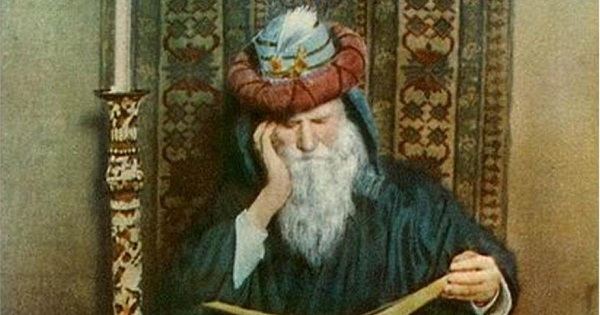
History remembers Omar Khayyam mostly as a poet, the author of the immortal Rubaiyyat. Yet poetry was only one face of an extraordinary mind. He was at once a mathematician, astronomer, philosopher, scientist, and skeptic — a man whose intellect moved effortlessly between equations and existential reflection.
And for the people of present-day Turkmenistan, Khayyam is not a distant literary figure. A vital chapter of his life unfolded in Merv, one of the great intellectual capitals of the medieval world.
Khayyam belonged to a remarkable generation. Tradition says he was acquainted in youth with two men who would shape the politics and mythology of the age: Nizam al-Mulk, the legendary Seljuk vizier, and Hassan-i Sabbah, the enigmatic founder of the Assassins. Whether every detail of the famous story is true or embellished by later writers hardly matters now; what matters is that these three names together symbolize the intellectual and political ferment of the Seljuk era.
Khayyam himself chose neither power nor conspiracy. He chose knowledge.
Under the patronage of Malik-Shah I and later Ahmad Sanjar, Khayyam became deeply involved in scientific work that would leave a lasting mark on world civilization. His years in Merv are especially important in this regard.
At the observatory established under Seljuk patronage, Khayyam and his colleagues undertook one of the most sophisticated astronomical projects of the medieval age: the reform of the calendar. The result was the Jalali calendar, introduced in 1079. It was based not on rough approximations but on painstaking astronomical observation.
What makes this achievement astonishing even today is its accuracy. The calendar Khayyam helped design measured the solar year with a precision so refined that many historians of science consider it comparable — and in some calculations even slightly superior — to the later Gregorian calendar used across most of the world today.
In an age when much of humanity still explained the heavens through myth and superstition, Khayyam was measuring celestial motion with scientific rigor.
But astronomy was only one aspect of his brilliance.
As a mathematician, Khayyam made major contributions to algebra and geometry. He worked on the classification and solution of cubic equations centuries before modern algebra fully developed.
He also examined the foundations of Euclidean geometry and wrestled with philosophical questions that would continue to challenge mathematicians long after his death.
As a philosopher, he was equally fearless. — He questioned certainty, challenged dogma, and explored the tension between fate and free will. Unlike many thinkers of his time, Khayyam did not pretend to possess final answers. His intellectual honesty perhaps explains why his words still feel startlingly modern.
And then there is the poetry.
The Rubaiyyat of Omar Khayyam continues to travel across centuries because it speaks directly to human anxiety, impermanence, hypocrisy, and the search for meaning. In times of war, political turmoil, social polarization, and uncertainty about the future, many of his verses sound less like relics from the 11th century and more like commentary on the present age.
Consider these famous lines:
“The Moving Finger writes; and, having writ,
Moves on: nor all thy Piety nor Wit
Shall lure it back to cancel half a Line,
Nor all thy Tears wash out a Word of it.”
In an era obsessed with rewriting narratives, controlling information, and endlessly revisiting the past, Khayyam’s reminder about the irreversible march of time feels uncannily relevant.
Or this reflection on human conflict and vanity:
“Think, in this battered Caravanserai
Whose Doorways are alternate Night and Day,
How Sultan after Sultan with his Pomp
Abode his destined Hour, and went his way.”
Empires rise, leaders proclaim greatness, nations compete for dominance — and yet history continues its indifferent march. Khayyam saw this nearly a thousand years ago.
And perhaps most modern of all is his skepticism toward hollow certainty:
“Myself when young did eagerly frequent
Doctor and Saint, and heard great argument
About it and about: but evermore
Came out by the same door as in I went.”
This could easily describe the fatigue of modern societies drowning in endless ideological noise while ordinary people continue searching for simple truth and peace of mind.
That is why Khayyam endures.
Had he written today, his poetry might have used different imagery, but its spirit would likely remain unchanged. He would still question arrogance masquerading as wisdom. He would still challenge rigid orthodoxy. He would still remind humanity of the brevity of life and the need for humility.
And perhaps he would still look at the stars above Merv with the same curiosity that drove him centuries ago — searching not only for mathematical precision in the heavens, but also for meaning in the human condition.
In remembering Omar Khayyam, we are not merely revisiting a literary icon. We are rediscovering a civilizational bridge between science and poetry, reason and wonder, Central Asia’s past and the anxieties of the modern world. /// nCa, 8 May 2026