


Energy connectivity in the modern world can be metaphorically compared to the circulatory system of the global economy. Imagine that the vessels are infrastructure and transit routes; if they function stably and uninterruptedly, then all organs — countries and regions — receive the necessary resources for life and development, regardless of their distance from the “heart,” the energy sources.
It is from this perspective that the UN General Assembly resolution, “The pivotal role of reliable and stable energy connectivity in driving sustainable development,” recently adopted at the initiative of Turkmenistan, acquires special significance.
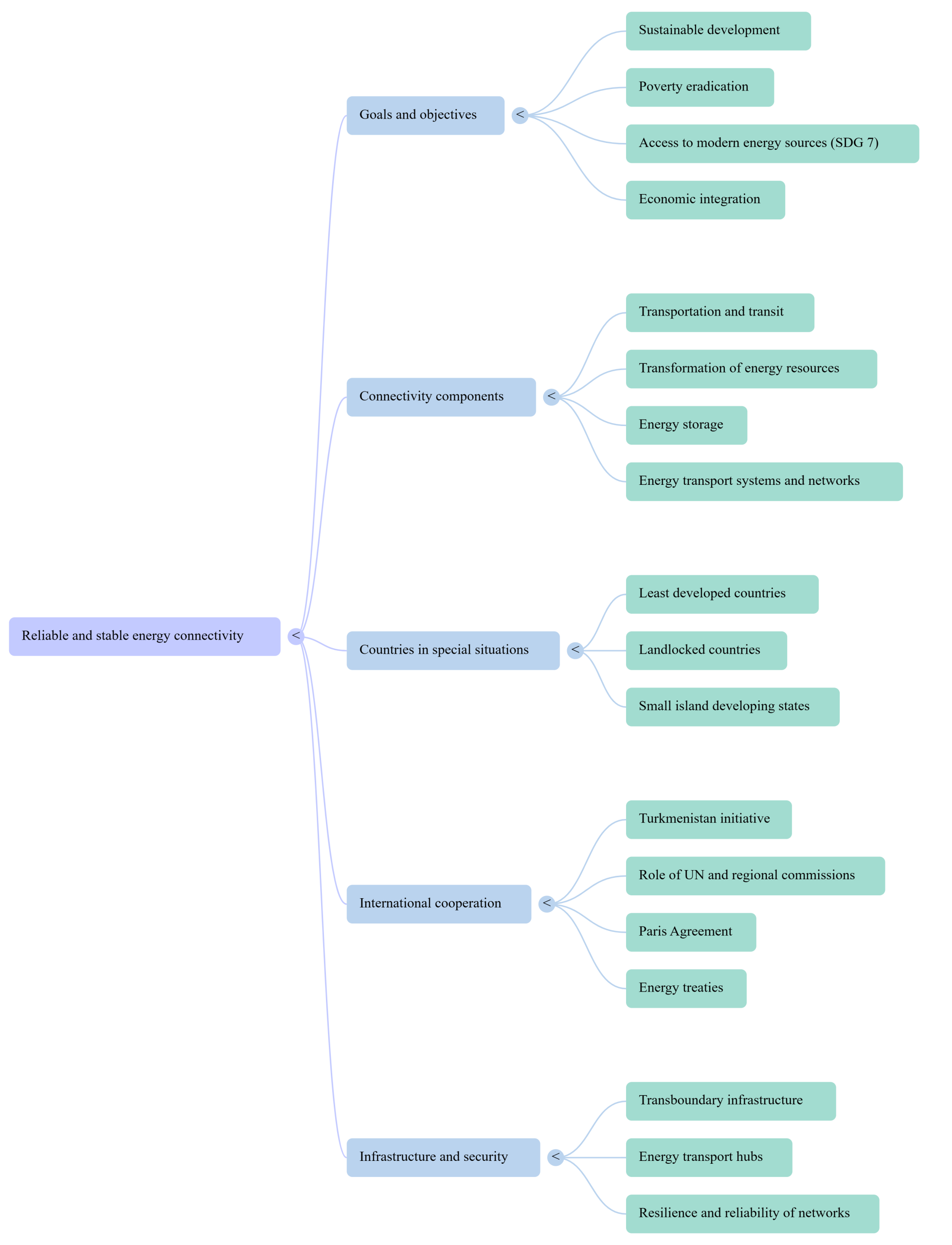
The resolution desçribes the reliable and stable energy connectivity as a fundamental factor for the implementation of the 2030 Agenda for Sustainable Development. A special emphasis is placed on supporting developing countries, including landlocked nations and small island territories, which require unimpeded access to global energy markets.
Key Ideas and Provisions of the Resolution:
- Energy Connectivity as a Foundation for Sustainable Development. The central idea is that stable and reliable energy links are in the interest of the entire international community and are a key factor for the implementation of the 2030 Agenda. Energy connectivity is a primary condition for achieving Sustainable Development Goal 7 — ensuring universal access to affordable, reliable, sustainable, and modern energy for all.
- A Comprehensive Definition of Connectivity. Energy connectivity is understood as the capacity of countries to transport, transmit, transform, and store energy resources through different systems or networks.
- Support for Countries in Special Situations. The resolution underlines that without stable energy transportation, developing countries (particularly the least developed, landlocked developing countries, and small island developing States) will face difficulties in meeting their energy demand. It is vital to develop stable energy transportation systems, networks, and market frameworks that link them to regional and international markets.
- Strengthening International Cooperation. The document calls for continued global cooperation to ensure the delivery of energy resources to international markets through various transportation systems. This is necessary to promote economic integration and sustainable growth.
- Infrastructure Security. One of the priorities is ensuring the resilience and security of cross-border energy infrastructure and energy connectivity.
- Further Steps and Monitoring. The resolution invites the Secretary-General to seek the views of Member States and UN entities on ways to strengthen energy connectivity and to present a summary report to the General Assembly at its eighty-first session. It also notes the importance of future forums, including the proposal by the Government of Turkmenistan to host the Sustainable Energy for All Forum in 2027
Here is a full text of the Resolution:
///nCa, 27 December 2025