


nCa Commentary
Tariq Saeedi
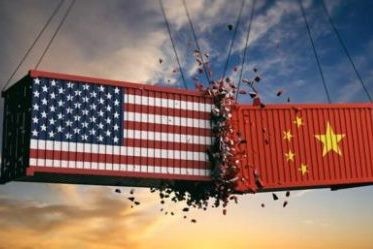
The tariff tussle is more than just tit-for-tat. The main participants of this tug of war – USA and China – are actually aware of what they are doing. Even though both have different objectives in mind, in the end, both might actually win in the sense that that their diverse objectives would possibly be several steps closer to fulfillment.
The USA is aiming for the return of manufacturing jobs back to homeland and create smooth surface for the domestic products while tilting the ground outward for the imported items.
China is trying to retain its share in the American market but also looking to strengthen its presence in the other markets around the world.
If we look at the pattern for the last 25-30 years, the American market is absorbing comparatively lesser volume of the world products. On the other hand, several regions, with the rising buying power of their populations, are comfortable in accommodating more of imported products. Instead of the origin of goods, the decisive factors are quality and price.
Except for food industry, the only outcome for the American consumers would be that they would be paying a higher price for the things they buy. Also, there would be the question of some fine distinctions.
For example, an iPhone made in China would be treated as a Chinese product or an American product? A Nike or Adidas produced in China or Vietnam would be tariffed as a foreign product or a local product?
Then, there is the question of the ability to genuinely compete with some of the high-end foreign imports. For instance, the EV or Hybrid models of BYD and the comparable models of Tesla go in opposite directions as far as their price and their value for the buyer are concerned. A BYD outclasses a Tesla and still costs much less. If there is 150% tariff on a BYD, it would still be comparatively cheaper in the American market.
This would only result in punishing the domestic consumers without substantially benefiting the domestic producers.
Central Asia, by default, is emerging as a region of interest for the global manufacturers. China already has a strong presence in the region. The rising stars such as Malaysia, are prepared to sharpen their focus on Central Asia.
The traditional friendship between Central Asia and Middle East is poised to reach the stage of mutual and reciprocal opening of their markets at a grand scale.
EU is looking at Central Asia through a bifocal lens. On one hand, it is a fairly lucrative market for the European products and on the other hand, it is a space for joint ventures to cover the world markets because the literacy rate in the region is nearly 100%, the workforce is ready for hard work under structured circumstances, the wages are low compared to the European countries and the infrastructure is available to transport the goods in any direction. On top of that, the de facto neutrality of the region makes it doubly attractive. /// nCa, 5 May 2025 (image credit The Trucker)