


nCa Commentary
When the Embassy of Romania in Ashgabat chose to display images of Constantin Brâncuși’s sculptures alongside the commemoration of Romania’s National Day—observed each year on 1 December—the gesture carried a resonance far deeper than an ordinary cultural exhibition.
In presenting Brâncuși to guests in Turkmenistan, Romania was not merely showcasing its most celebrated modern artist; it was offering a visual philosophy of how a nation honors its ancient roots while reaching outward to the wider world.
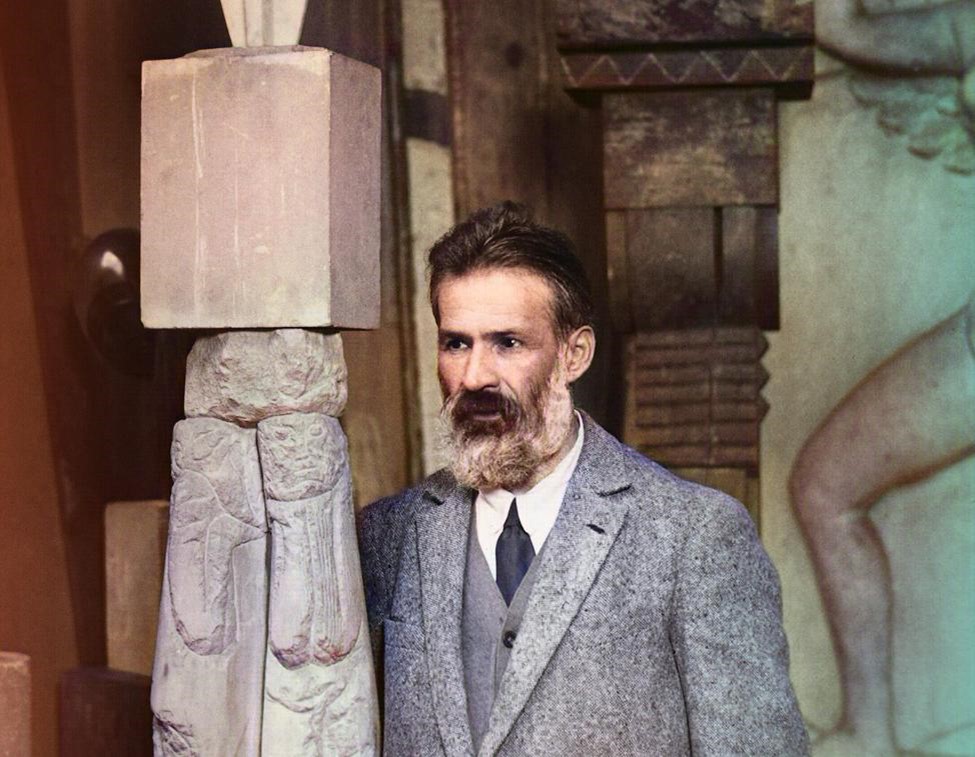
Constantin Brâncuși – 3 Seas Europe
Born in 1876 in the village of Hobița, tucked into the Carpathian foothills of southern Romania, Brâncuși grew up in a world where art and daily life were inseparable. Before he ever entered an academy in Craiova or Bucharest, and long before he made his legendary journey on foot to Paris in 1903–1904, his eyes and hands were shaped by the folk architecture, notched wooden porch pillars, and timeless stone carvings of his homeland. That rural upbringing gave him a profound respect for raw materials and a conviction that beauty does not lie in ornate surface decoration, but in the quiet truth resting inside wood, stone, and bronze.
In Paris, where he briefly worked in the studio of Auguste Rodin before departing with the famous observation that nothing grows in the shadow of great trees, Brâncuși dismantled centuries of European sculptural convention.
Rather than modeling clay to imitate muscles, drapery, or fleeting facial expressions, he championed direct carving. He listened to the grain of the timber and the veining of the marble, stripping away every superfluous detail until only the inner soul of the subject remained.
As he once explained, what observers hastily called abstract in his work was in fact the most realistic thing of all, because reality resides not in outward appearance, but in the essence of things. Simplicity, in his view, was never an empty minimalism; it was complexity resolved.
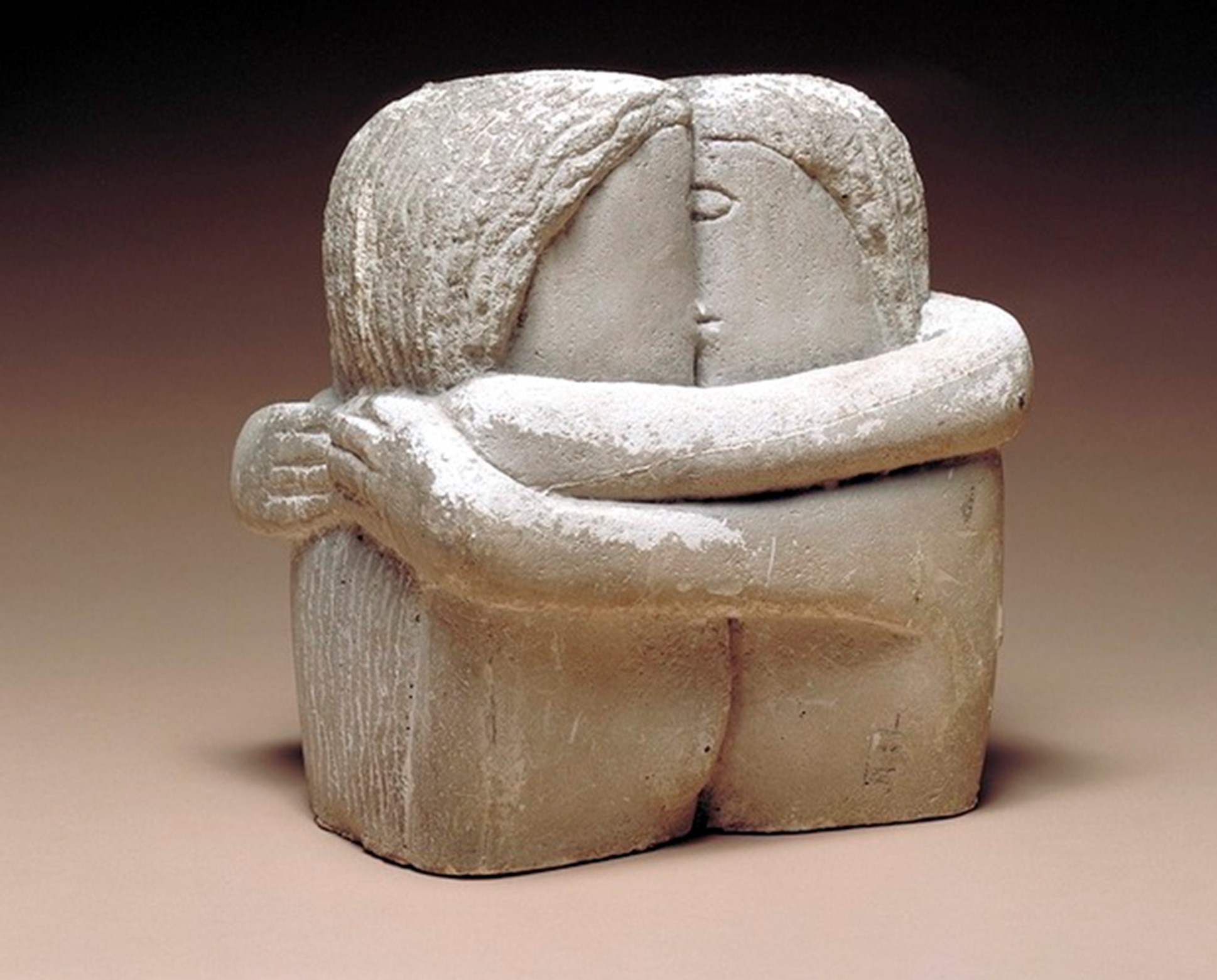
The Kiss – Nasher Sculpture Center
This philosophy gave birth to some of the defining works of the twentieth century. In The Kiss, two figures merge into a single block of limestone, indivisible and serene. In Sleeping Muse, the human head is distilled into a pure, contemplative ovoid. In Bird in Space, polished bronze rises in a weightless arc that captures not the feathers of a bird, but the sheer upward surge of flight itself.
And when he returned to Romania in 1937–1938 to create the monumental ensemble at Târgu Jiu—inscribed on the UNESCO World Heritage List in 2024—he united civic memory, landscape, and spiritual aspiration along a single urban axis. From the contemplative circle of The Table of Silence, through the threshold of The Gate of the Kiss, to the soaring rhythm of the Endless Column, Brâncuși transformed a local Romanian woodcarving motif into a universal hymn to human endurance and infinity.
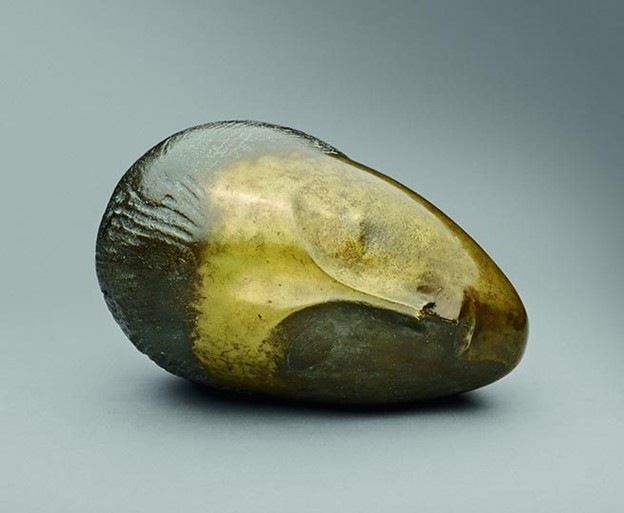
Sleeping Muse – Apollo Magazine
For the people of Romania today, Brâncuși embodies the very spirit commemorated on the Great Union Day of 1 December.
His life and art reflect a national aspiration that is both deeply anchored and confidently outward-looking: the determination to preserve an authentic cultural identity while contributing original, forward-looking ideas to the global community. Just as Romania’s modern trajectory seeks to harmonize heritage with innovation, connectivity, and European and international integration, Brâncuși proved that fidelity to one’s native soil is not a barrier to universality—it is the very source of it.
It is precisely this quality that makes Brâncuși’s legacy a natural bridge between Romania and Central Asia, and with Turkmenistan in particular. Across the historic expanses of the Silk Road, from the ancient oases of Margiana to the monumental architecture of modern Ashgabat, Central Asian civilization has long understood the power of pure geometry, symbolic form, and harmony with stone, earth, and open sky.
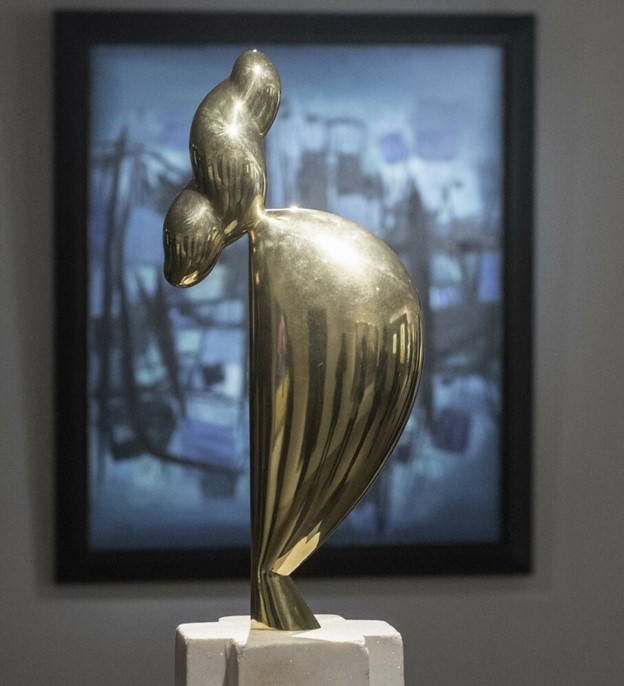
‘La Jeune Fille Sophistiquée’ – Philip Fong / AFP/ East News
Both Romanian folk tradition and Turkmen artistic heritage—expressed in the timeless geometric rigor of Turkmen carpets, traditional architecture, and reverence for ancestral craft—share an intuitive grasp that simple forms can carry profound spiritual and philosophical weight.
Today, as Romania and Turkmenistan deepen their dialogue across diplomacy, trade, energy, and transport corridors linking the Black Sea and the Caspian basin, cultural understanding provides the essential human foundation. Economic routes and infrastructure projects connect ports and capitals, yet it is shared creative vision that connects peoples.
Brâncuși believed that the true function of art is to make understood what would remain incomprehensible in the form of mere argument, and to offer pure joy to anyone willing to look with an open heart. /// nCa, 29 November 2026