


nCa News and Commentary
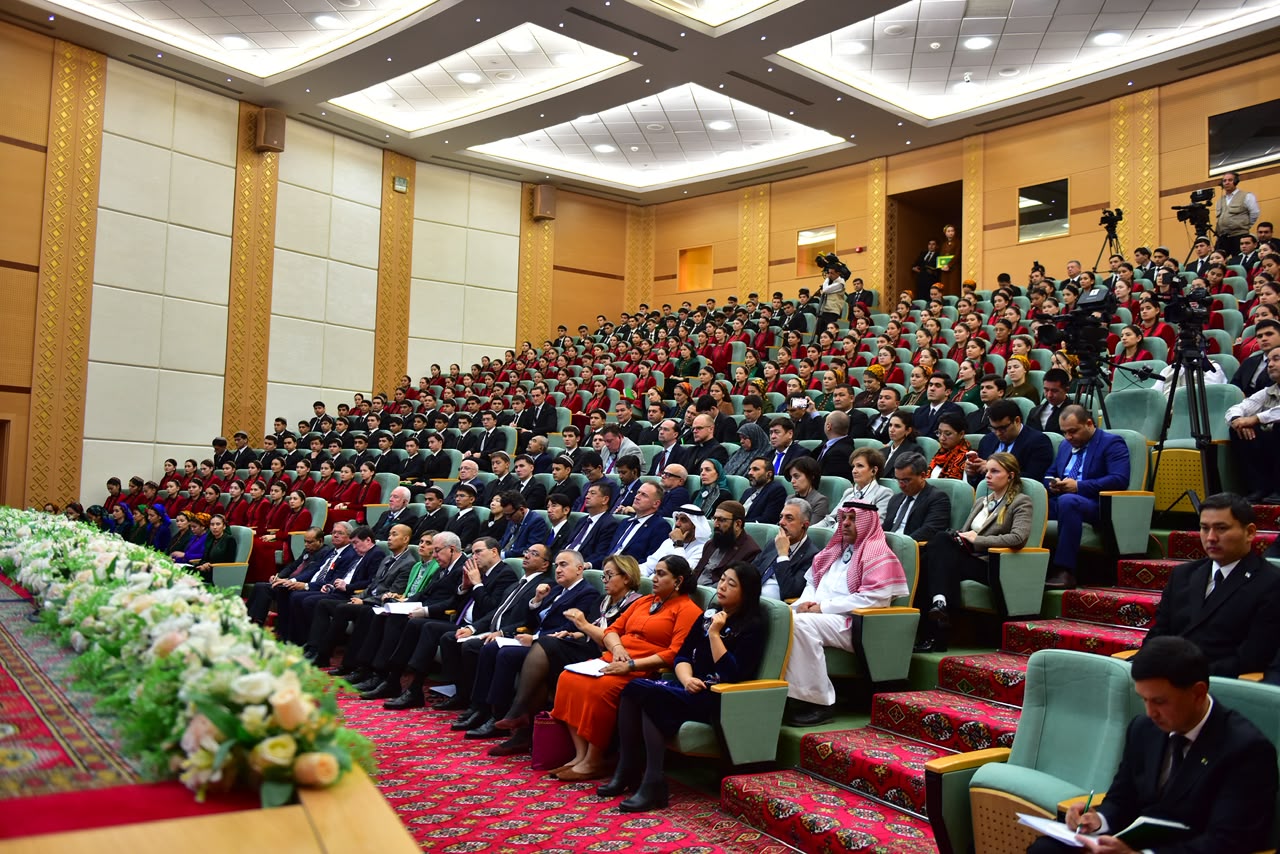
On November 27, 2026, the International University for Humanities and Development hosted the International Conference “Biodiversity and Climate Change: Turkmenistan’s Initiatives and International Cooperation for Sustainable Development,” bringing together representatives of government agencies of Turkmenistan, international organizations, and diplomatic missions accredited in the country.
The conference focused on current environmental challenges, biodiversity conservation, climate change mitigation, and strengthening international cooperation to ensure environmental security and sustainable development.
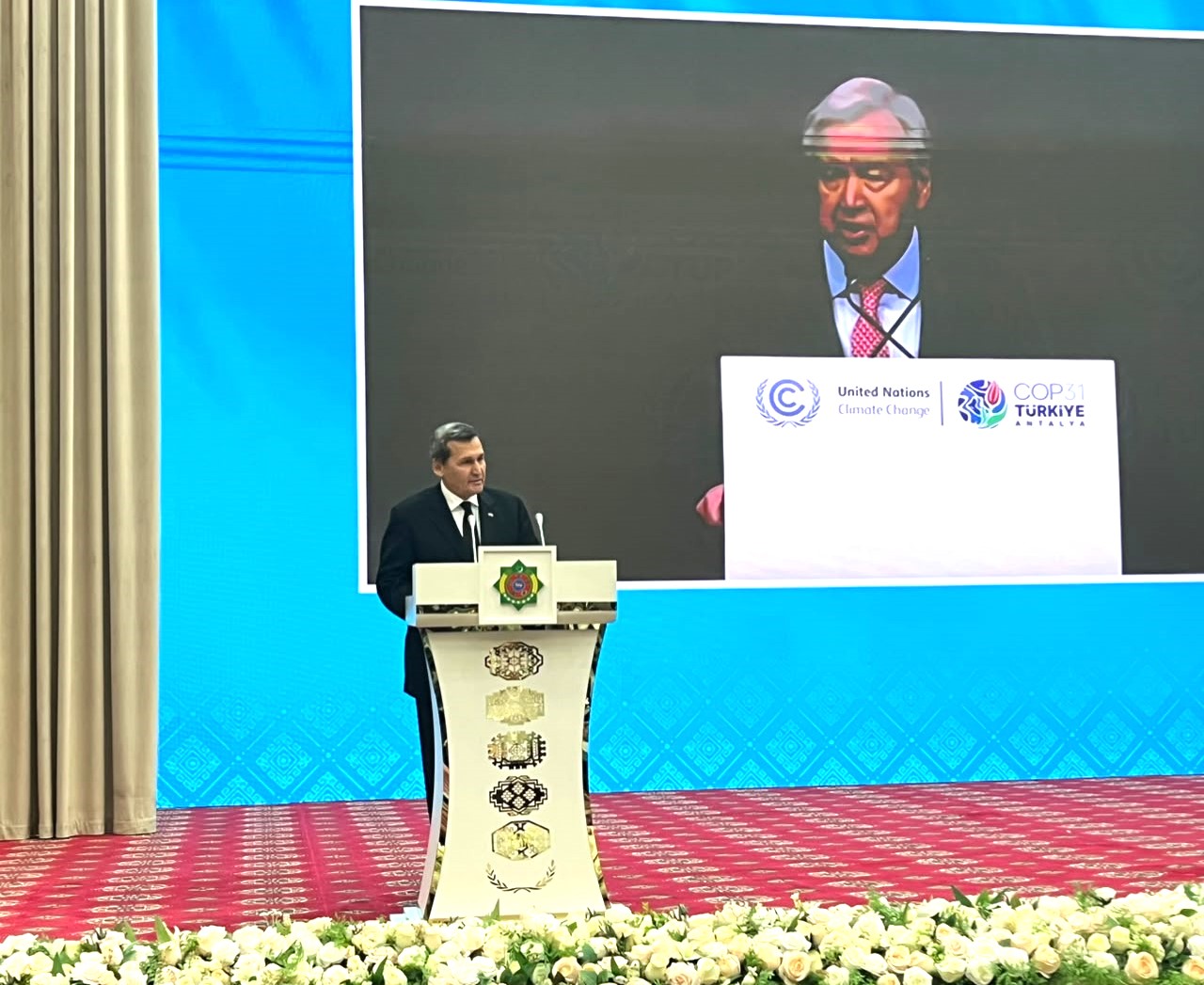
Keynote speeches at the conference were delivered by Deputy Chairman of the Cabinet of Ministers and Minister of Foreign Affairs of Turkmenistan Rashid Meredov, UN Resident Coordinator in Turkmenistan Xiaojun Grace Wang, Deputy Minister of Environmental Protection of Turkmenistan Nury Djumashov, UNDP Resident Representative Narine Sahakyan, and UNICEF Representative in Turkmenistan Jalpa Ratna.
The conference was also attended and addressed by the Ambassadors Extraordinary and Plenipotentiary of the Republic of Turkey Şener Cebeci, the Republic of Armenia Arsen Avagyan, the Republic of Azerbaijan Gismat Gozalov, the Italian Republic Martin Brook and the French Republic Aléna Grand.
Speaking at the conference, the head of Turkmenistan’s Foreign Ministry emphasized that environmental diplomacy is a key pillar of the country’s foreign policy. It was noted that Turkmenistan consistently promotes international initiatives aimed at preserving biodiversity, combating climate change, and strengthening multilateral cooperation. Particular attention was paid to the initiatives of Turkmen President Serdar Berdimuhamedov, presented at the 17th Conference of the Parties to the UN Convention on Biological Diversity (COP17) in Yerevan, as well as the initiatives of the National Leader of the Turkmen People, Chairman of the Halk Maslahaty of Turkmenistan, Hero Arkadag, announced at COP31 in Antalya.
The Minister of Foreign Affairs of Turkmenistan also reported on the steps being taken to promote Turkmenistan’s regional and global initiatives, including the establishment of the Ashgabat Climate Dialogue, the development of a Digital Atlas of Climate Change, and the establishment of international mechanisms for the transfer of climate technologies. The special role of the UN, relevant international organizations, and diplomatic missions in ensuring the practical implementation of these initiatives was emphasized.
The participants’ presentations reflected a wide range of approaches to addressing environmental issues and confirmed the importance of uniting the efforts of states, international organizations, and partners to develop coordinated responses to modern climate and environmental challenges.
Particular attention was paid to Turkmenistan’s international initiatives aimed at developing a constructive dialogue in the field of ecology, the rational use of natural resources, and the formation of long-term cooperation mechanisms in the interests of current and future generations.
Following the conference, participants adopted an Address to the President of Turkmenistan, Serdar Berdimuhamedov, which reflected recognition of the relevance of Turkmenistan’s initiatives and a commitment to further strengthening international cooperation in biodiversity conservation and climate change mitigation. [nCa – in cooperation with MFA Turkmenistan]
nCa Commentary by Tariq Saeedi and Elvira Kadyrova
Ordinarily, high-level diplomatic forums of this caliber—bringing together the Foreign Minister, resident heads of UN agencies, and accredited ambassadors—take place within the formal halls of the Ministry of Foreign Affairs.
Choosing instead to convene this conference inside the International University for Humanities and Development was clearly not a spur-of-the-moment logistical decision. Rather, it reflects Turkmenistan’s consistent, deliberate policy of keeping the younger generation directly in the loop on questions that will define their future.
Established in 2014 as the country’s flagship English-medium institution aligned with the Bologna Process, the university has earned a well-deserved reputation as an elite educational establishment. Its academic architecture—spanning international relations, international law, economics, journalism, and information technologies—is designed specifically to train professionals equipped with foreign language fluency and transformational skills for public service, science, and global business.
Bringing active diplomacy directly onto a campus of over 1,600 students transforms abstract policy discussions into lived experience, bridging the traditional divide between the diplomatic corps and the classroom.
University education is generally the final rung on the ladder leading to practical life. Whether these students go on to pursue master’s degrees or step directly into the professions of their choice, they must enter the world informed and aware. Environmental stewardship is no longer the exclusive domain of ecologists or treaty negotiators; it is the operating context for every modern career.
Future economists will have to price climate risk and green finance; future legal scholars will draft cross-border resource frameworks; future computer scientists will build the very tools mentioned at the podium, such as the Digital Atlas of Climate Change; and future journalists will be tasked with translating complex environmental realities for the public.
Furthermore, the timing of this engagement adds weight to the venue.
Coming just days after Turkmenistan adopted its updated National Biodiversity Strategy and Action Plan for 2027–2035, and building on the momentum of COP17 in Yerevan and COP31 in Antalya, the long-term mechanisms discussed in Ashgabat will reach maturity precisely when today’s undergraduates are stepping into positions of responsibility. Policy documents gain real traction only when the generation tasked with executing them understands their urgency from the outset.
Biodiversity loss and climate change are realities that spare no corner of the globe and impact everyone on this planet. When young minds are treated not merely as passive observers of state policy, but as active stakeholders in global dialogue, they gain the perspective needed to shape every professional and personal decision in the right direction.
By opening the doors of diplomacy inside one of its premier academic institutions, Turkmenistan is investing in the most reliable safeguard for sustainable development: an informed, globally minded generation. /// nCa, 28 November 2026