


nCa Report
Turkmenistan is approaching the conclusion of its 2026 chairmanship of the Commonwealth of Independent States (CIS) with an emphasis on a diplomatic achievement that extends beyond the organisation itself: the adoption by the United Nations General Assembly, on 16 November, of a resolution entitled Cooperation between the United Nations and the Commonwealth of Independent States.
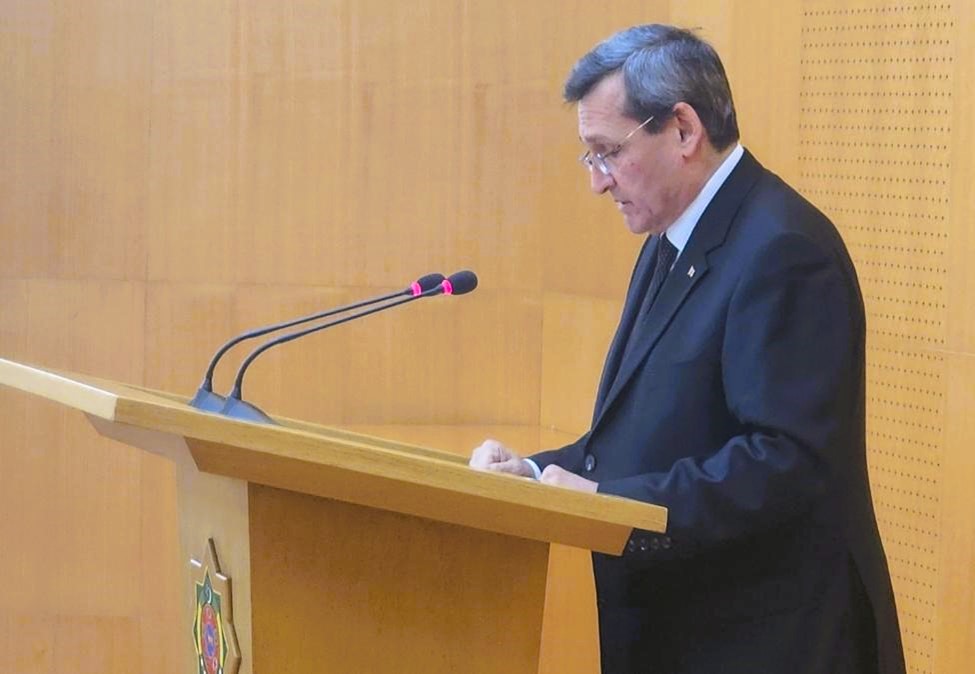
Foreign Minister Rashid Meredov placed this development at the centre of his briefing to diplomatic representatives in Ashgabat on 24 November, describing it as an important step towards strengthening institutional cooperation between the UN and the CIS and potentially establishing a model for the UN’s relations with other regional and interregional organisations.
The briefing was significant not only as an account of the year’s activities under Turkmenistan’s chairmanship, but also as an explanation of how Ashgabat sees the relationship between its regional responsibilities and its wider foreign-policy priorities. The underlying approach is to use regional cooperation as a practical instrument for advancing the purposes and principles of the UN Charter, while reinforcing the role of international law in an increasingly uncertain international environment.
A diplomatic achievement with wider implications
The resolution adopted on 16 November was initiated by Turkmenistan and co-sponsored by Armenia, Belarus, Kazakhstan, Kyrgyzstan, Nicaragua, Russia, Tajikistan and Uzbekistan. Its adoption during the 81st session of the UN General Assembly carries particular significance because 2026 marks both the 35th anniversary of the establishment of the CIS and Turkmenistan’s year of chairmanship.
The resolution recognises the contribution of the CIS to regional dialogue and cooperation and welcomes the organisation’s efforts to expand and deepen its relations with UN institutions, programmes and funds. It also acknowledges the breadth of CIS cooperation, covering trade and economic development, the exchange of statistical and economic information, culture, education, healthcare, sport, tourism, science, innovation, environmental protection and disaster response. Other areas include combating organised crime, drug trafficking, terrorism, extremism and illegal migration.
More importantly, the document provides an institutional framework for closer coordination between the two organisations. It encourages the UN Secretary-General to hold regular consultations with the CIS Secretary-General and invites specialised agencies and other UN bodies, programmes and funds, as well as international financial institutions, to develop cooperation with the CIS.
This is the aspect that Meredov particularly emphasised. In his assessment, the resolution should not be regarded merely as a formal recognition of the relationship between two international organisations. It establishes a legal and institutional basis upon which more substantive cooperation can be built.
He stressed, however, that adoption is only the beginning. The essential task now is to give the resolution practical content through implementation, regular consultations and concrete joint activities. Turkmenistan is prepared to assume a coordinating role and provide the necessary conditions for meetings and contacts.
Meredov called on diplomatic missions, particularly those representing CIS countries, and international organisations in Ashgabat to participate actively in this process.
This emphasis on implementation is important. The resolution itself does not create a new supranational mechanism or confer additional powers on the CIS. Its significance lies instead in providing an internationally endorsed framework for more systematic engagement with the UN system. Whether it becomes a meaningful instrument will depend on the willingness of both organisations and their member states to translate its provisions into working arrangements and practical programmes.
The CIS as a regional partner of the United Nations
Meredov presented the resolution within a broader Turkmen understanding of the evolving international system. He argued that the UN should expand the geographical and thematic reach of its activities by engaging more actively with regional and specialised organisations that share its objectives and have demonstrated their capacity to contribute constructively to international development.
In this context, cooperation between the UN and the CIS could serve as an example, and potentially a prototype, for relations between the United Nations and other regional or interregional associations.
The argument reflects Turkmenistan’s longstanding position that the United Nations remains the only universal and legitimate international organisation with responsibility for maintaining international peace and stability. Ashgabat supports improvements in the organisation’s effectiveness, but insists that such reforms should strengthen rather than diminish its central role.
The distinction is significant. Rather than advocating the creation of alternative international structures, Turkmenistan is proposing that existing regional organisations should become more effective partners of the UN. Regional bodies can contribute their geographical knowledge, institutional experience and established channels of cooperation, while the UN provides the universal framework of legitimacy and common principles.
For the CIS, this approach could broaden the international relevance of its activities. Its member states already cooperate in a wide range of economic, social, humanitarian and security-related fields. Closer institutional engagement with UN agencies and programmes could help connect these activities with wider international initiatives, including the Sustainable Development Goals.
It could also provide a more structured channel through which the CIS countries collectively contribute to discussions on international issues. As the statements of the participating ambassadors suggested, the organisation has accumulated considerable experience over its 35 years and has a regional contribution to make to the wider international agenda.
A year of active chairmanship
In reviewing Turkmenistan’s chairmanship, Meredov expressed appreciation for the support extended by CIS member states to the country’s chairmanship concept. He noted that the year had seen the organisation’s principal statutory bodies and a number of sectoral councils and committees meet in Turkmenistan.
These included the Council of Heads of State, the Council of Heads of Government, the Council of Foreign Ministers and the CIS Economic Council, alongside meetings of specialised bodies. The programme provided opportunities for political consultations, economic coordination and discussions on sector-specific cooperation.
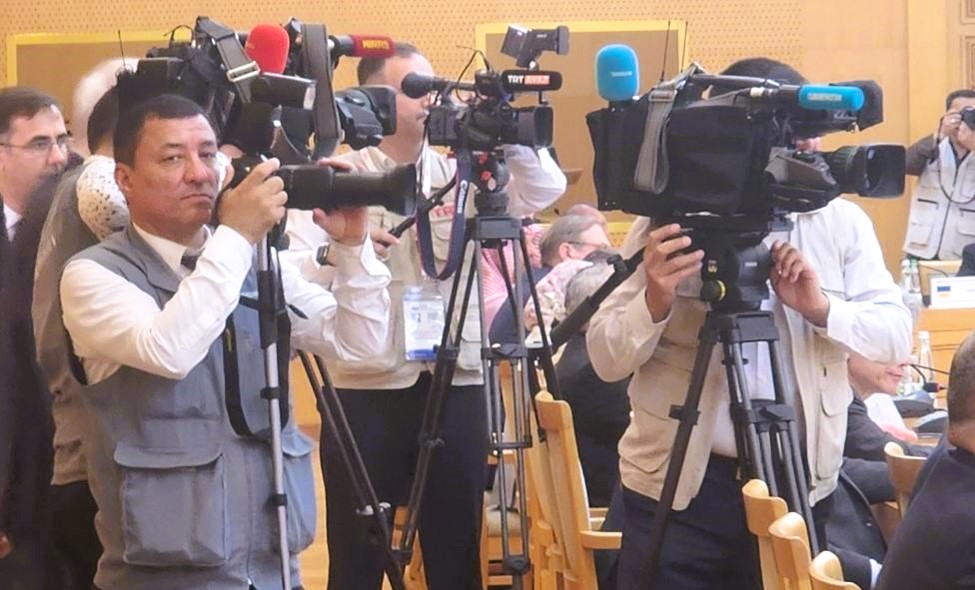
The ambassadors of Kyrgyzstan, Kazakhstan, Tajikistan, Uzbekistan and Belarus, who participated in the briefing, broadly endorsed this assessment. Their remarks indicated that Turkmenistan’s chairmanship had been viewed positively by its partners, particularly in terms of the organisation of meetings and the opportunities created for regional dialogue.
The Kyrgyz ambassador, Azizbek Madmarov, highlighted the range of activities conducted throughout the year, from high-level political meetings to sectoral and international events. He also drew attention to the decision in July to grant the Mejlis of Turkmenistan observer status in the CIS Inter-Parliamentary Assembly. This development provides an additional channel for parliamentary contacts and the exchange of legislative experience.
The Belarusian representative, Ivan Sinapko, similarly described the chairmanship as successfully implemented, noting that the meetings and decisions had contributed to the development of integration processes across the Eurasian region and enhanced the effectiveness of the CIS.
For Turkmenistan, the chairmanship has therefore served two related purposes: strengthening the functioning of the CIS through the regular work of its institutions and reinforcing the organisation’s external engagement through the new UN General Assembly resolution.
The timing of the resolution adds to its political significance. Its adoption during the 35th anniversary year of the CIS and the Turkmen chairmanship gives Ashgabat an opportunity to associate the year’s institutional activities with a longer-term objective: establishing a more structured relationship between the organisation and the wider international system.
Support from Central Asian partners
The interventions by the ambassadors of Kyrgyzstan, Kazakhstan, Tajikistan and Uzbekistan demonstrated broad regional support for the Turkmen initiative, although each placed particular emphasis on different aspects of the emerging cooperation.
Kyrgyz Ambassador Azizbek Madmarov welcomed the systematic nature of Turkmenistan’s chairmanship and its contribution to regional dialogue. He also connected the UN-CIS resolution with the wider efforts of Central Asian countries to advance international initiatives on sustainable development. His remarks highlighted the shared concerns of the region, including the consequences of glacier melting, water scarcity, land degradation and desertification.
In his response, Meredov drew a direct connection between these environmental challenges. The loss of mountain glaciers, he observed, reduces water availability and contributes to land degradation and desertification. These are not isolated national problems but interconnected issues with economic, social and humanitarian consequences. His comments reflected an understanding that regional environmental concerns require coordinated international attention.
Meredov also acknowledged Kyrgyzstan’s contribution to the promotion of international law and sustainable development, including its organisation of training programmes, courses and conferences with international partners. He expressed confidence that the two countries would continue working together on the implementation of their common UN initiatives.
Kazakhstan’s Ambassador Nurlan Nogayev described Turkmenistan’s chairmanship as a reflection of the country’s commitment to the principles of the UN Charter and international law. He linked the importance of preventive diplomacy with the work of the UN Regional Centre for Preventive Diplomacy for Central Asia, based in Ashgabat, and emphasised Kazakhstan’s support for strengthening cooperation between the UN and the CIS.
Nogayev also placed the initiative within the wider regional diplomatic environment. Kazakhstan, he said, supports the principle of strengthening the role of law in both domestic governance and international relations. He regarded the new resolution as an opportunity for CIS member states to engage more closely with the UN and contribute collectively to international cooperation.
Tajik Ambassador Vafo Niyatbekzoda emphasised the close convergence between the foreign-policy approaches of Turkmenistan and Tajikistan, particularly regarding peace and security, good-neighbourly relations, sustainable development and regional cooperation. He underlined the importance of closer UN-CIS relations for Central Asia, whose economic, transport, transit, energy and humanitarian potential could benefit from more effective international and regional coordination.
Meredov responded by describing Central Asia as a region of peace, stability and effective international cooperation. He attributed this development primarily to the efforts of the Central Asian countries themselves, pointing to their shared history, culture, traditions and customs as a strong foundation for closer cooperation.
The contribution of Uzbekistan was particularly notable in the context of the forthcoming transfer of the CIS chairmanship. Ambassador Ravshanbek Alimov welcomed the UN-CIS resolution as a significant diplomatic achievement and confirmed Uzbekistan’s readiness to participate actively in its implementation.
He also highlighted the structured nature of Turkmenistan’s proposed National Action Plan for 2027–2028 on the preparation and conduct of the International Year of International Law. The plan, which he described as comprising 19 major international events, was presented as an example of how diplomatic initiatives can be accompanied by practical mechanisms for implementation.
Alimov further indicated that Uzbekistan intended to incorporate the new UN-CIS framework into its own chairmanship priorities for 2027. This is an important indication of continuity: the resolution is not being treated as an achievement confined to the outgoing chairmanship, but as a potential component of the organisation’s future programme.
Uzbekistan’s support also reflects the close coordination between the two countries at multilateral forums. Meredov noted that Turkmenistan and Uzbekistan have consistently supported each other’s important international initiatives, including through co-sponsorship of UN General Assembly resolutions.
Taken together, these interventions suggest that the Turkmen initiative has secured support from the Central Asian members of the CIS and that its continuation under Uzbekistan’s 2027 chairmanship has a promising political basis.
Neutrality and international law as the foundations of Turkmenistan’s approach
Towards the conclusion of the briefing, Meredov returned to a central element of Turkmenistan’s foreign policy: its internationally recognised permanent neutrality.
He described neutrality as the political foundation and practical instrument of the country’s strategy of peace, good-neighbourliness and cooperation. Respect for international law and the UN Charter, he stressed, occupies a central place in this strategy.
This explanation connects the CIS chairmanship with another major Turkmen diplomatic priority: the international initiative concerning 2028 as the International Year of International Law. The two initiatives, although distinct, are presented by Ashgabat as mutually reinforcing components of a broader effort to strengthen the legal foundations of international relations.
The first seeks to enhance the role of international law through greater awareness, dialogue and practical cooperation. The second seeks to strengthen the institutional relationship between the UN and a regional organisation whose member states are also participants in the universal international system.
The logic is that international law must be supported not only through declarations and resolutions but also through functioning institutions, regular dialogue and cooperation in addressing practical problems.
The ambassadors’ statements reinforced this perspective. They repeatedly referred to the importance of the UN Charter, international law, peaceful relations and multilateral diplomacy. Their support for the resolution also indicated that the initiative was being viewed as part of a wider regional effort rather than simply as a national diplomatic accomplishment.
The road ahead: from diplomatic endorsement to practical cooperation
The most consequential question arising from the briefing is how the new UN-CIS framework will be implemented.
The resolution establishes a basis for regular consultations between the UN and CIS Secretaries-General and encourages greater engagement by UN specialised agencies, programmes, funds and international financial institutions. These provisions create opportunities for practical cooperation in areas where the two organisations already have overlapping interests.
Economic development, trade, education, healthcare, environmental protection, disaster management, transport connectivity and the fight against transnational crime are among the fields identified in the resolution. Turning these broad areas into effective programmes will require the identification of specific priorities, institutional counterparts, working arrangements and measurable outcomes.
The proposed regular consultations between the two Secretaries-General could provide an important coordinating mechanism. Equally important will be the participation of the specialised UN bodies and the relevant CIS sectoral structures, which would need to translate the general framework into concrete projects.
Turkmenistan’s offer to facilitate this process gives Ashgabat an opportunity to remain actively engaged in the initiative after the conclusion of its chairmanship. The forthcoming Uzbek chairmanship will also be important. Uzbekistan’s stated intention to incorporate the resolution into its 2027 programme offers a basis for continuity and for maintaining political momentum.
There is, however, a distinction between institutional recognition and operational effectiveness. The adoption of a General Assembly resolution demonstrates international support for closer cooperation, but it does not automatically guarantee that cooperation will become more substantive. Its long-term value will be determined by the extent to which the UN and CIS can develop practical working relationships that produce tangible benefits for their respective member states.
Overall assessment
Turkmenistan’s 2026 CIS chairmanship has provided Ashgabat with an opportunity to combine regional institutional diplomacy with its wider international priorities. The adoption of the UN General Assembly resolution on cooperation between the UN and the CIS is its most important diplomatic outcome, giving the organisation a more clearly articulated basis for engagement with the universal international system.
The significance of the initiative extends beyond the CIS itself. Turkmenistan is advancing the proposition that regional organisations can make a more effective contribution to international peace, stability and sustainable development by working within the framework of the United Nations rather than alongside or outside it. If implemented successfully, the UN-CIS relationship could offer a useful precedent for cooperation with other regional organisations.
The broad support expressed by the participating ambassadors, particularly the readiness of Uzbekistan to carry the initiative forward during its 2027 chairmanship, provides a favourable basis for continuity. The observer status granted to Turkmenistan’s Mejlis in the CIS Inter-Parliamentary Assembly is another institutional development that could strengthen the country’s engagement with the organisation.
For Ashgabat, the broader diplomatic objective is clear: to translate the country’s permanent neutrality and its commitment to international law into an active contribution to multilateral cooperation. The challenge now is to ensure that the political support generated during the chairmanship is converted into regular institutional engagement and practical programmes.
In that respect, the real test of Turkmenistan’s CIS chairmanship will not be the number of meetings held or declarations adopted, but whether the institutional bridge established between the CIS and the United Nations becomes a functioning channel for cooperation. The transition from diplomatic achievement to practical implementation is now the task facing both organisations and their member states. /// nCa, 25 November 2026