


Elvira Kadyrova, Tamir Shakirov
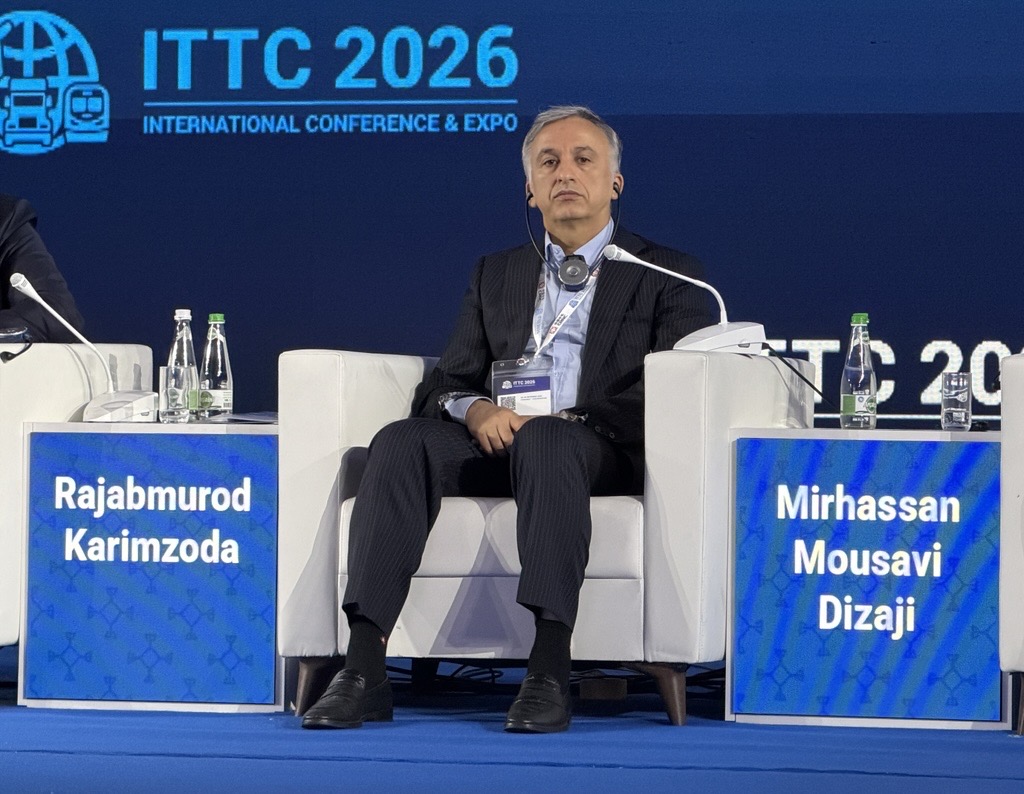
Iran advocates for stepping up railway cooperation with Turkmenistan, simplifying customs procedures, and harmonizing competitive tariffs to boost bilateral freight traffic and develop transit links between Asia and Europe. Tehran is also ready to attract private investors to modernize rolling stock, establish logistics centers, and introduce digital solutions at border stations. This was stated by Mirhassan Mousavi Dizaji, First Deputy Head of the Islamic Republic of Iran Railways (RAI), speaking at the ITTC 2026 international forum in Ashgabat.
According to him, owing to the geographical location of the two countries, the railway networks of Iran and Turkmenistan can play a vital role in connecting Asia with Europe and the Middle East. Furthermore, Iran’s rail connections with Central Asian countries and Russia pass through the territory of Turkmenistan.
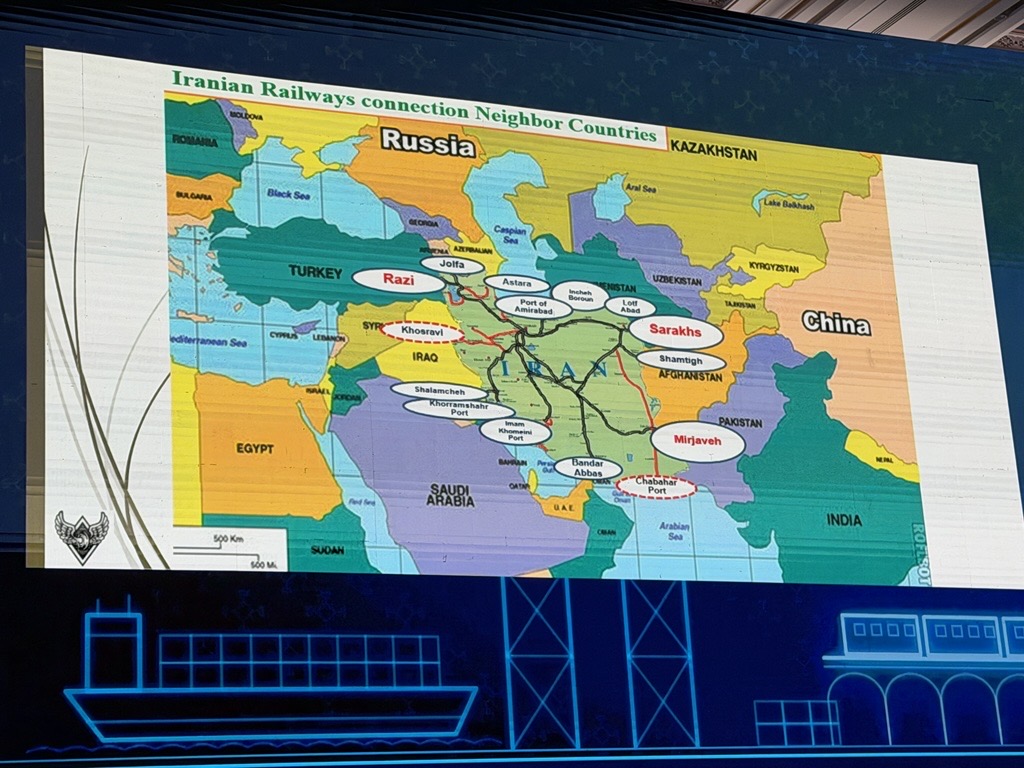
He identified the border stations of Sarakhs in northeastern Turkmenistan and Incheborun in the north as key junction points. Through the Razi border crossing, Iran’s railway network also connects with Türkiye.
According to the speaker, the Sarakhs border station is the best-equipped border station of the Iranian railways: the distance from it to Tehran is about 1,000 kilometers, and to the Razi railway station on the Turkish border—2,014 kilometers. The distance from the Incheborun border station to Tehran is 599 kilometers, and to the Razi border with Türkiye—1,517 kilometers.
Ideas for Strengthening Transport Connectivity with Turkmenistan
The Iranian side proposes intensifying cooperation with Turkmen railways in four areas:
• First: Developing railway diplomacy and simplifying customs procedures—deploying an electronic data exchange system between the railways and customs authorities of the two countries so that train dwell times at borders are reduced to the absolute minimum.
• Second: Harmonizing preferential and through tariffs. Introducing competitive tariffs for Iranian and Turkmen railway routes can significantly increase the attractiveness of this corridor compared to alternative routes.
• Third: Developing green corridors. As one of the most environmentally friendly modes of transport, rail should take a priority place in the region’s trade policy.
• Fourth: Joint investments in infrastructure. Iran welcomes private-sector investors to participate in projects to renew rolling stock, develop logistics hubs, and implement smart solutions at border stations.
Mousavi Dizaji noted that the current volumes of rail freight between the two countries do not yet match their transit potential, despite the high figures achieved in previous years.
Temporary fluctuations in this year’s statistics, he said, should be viewed as an opportunity to rethink approaches to organizing freight transport and expand cooperation.
The Southern Corridor as a Connectivity Option Along China–Europe Routes
Mousavi Dizaji dedicated the main part of his speech to the prospects for developing the China–Europe southern railway corridor, which passes through Kazakhstan, Uzbekistan, Turkmenistan, Iran, and Türkiye.
He highlighted three main overland routes linking China with European markets: the Northern Corridor through Kazakhstan, Russia, and Belarus; the Middle Corridor through Kazakhstan, the Caspian Sea, Azerbaijan, Georgia, and Türkiye; and the Southern Corridor through Central Asia, Turkmenistan, Iran, and Türkiye.
According to the Iranian side’s assessment, the southern route could serve as a complement to the northern and middle routes, as well as one of the shortest railway pathways from China to Southern Europe and the Persian Gulf countries.
The representative of Iranian Railways outlined two possible branches for this route:
• The first envisions transit from China through Kazakhstan and Turkmenistan into Iran, followed by an exit into Türkiye via the Incheborun border crossing.
• The second runs through Kazakhstan, Uzbekistan, and Turkmenistan, continuing through Iran with an exit into Türkiye via Sarakhs.
To implement these routes, Iran intends to develop infrastructure capable of handling container trains from China to Iran and onward to Europe.
Priorities include modernizing border stations, establishing logistics centers and dry ports—including the Aprin dry port—and digitalizing railway operations.
“Within the framework of the B2B and B2G meetings at this conference, we are ready to finalize and approve practical memorandums and joint projects,” Mousavi Dizaji stated.
He reaffirmed the readiness of Iranian Railways to utilize its technical, operational, and human resources potential to strengthen cooperation with Turkmenistan and other regional and international partners. /// nCa, 25 November 2026