


Tariq Saeedi and Raviliya Kadyrova
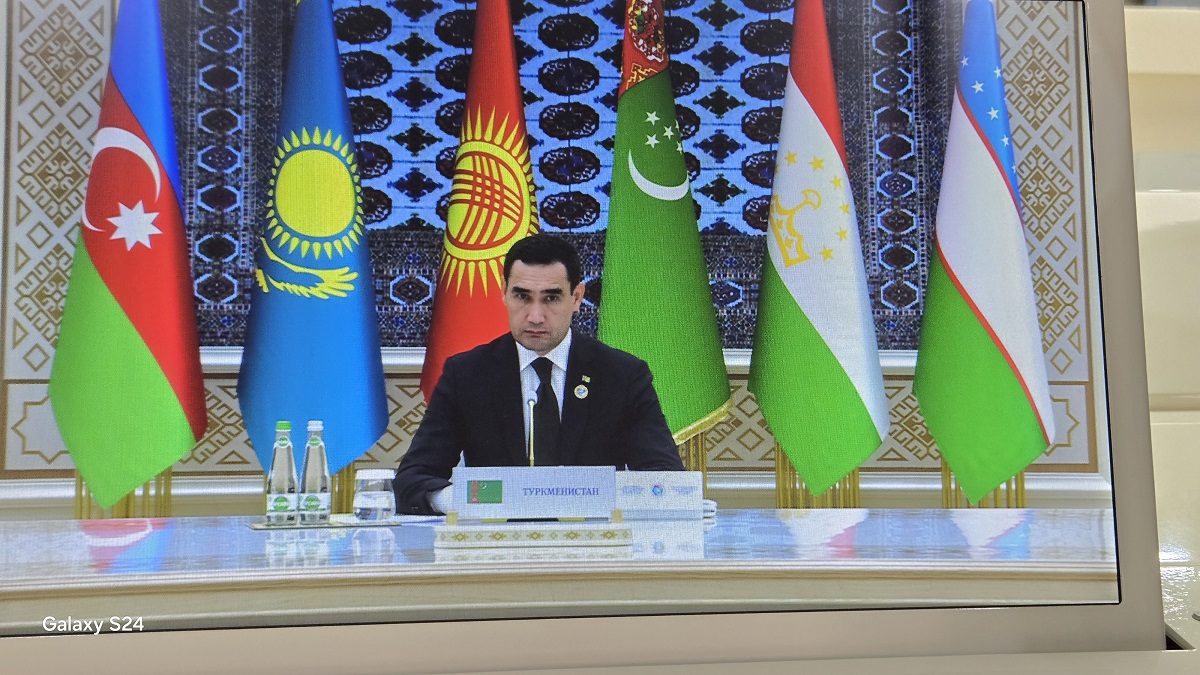
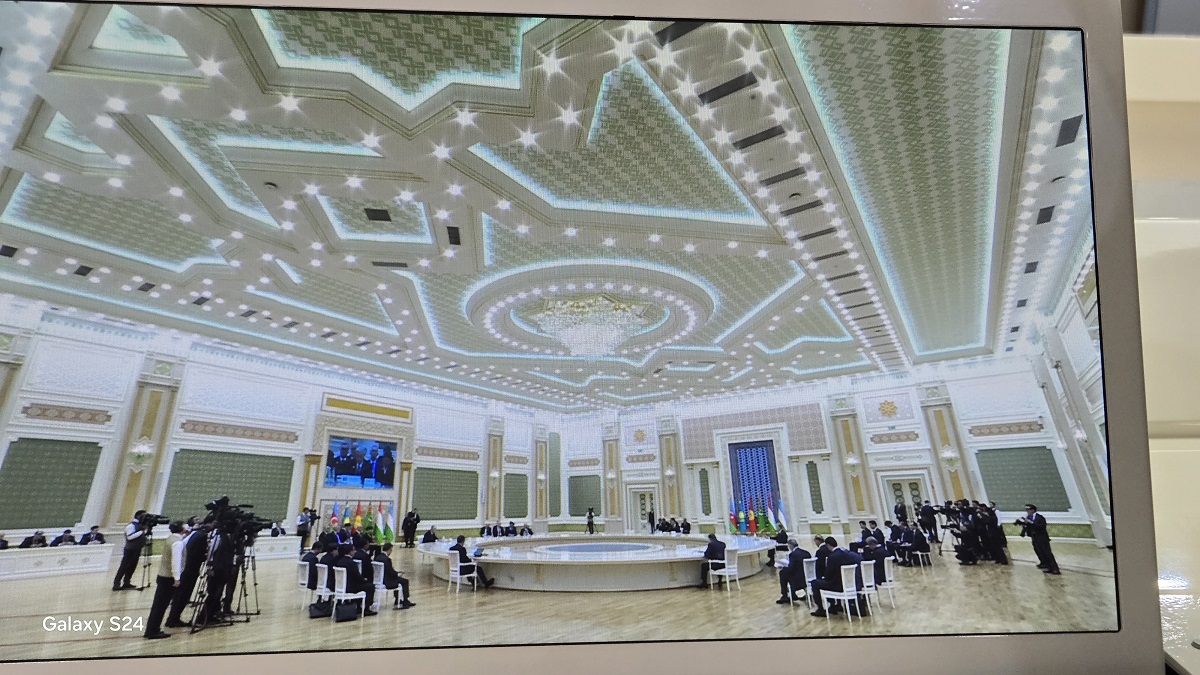
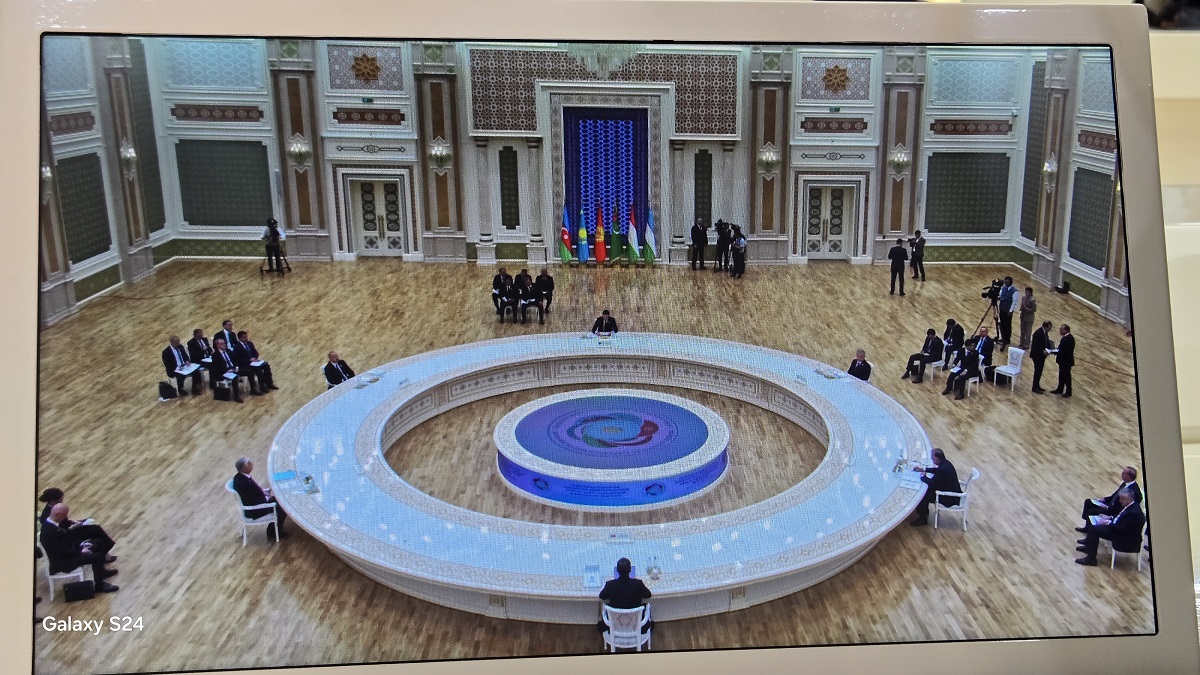
The first consultative meeting of the heads of state of Central Asia and Azerbaijan was held at Awaza on 8 October 2026. President Serdar Berdimuhamedov of Turkmenistan hosted and moderated the meeting.
Executive Synthesis: The Awaza Summit Framework
Format: First Formal Consultative Meeting of the Heads of State of Central Asia and Azerbaijan (“C6”)
Location: Awaza National Tourist Zone, Turkmenistan
Key Takeaways & Strategic Consensus
- Historic Expansion to the “C6” Format:
The primary milestone of the Awaza Summit is the official integration of Azerbaijan into the Consultative Meetings of Central Asian Leaders. The leaders unanimously framed this shift as a natural geopolitical and economic consolidation, uniting the two shores of the Caspian Sea into a single strategic space.
The Summit was officially named as Central Asia and Azerbaijan Consultative Summit. There was no mention of C6 in the official positioning. Nevertheless, it is popularly described as C6.
- The Caspian Infrastructure & Transport Axis:
The Middle Corridor (Trans-Caspian International Transport Route) served as the central economic pillar of the speeches. Leaders highlighted double-digit growth in transit volumes along this route and prioritized the synchronicity of railway/port infrastructure, elimination of tariff/customs bottlenecks, and the completion of the seabed “Digital Silk Way” fiber-optic cable.
- Industrial Integration & “Six Economies, One Product”:
Transitioning from simple raw commodity exchange to complex value chains was a shared priority. Uzbekistan introduced the operational formula “Six Economies, One Product”, urging the creation of joint cross-border industrial parks, shared investment funds, and specialized regional manufacturing hubs.
- Resource Management: Water, Green Energy & Critical Minerals:
The summit addressed twin existential challenges: water scarcity and energy transition. Priorities include a proposed Central Asian Framework Convention on Water Resources Management, a joint Green Development Strategy, an interconnected Caspian Green Energy Transmission Corridor, and a unified digital map for Critical Mineral Reserves.
- Digital & AI Alignment:
The leaders prioritized digital connectivity, endorsing joint artificial intelligence frameworks, regional data center networks, and specialized platforms such as a unified Central Asia–Azerbaijan E-Commerce Platform.
- Chairmanship Succession:
Following Turkmenistan’s successful 2026 tenure, Azerbaijan will assume the chairmanship of the Consultative Format for 2027, reflecting the institution’s expanded footprint across Trans-Caspian Eurasia.
Detailed Synthesis by Sector
1. Economic Cooperation, Trade & Industrial Policy
- Target Trade Expansion: Regional trade stood at $13 billion in the past year (roughly 8% of total trade volume). President Tokayev proposed a joint action plan to raise intra-regional trade to at least $20 billion.
- Industrial Chains: Leaders agreed to move beyond basic buy-and-sell commerce toward deep industrial co-production. President Mirziyoyev called for regional financial-technical mechanisms to back joint ventures in agriculture, light industry, construction materials, and refining.
- Capital & Investment Funds: President Aliyev highlighted the expansion of joint investment funds established between Azerbaijan and Kazakhstan, Uzbekistan, and Kyrgyzstan, each backed by hundreds of millions of dollars to fund cross-border production.
- Unified E-Commerce Platform: President Japarov proposed creating a centralized regional e-commerce infrastructure—supported by Kyrgyzstan’s High Tech Park—to allow seamless digital purchases and eco-logistics tracking across member states.
- Critical Minerals Alliance: Uzbekistan proposed a Regional Alliance on Critical Minerals backed by a shared digital geological map to attract international investors to the region’s rare-earth and critical raw material deposits.
2. Transport, Transit & Trans-Caspian Logistics
- Middle Corridor Optimization: Trans-Caspian cargo volumes expanded significantly in recent years. To sustain this momentum, leaders called for unified end-to-end transit tariffs, digitized cargo manifests, streamlined border checks, and coordinated port expansion on both sides of the Caspian Sea.
- Key Strategic Infrastructure Projects:
- Railways: Rapid progress on the China–Kyrgyzstan–Uzbekistan line, the Moiynty–Taub, Darbaza–Maktaaral, and Bakhty–Ayagoz rail links.
- Road & Maritime: Arteries linking western China, Central Asia, the Caspian, and Europe, alongside the Caspian seabed Digital Silk Way fiber-optic project.
- Governance Body: Uzbekistan offered to host the inaugural meeting of a newly envisioned regional Transport Council.
3. Energy, Water Security & Climate Resilience
- Caspian Green Energy Corridor: Joint initiatives between Azerbaijan, Kazakhstan, and Uzbekistan to build trans-Caspian green power transmission lines to export renewable electricity to international markets.
- Water Resource Governance: President Tokayev urged adoption of a Central Asian Framework Convention on Water Resources Management and backed an international water organization under UN auspices. President Japarov renewed calls for a Regional Center for Energy Efficiency and Resource-Saving Technologies in Bishkek.
- Environmental & Ecological Action:
- IFAS Leadership: Uzbekistan will assume the presidency of the International Fund for Saving the Aral Sea (IFAS) next year, focusing on digital water monitoring and modernization.
- Clean Air Consortium: Implementation of the “Clean Air Central Asia” initiative to mitigate industrial pollution and urban smog.
- Regional Oil Refining Proposal: President Rahmon reiterated the necessity of building a high-tech regional oil refinery to fulfill the combined fuel demands of the member states.
4. Artificial Intelligence, Digital Ecosystems & Innovation
- Responsible AI & Governance: Kazakhstan introduced a draft Declaration on the Responsible Use of Artificial Intelligence for Central Asia and Azerbaijan, while proposing a regional AI Partnership Program across universities and tech hubs.
- Shared AI Infrastructure: Uzbekistan proposed building a unified regional computing infrastructure powered by an interconnected network of national data centers.
- Regional AI Center: President Rahmon highlighted the role of the regional AI center established in Dushanbe to integrate national computing capacities into healthcare, agriculture, and public services.
5. Regional Security, Peace & Geopolitical Stability
- Comprehensive Security Protocols: The assembly affirmed that economic progress depends on regional stability. Strategic responses were outlined to counter terrorism, drug trafficking (specifically synthetic narcotics), organized crime, human trafficking, and cyberthreats.
- Afghanistan Strategy: Leaders emphasized the necessity of a stable, peaceful Afghanistan, committing to continued humanitarian aid, regional infrastructure integration, and structured dialogue regarding transboundary water usage.
6. Humanitarian, Education, Youth & Cultural Space
- Youth Volunteering & Education: President Tokayev proposed hosting a regional Youth Volunteering Forum in 2027 under the banner “Central Asia – A Shared Territory of Good Deeds”. President Mirziyoyev introduced a Regional Atlas of Future Professions and Competencies to align university curricula with upcoming industrial skills shortages.
- Unified Tourism Space: Leaders endorsed a “One Trip, Multiple Countries” travel strategy, proposing a unified regional calendar for sports, cultural, and scientific events, as well as advancing negotiations toward a single regional tourist visa.
7. Institutional Governance & Future Directions
- Format Efficiency & Inventory: President Tokayev recommended that foreign ministries conduct an immediate inventory of the 200+ initiatives proposed since 2018 to purge non-viable plans and focus resources on impactful, high-value projects.
- Consultative Philosophy: The heads of state agreed to preserve the format’s flexible, non-bureaucratic structure, built on consensus, equality, and national sovereignty.
- Next Summit (2027): President Ilham Aliyev and Azerbaijan were formally congratulated on assuming the inaugural chairmanship of the C6 Consultative Format for 2027. /// nCa, 8 October 2026