


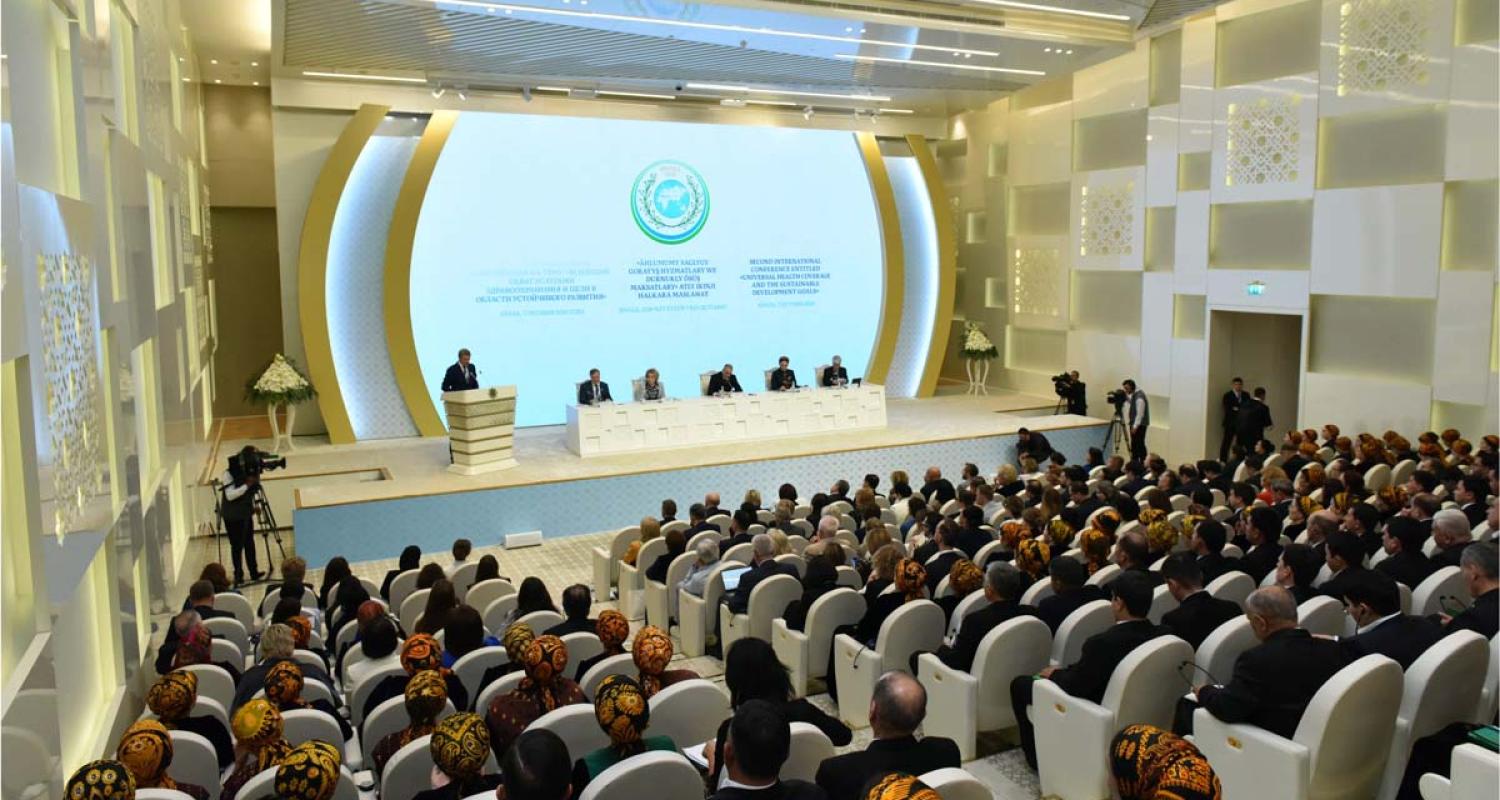
AVAZA, Turkmenistan – A second international conference on universal health coverage in Avaza has moved from broad discussion of healthcare priorities to a more concrete regional policy outcome, following thematic sessions on primary healthcare, access to medicines and sustainable health financing.
The conference, “Universal Health Coverage and the Sustainable Development Goals,” was held on October 7 under Turkmenistan’s 2026 chairmanship of the Commonwealth of Independent States and during the CIS Year of Healthcare. It was organised with the participation of the CIS Interparliamentary Assembly, the Mejlis of Turkmenistan and the World Health Organization’s Regional Office for Europe.
nCa reported on the opening phase of the conference earlier, when the emphasis was on the issues being brought to the table rather than on final decisions. At that stage, participants were discussing the strengthening of primary healthcare, access to medicines, pharmaceutical cooperation, digital health and sustainable healthcare financing. Possible approaches included greater investment in primary care, cooperation on medicines and the use of health-related taxation instruments. We noted at the time that these were priorities under discussion rather than decisions adopted by the conference.
The subsequent sessions have now provided a clearer picture of the outcome.
The conference concluded with the adoption of a Final Document, giving the two-day Avaza health discussion a formal outcome directed towards strengthening interregional and international cooperation and pursuing concrete objectives in healthcare.
The first thematic session focused on primary healthcare as the foundation of universal health coverage. Participants discussed modernising primary medical and preventive care, the use of digital technologies and the exchange of experience among countries. The discussions also examined the preparation of qualified primary-care personnel and the role of new technologies in improving the efficiency of healthcare systems. Recommendations were developed to strengthen cooperation in primary and preventive healthcare.
The second session examined access to medicines and medical products, including the contribution that parliamentary cooperation and model legislation can make to improving the legal framework. Participants discussed quality and affordability, regulatory experience and the reliability of supply chains for medicines and medical equipment.
The third thematic session addressed perhaps the more politically sensitive subject of health-related taxation and sustainable healthcare financing. Participants examined the experience of using taxation of products such as tobacco, alcohol and sugar-containing products as part of broader public-health policy, while also considering the role of parliaments in shaping such policies.
The discussions took place against a broader CIS effort to make healthcare a sustained area of intergovernmental cooperation. CIS Secretary General Sergei Lebedev said the organisation’s work during the Year of Healthcare covers primary medical care, disease prevention, medicines and medical products, telemedicine and other areas of cooperation. He also pointed to joint projects, expert exchanges and efforts to develop model legislation.
For Turkmenistan, the conference also provided an opportunity to present its own healthcare priorities. Turkmen officials highlighted the continuing implementation of the Saglyk State Programme, development of medical infrastructure, digitalisation, telemedicine, artificial intelligence and the legal framework surrounding modern medicine. Cooperation with the WHO, UNICEF and other international organisations was also emphasised.
The presence of senior political and health officials gave the conference a broader character than a specialist medical meeting. Valentina Matviyenko, Chairwoman of Russia’s Federation Council and Chair of the CIS Interparliamentary Assembly Council, stressed the importance of protecting children’s health, improving health legislation and expanding scientific and research cooperation within the CIS.
The central question now is how much of the Avaza discussion will translate into practical cooperation at national and regional levels. The Final Document provides the formal framework, but implementation will ultimately depend on decisions by governments, parliaments and health institutions.
More information on the precise contents and follow-up mechanisms of the Final Document could become available as the participating institutions publish further details. For the moment, the significant development is that the Avaza conference has moved beyond an exchange of national experiences and priorities to a formally adopted outcome.
That gives the healthcare meeting a relevance extending beyond the conference itself: universal health coverage is increasingly being treated not only as a medical objective, but as a question of legislation, financing, prevention, technology and regional cooperation. /// nCa, 8 October 2026