


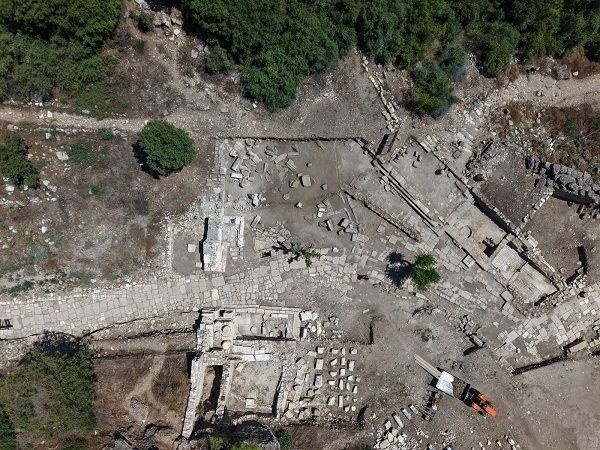
Home to countless civilisations over millennia, Anatolia holds an extraordinarily rich heritage beneath its soil. Today, traces of this layered past continue to emerge across Türkiye, brought to light through archaeological research and excavations conducted throughout the country.
From Flowing Fountains to Well-Preserved Statues
One of the outstanding destinations where Türkiye carries out some of its most high-calibre archaeological work is Burdur, located in the heart of the Mediterranean’s Lakes Region. Burdur’s Kibyra and Sagalassos stand out as its most significant and captivating ancient sites. Imagine an ancient city where a fountain built thousands of years ago still flows today, inviting visitors on a journey back through time. With their meticulously restored fountains, Sagalassos and Kibyra offer precisely this atmosphere. In fact, these two ancient cities have also been capturing global archaeological attention of late, not only for their fountains but also for a series of extraordinary finds. Among the most striking are statues recovered almost entirely intact.
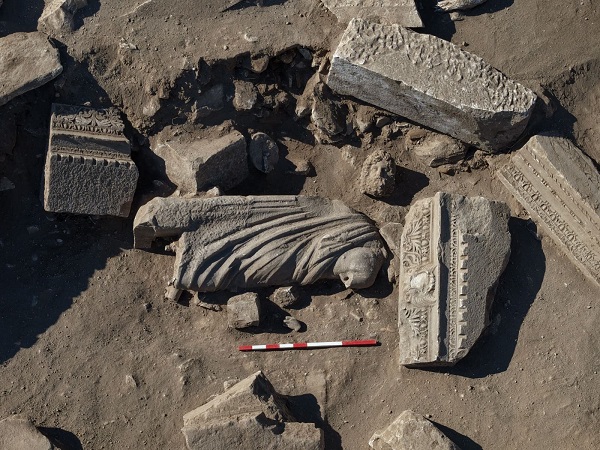
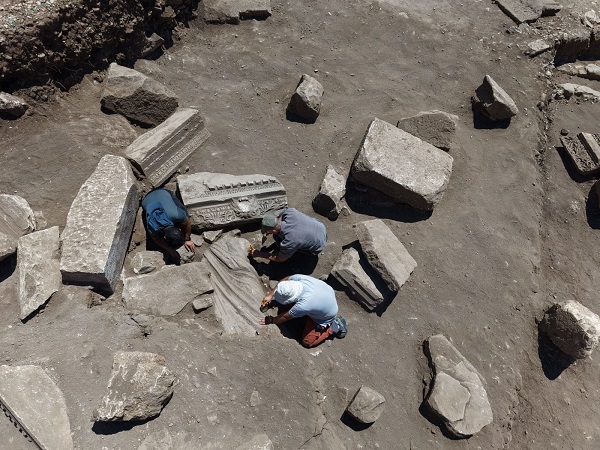
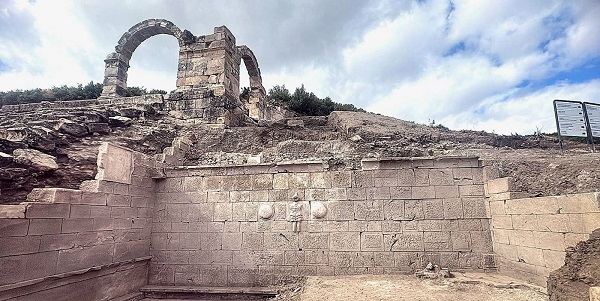
Kibyra is an important city of Roman civilisation known for its symmetrical layout designed so that structures do not obstruct each other’s views. Among the latest finds shedding light on the city’s Roman history are two statues of Emperor Hadrian, uncovered in 2025 during excavations at the propylon (the monumental entrance gate). Alongside these nearly fully intact statues, the city’s theatre also stands out for its rich archaeological yield and restorations. Kibyra greets visitors with one of Anatolia’s most magnificent stadiums—a structure with a capacity of approximately 10,000 that once hosted legendary gladiator battles. Kibyra has recently seen the restoration of the stadium’s three entrance arches, as well as a Hellenistic-period monumental tomb in the stadium’s eastern seating section. Adding to these remarkable discoveries, archaeologists unearthed a relief depicting a tropaion—an ancient victory trophy—beside the stadium’s northern wall.
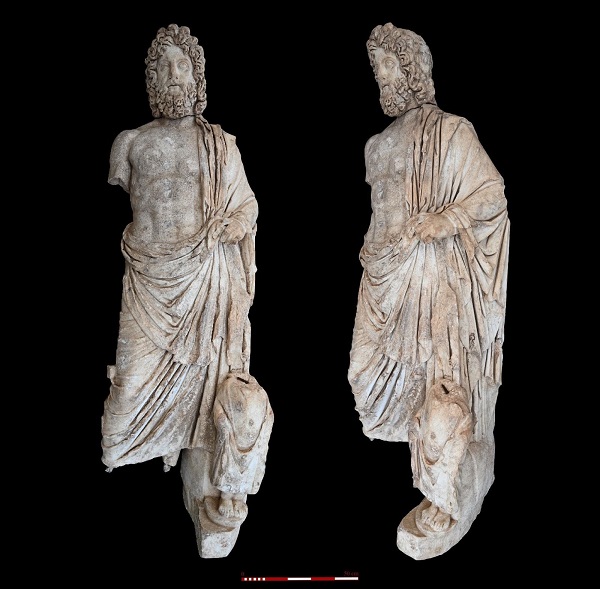
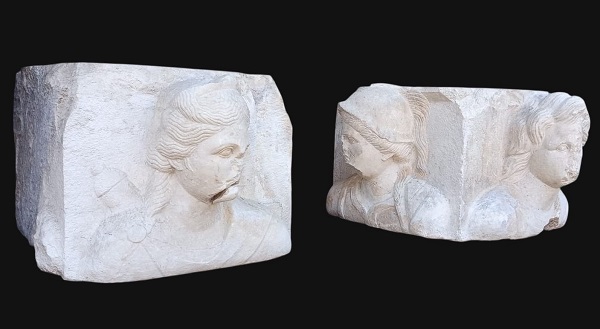
In Sagalassos, the prominent city of the Pisidia region during the Roman Imperial Period, excavations at the odeon yielded another remarkable discovery in 2025: a statue of a young male depicted with a shepherd’s crook and a goat skin. With almost all its details preserved except for the head and arm, the statue is believed to represent the God Pan. At the ancient site on the UNESCO World Heritage Tentative List, researchers uncovered high reliefs depicting Artemis, Ares, and Apollo in 2024 at a nymphaeum along Southeast Street.
Türkiye’s Sculptural Treasures Expanded
Another notable Mediterranean site with striking new sculpture discoveries is in Antalya, the heart of the Turkish Riviera. As part of the “Legacy for the Future” Project, excavations at the Ancient City of Aspendos uncovered a 2.20-metre-tall marble statue group depicting Asclepius, the god of medicine, alongside his son and helper Telesphorus, the symbol of healing. Found almost fully intact, this sculpture provides key insights into the role of health and healing cults in Aspendos. Dated to the last quarter of the 2nd century, it also reflects the era’s sculptural style. Famous for its massive, well-preserved Roman-era theatre, Aspendos also welcomes visitors at night with special lighting throughout the summer as part of the Night Museums Project.
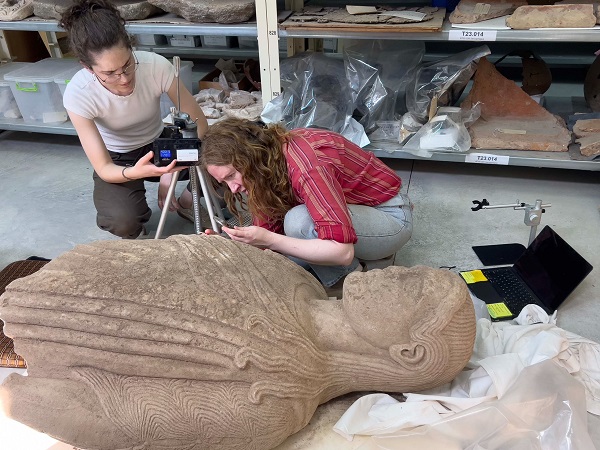
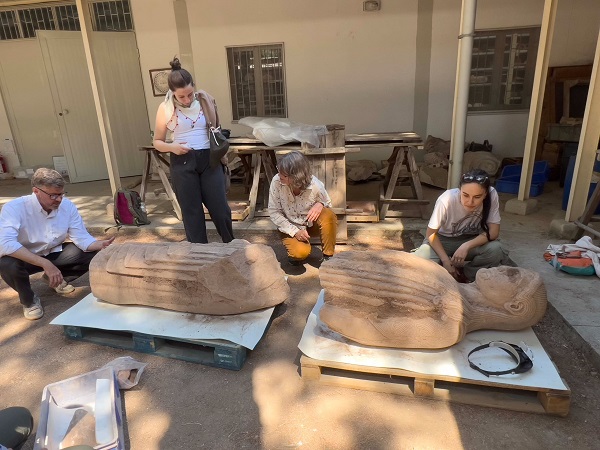
Meanwhile, another intact statue was discovered in the Aegean region at the ancient city of Sardis in Manisa, which is listed on the UNESCO World Heritage List. Known as the capital of the Lydian Kingdom and home to one of the Seven Churches mentioned in the Book of Revelation, the ancient site yielded a statue of a young man dating back to the first half of the 5th century BCE. Uncovered in two pieces, this remarkably well-preserved colossal statue will soon be accessible to travellers at the Manisa Museum. Standing 2.2 metres tall, the marble sculpture offers invaluable insights into the era’s art and social life through its monumental scale, exceptional preservation, and clothing details that reflect Lydian culture.
As excavations continue to deepen our understanding of Anatolia’s past, Türkiye’s archaeological landscape remains a story still being written. For travellers drawn to history and cultural routes, every discovery opens a new window onto this extraordinary legacy—and brings a new journey into view. ///nCa, 14 September 2026 (in cooperation with the Embassy of Türkiye to Turkmenistan)