


The Court of Arbitration hearing the Indus Waters Western Rivers case has ruled that the Indus Waters Treaty of 1960 remains fully in force, rejecting India’s position that the Treaty is suspended or terminated following its April 2025 declaration holding the agreement “in abeyance.”
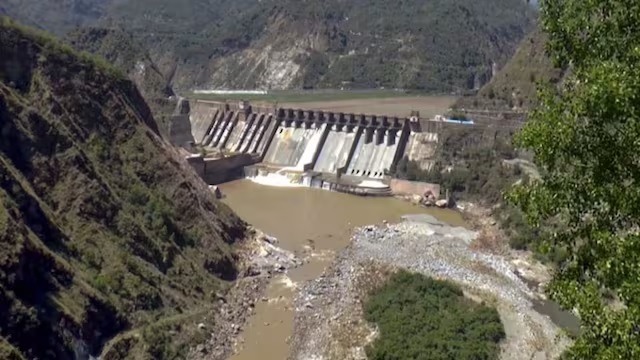
In a parallel order issued the same day, the Court also imposed interim measures barring India from continuing concrete works above specified levels at the dam wall and power intake of the Ratle Hydro-Electric Plant (RHEP) on the Chenab River, pending a decision from the Treaty’s Neutral Expert.
The two rulings — an Award on the Status of the Indus Waters Treaty and an Order on Interim Measures — were issued in proceedings brought by Pakistan against India under Article IX and Annexure G of the Treaty, in a case that has been before the Court since 2016.
Background
Pakistan initiated arbitration in August 2016 over the design of Indian run-of-river hydropower projects on the Western Rivers — the Indus, Jhelum, and Chenab — with particular focus on the Kishenganga and Ratle plants. India, for its part, sought a separate Neutral Expert process the same year to examine technical questions on the same two projects. The World Bank paused appointments to both tracks between 2016 and 2022, after which the Court was empanelled and the Neutral Expert appointed. The Neutral Expert’s final decision on the RHEP and KHEP is not expected until around July 2027. /// nCa, 1 September 2026 [photo credit – CNBC TV 18]