


On 1 September, Knowledge Day, Turkmenistan inaugurated two major university campuses equipped with high-tech laboratories, seismic simulators, and robotics facilities — the buildings of the Institute of Architecture and Construction in Ashgabat and the Seyitnazar Seydi Pedagogical Institute in Turkmenabat. President Serdar Berdimuhamedov took part in the opening ceremonies. During the celebrations, the universities were presented with international certifications: the Institute of Architecture and Construction became the first university in the CIS to receive five ISO standards simultaneously.
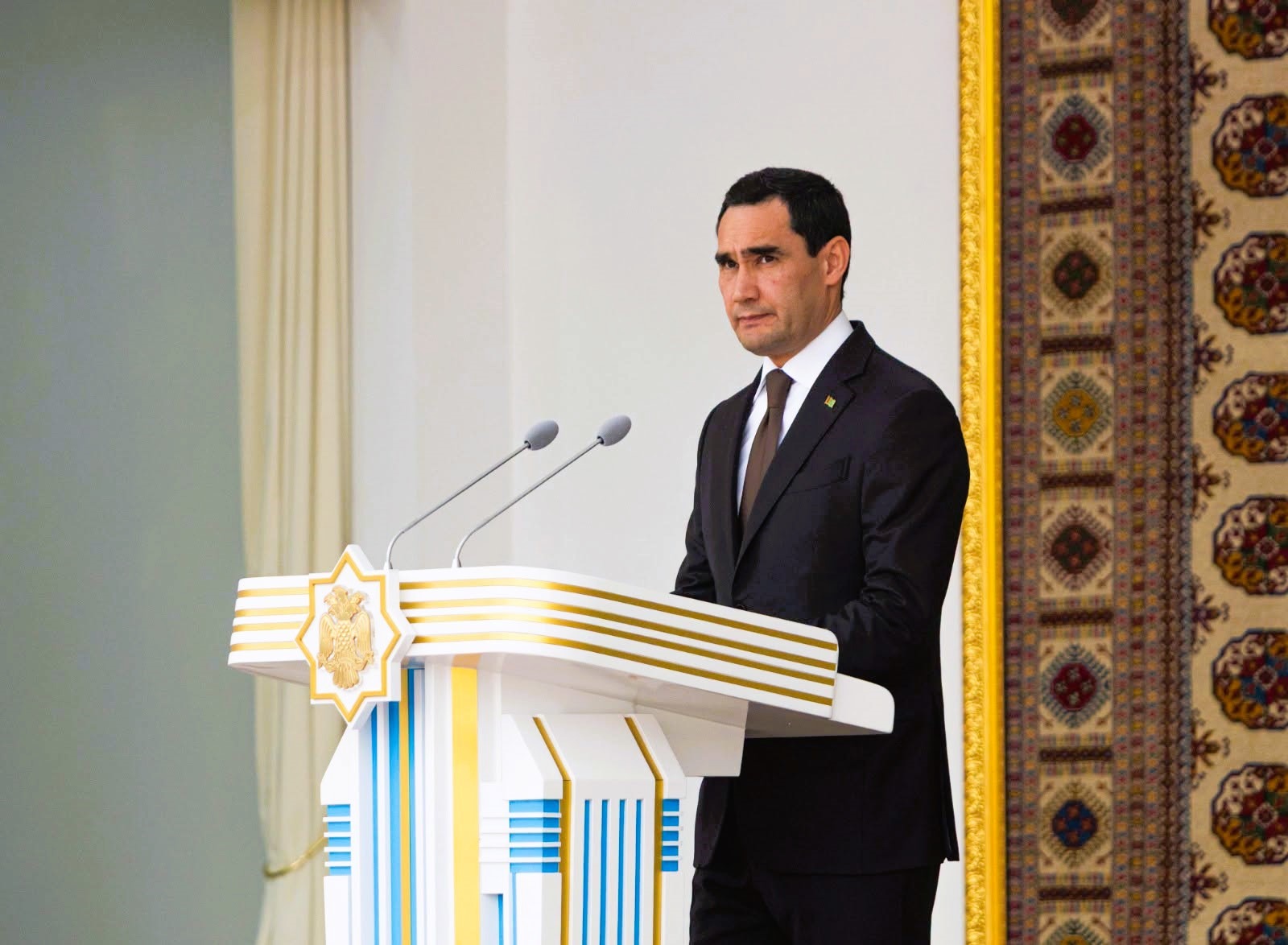
Speaking at the ceremony in Ashgabat, the head of state noted that the comprehensive development of science and education, and raising them to a qualitatively new level, remain among the government’s policy priorities.
“Turkmenistan is carrying out a set of programs to improve the national education system and strengthen its infrastructure. Particular attention is being paid to introducing advanced scientific achievements into this field, training highly qualified specialists, and expanding targeted international cooperation,” the President said.
Turkmen State Institute of Architecture and Construction
Built by Turkmen private companies, the new campus of the Institute of Architecture and Construction spans 32.2 hectares.
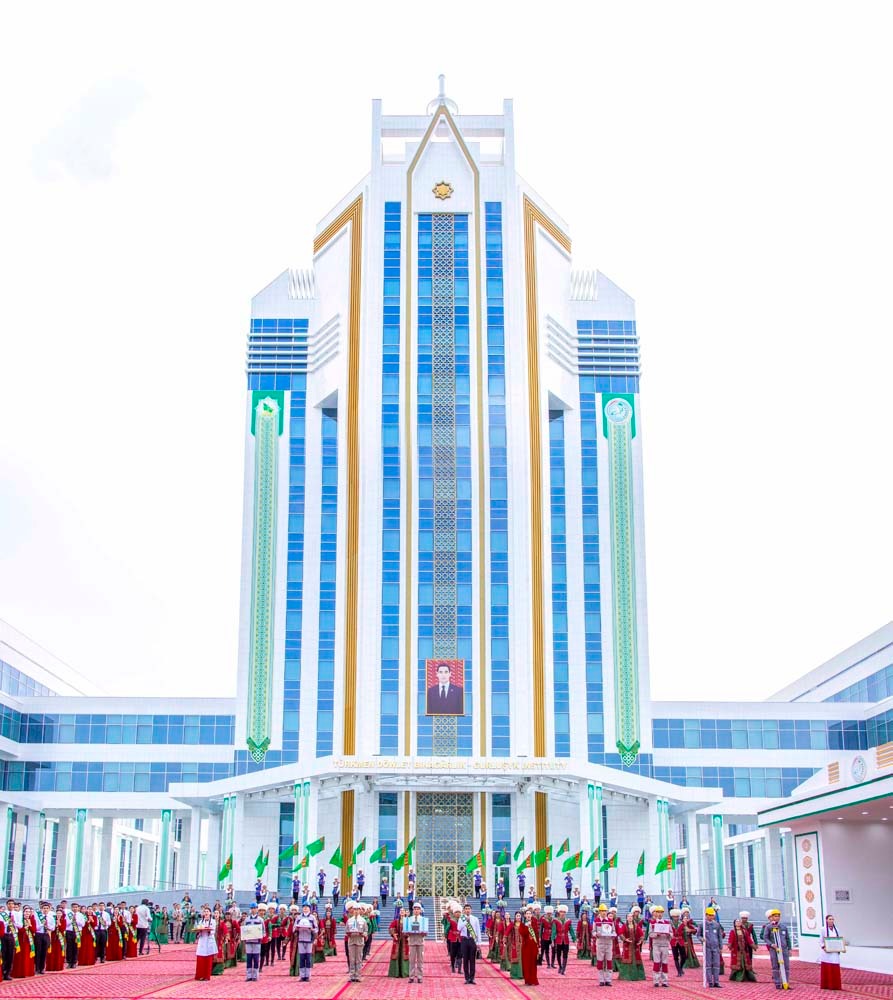
The complex includes a 13-story main building, 8 faculties, 28 academic departments, a modern library, and a conference hall. The campus is designed for 5,000 students, with a dormitory built to house 2,600 of them. Faculty and staff were also considered — a residential complex with 80 apartments was built for them.
The new campus’s main advantage is its advanced research facilities, where students will train on equipment from leading global manufacturers.
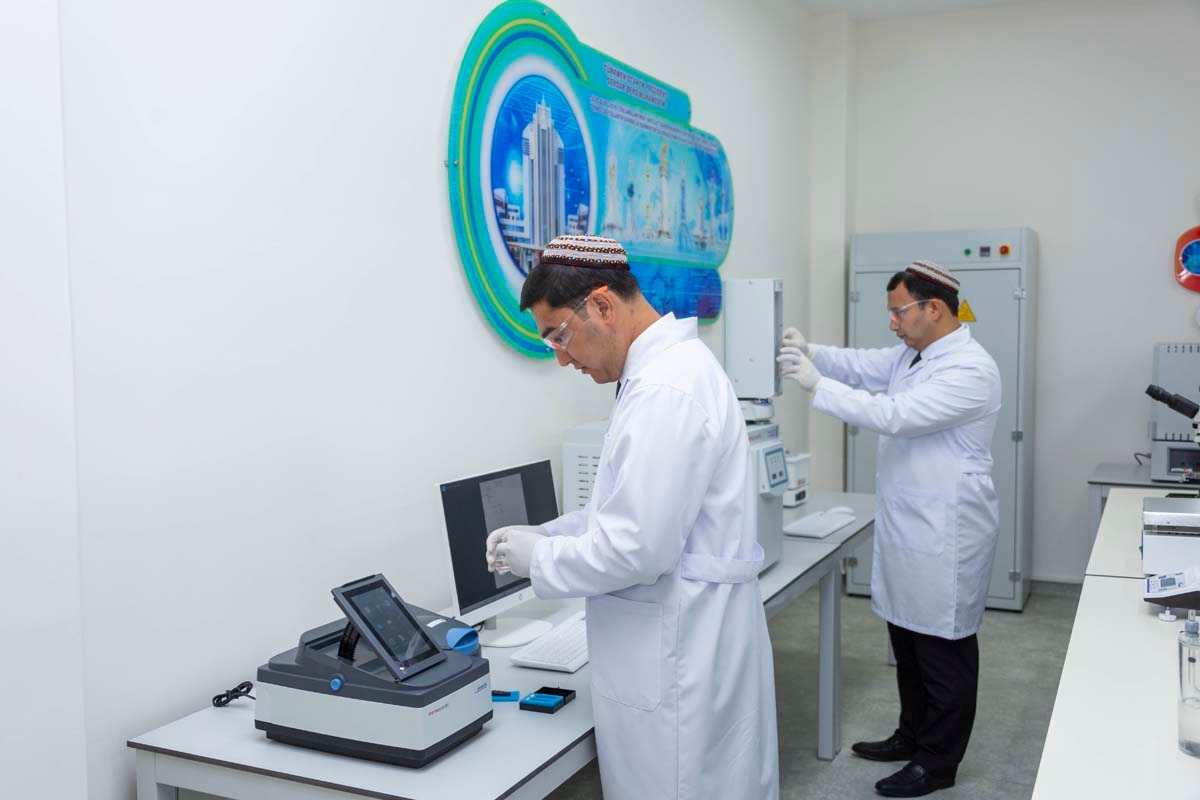
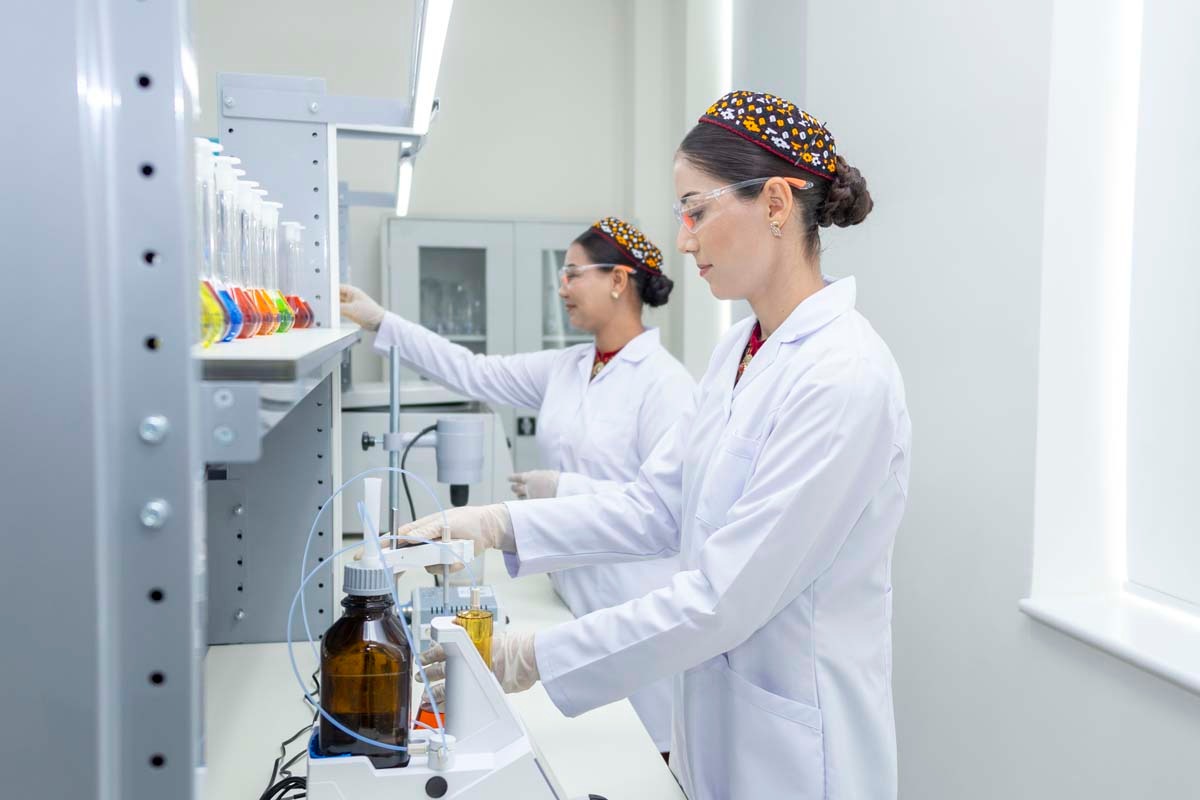
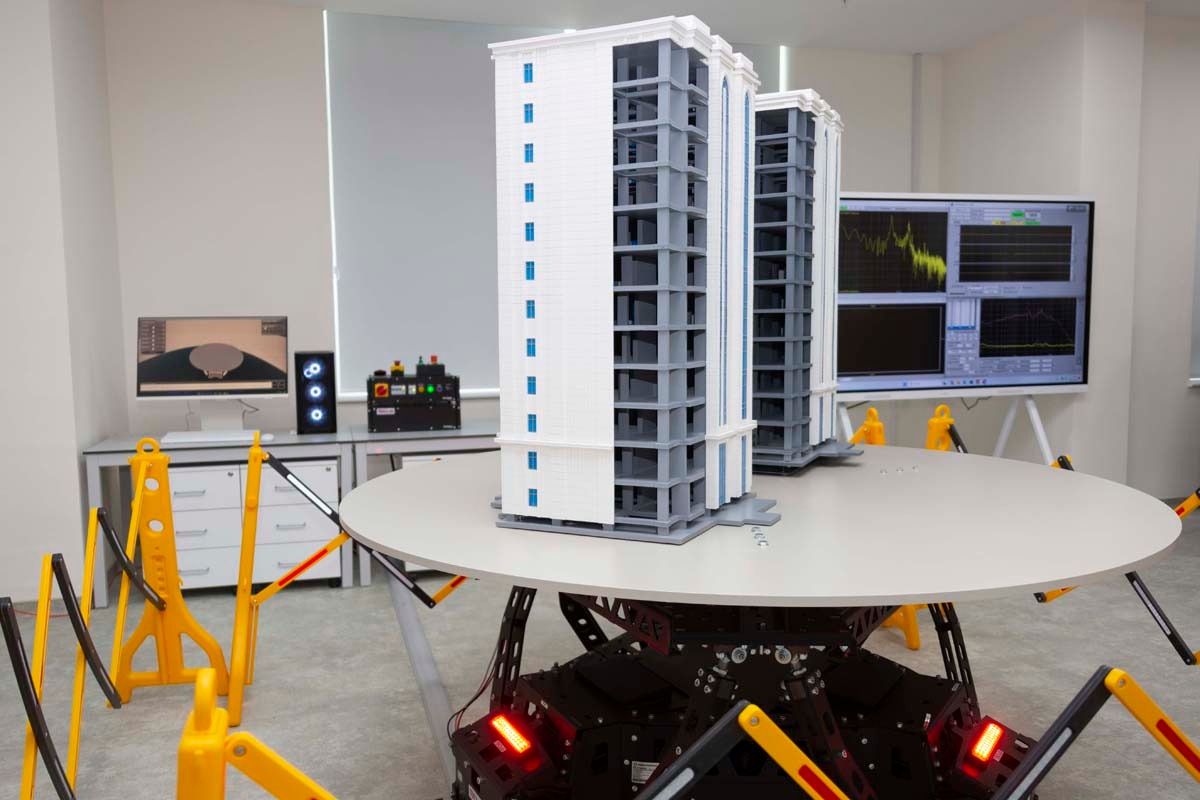
The experimental laboratory of architecture and earthquake-resistant construction has become a genuine testing ground. The Motion Systems PS-6TM-550 dynamic platform simulates real underground tremors: scaled-down building models fitted with sensors are placed on the platform to measure how vibrations affect different types of structures, while specialized software generates a 3D model of how the structures behave during an earthquake, displayed directly on screen.
This seismic monitoring is complemented by highly sensitive sensors from the Italian brands Moho and Sara Electronic Instruments, which can detect micro-vibrations and monitor the stability of large bridges and industrial facilities.
Swiss Leica systems are used for geodetic measurements, while the strength of concrete, paints, and building materials is analyzed using equipment from the Turkish company UTES.
VR technology brings the learning process as close as possible to real-world production conditions.
Canadian CM Labs simulators teach safe operation of heavy construction machinery, letting students practice excavation and load-lifting in a virtual environment.
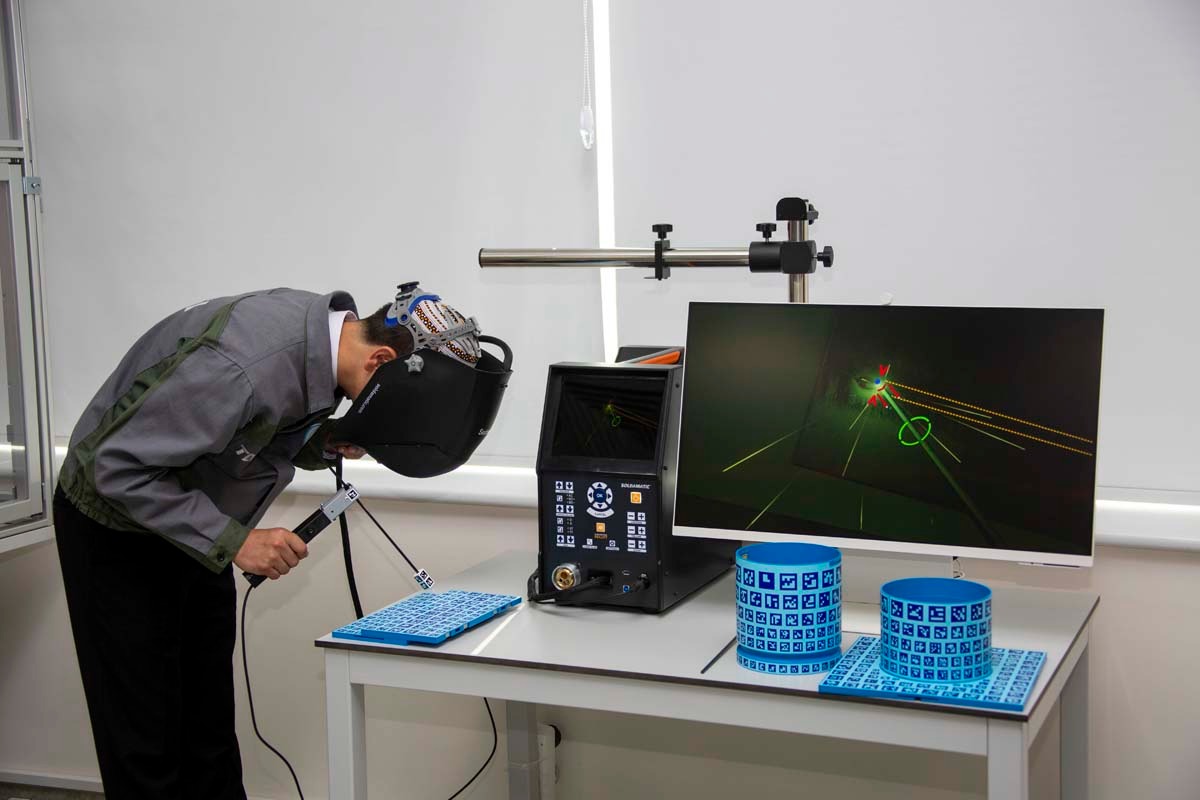
The Spanish VR system Soldamatic, by Seabery, allows future specialists to master spot welding and assess weld quality using augmented reality.
The German Lucas Nülle complex, featuring a Kuka CRK 11 industrial robot, handles process automation — the robot picks up parts on its own and tests the composition of workpieces.
In the general chemical technology laboratory, the focus is on high-precision materials analysis. A German Spectrocube X-ray fluorescence spectrometer (Spectro) determines the elemental composition of samples within seconds, while expert-grade chromatography equipment breaks down chemical mixtures into their components in microliter-scale volumes.
Seyitnazar Seydi Turkmen State Pedagogical Institute in Turkmenabat
That same day, the President took part online in the opening of the building complex of the Seyitnazar Seydi Turkmen State Pedagogical Institute in Turkmenabat, in Lebap province. Designed to accommodate 5,000 people, the complex was built by a private Turkmen company.
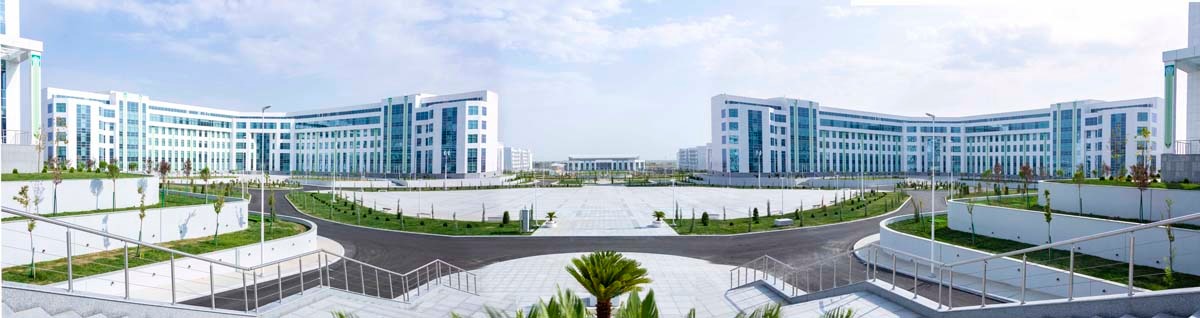
The institute’s new building complex includes a main building, an assembly hall, academic buildings, a dining hall seating 1,000, a library, six fully equipped dormitories housing 2,000 students, sports facilities, and the necessary technical infrastructure.
The academic buildings house dozens of laboratories where students carry out research work, covering chemistry, biology, physics, basic labor and technology skills, special-needs education (defectology), and other fields, all equipped with modern equipment.
The institute’s new building complex is also home to museums of history, archaeology and ethnography, and flora and fauna.
The institute’s library is designed to hold up to 1 million books, with a reading room seating 700 and a digital library section seating 100.
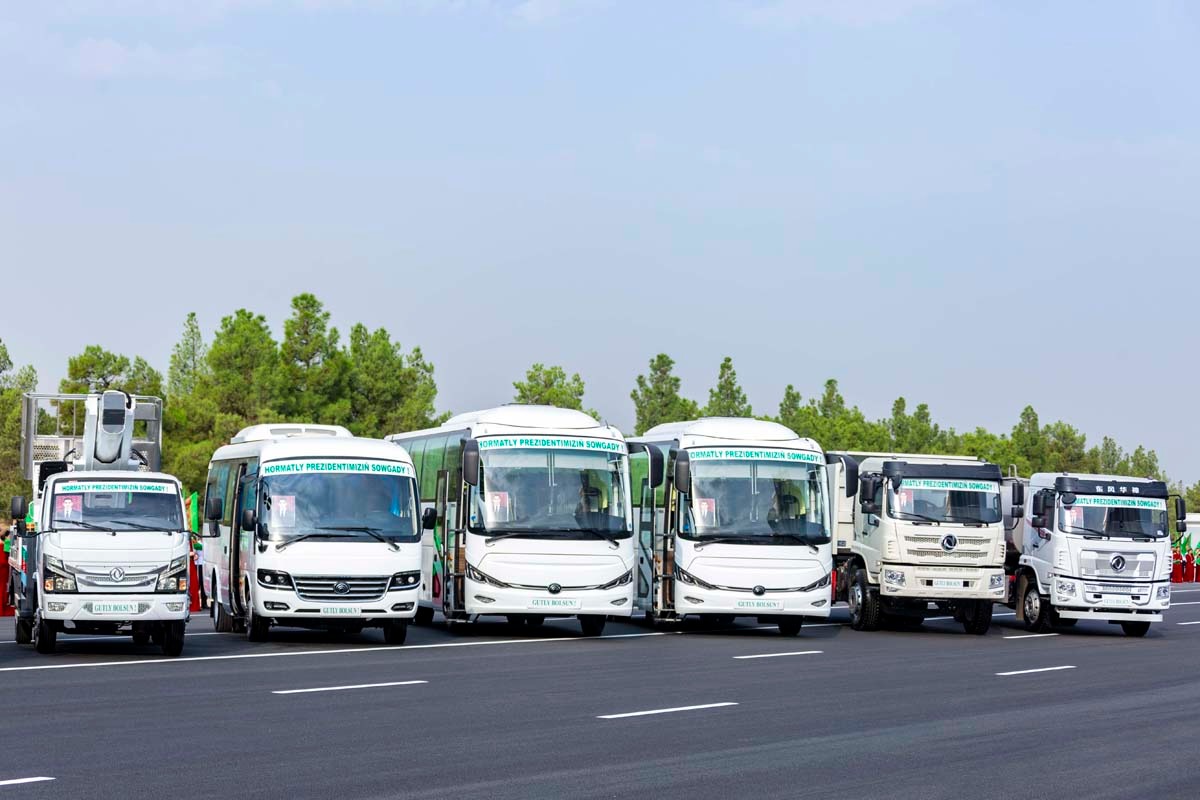
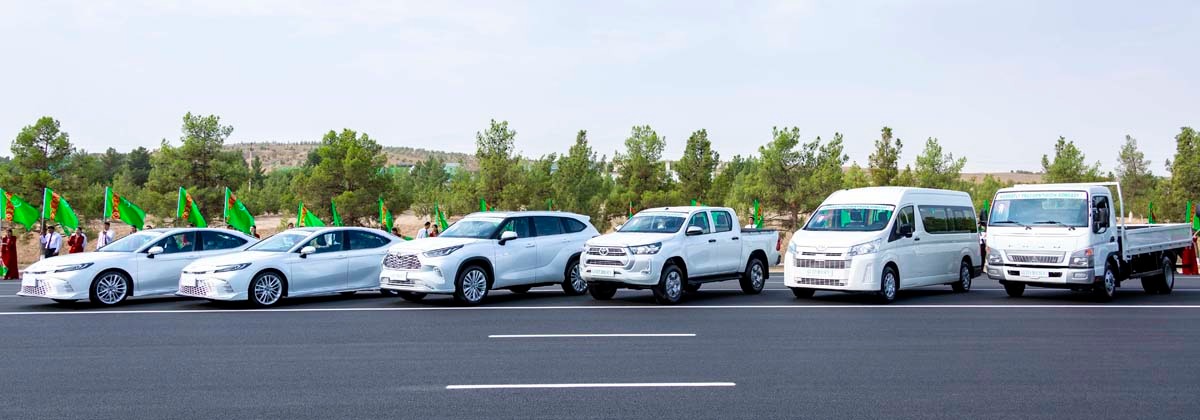
At the close of the ceremony, the President presented both universities with new cars as gifts.
International Recognition
The opening of the new campuses immediately established both universities as world-class educational institutions.
The Turkmen State Institute of Architecture and Construction became the first higher education institution not only in Turkmenistan but across the entire CIS to simultaneously receive five prestigious ISO certifications from the internationally recognized organization CERT International.
This package of standards confirms the institute’s excellence across several key areas: ISO 9001:2015 for quality management systems, ISO 14001:2015 for environmental management, ISO 45001:2018 for occupational health and safety management, ISO 21001:2018 for educational organization management, and ISO 27001:2022 for information security management.
The new architectural campus’s environmental sustainability drew particular attention from the international community. The United Nations Development Programme (UNDP) recognized the institute with a series of “green” certifications focused on energy efficiency, water conservation, and sustainable energy. UNDP also presented the university with a Certificate for Water Resource Conservation and Management, a Certificate for Energy Efficiency and Monitoring, and a Certificate for Education and Professional Skills Development.
Another technological milestone was the launch of an authorized Certiport examination center at the university — Certiport being part of the international Pearson VUE network. This CATC status gives students and industry professionals direct access to exams that certify their digital competencies according to standards recognized worldwide.
The international recognition earned by the Seyitnazar Seydi Turkmen State Pedagogical Institute was equally significant. The university officially joined UNESCO’s International Association of Universities, and UNESCO’s specialized Institute for Information Technologies in Education marked the launch of the high-tech complex with a special letter of commendation.
UNICEF also praised the new campus’s educational initiatives, honoring the institute for its strategic contribution to developing inclusive education and social services in Turkmenistan. The university additionally received certificates from Russia’s Naberezhnye Chelny State Pedagogical University and the “Contribution to the Future” foundation. ///nCa, 2 September 2026 (based on materials from the State News Agency of Turkmenistan, TDH)