


Ashgabat, Turkmenistan – SOCAR will once again serve as Premier Partner of the 31st International Conference and Exhibition “Oil & Gas of Turkmenistan – OGT 2026”, to be held in Ashgabat on 21–23 October 2026.
The partnership reflects both SOCAR’s expanding international presence and the growing strategic importance of energy cooperation between Azerbaijan and Turkmenistan.
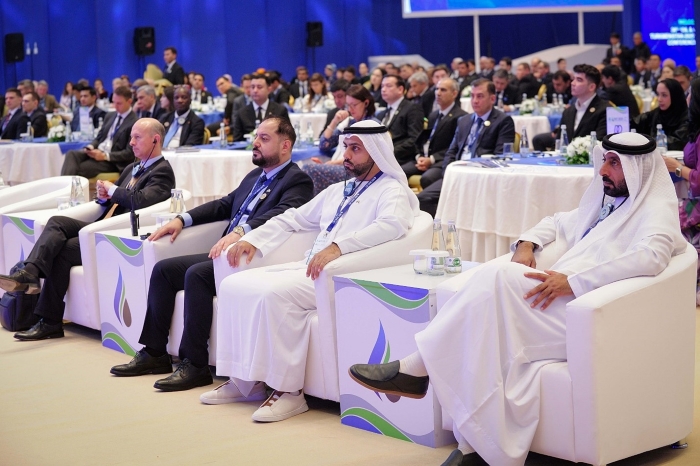
OGT 2026, Turkmenistan’s flagship international energy forum, will bring together national and international energy companies, investors, financial institutions, technology providers, and senior decision-makers from across the global energy value chain.
SOCAR’s participation comes at a particularly significant time for the company as it continues to expand its upstream, downstream, trading, gas, and international investment activities while advancing a long-term strategy centred on energy security, innovation, digitalisation, and the energy transition.
Under its Corporate Strategy to 2035, SOCAR is pursuing continued international growth while strengthening operational efficiency, technological capability, and lower-carbon development.
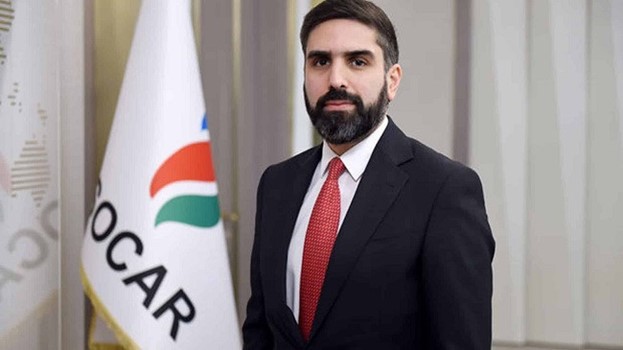
At OGT 2025 in Ashgabat, Rovshan Najaf highlighted the growing importance of cooperation between Azerbaijan and Turkmenistan in shaping the future of the Caspian energy region, noting:
“Together, our partnership positions the Caspian region as a strategic centre for sustainable energy.”
That message has become increasingly relevant as cooperation between the two countries broadens across energy, transport, trade, connectivity, and sustainable development.
From the Caspian to a growing international portfolio
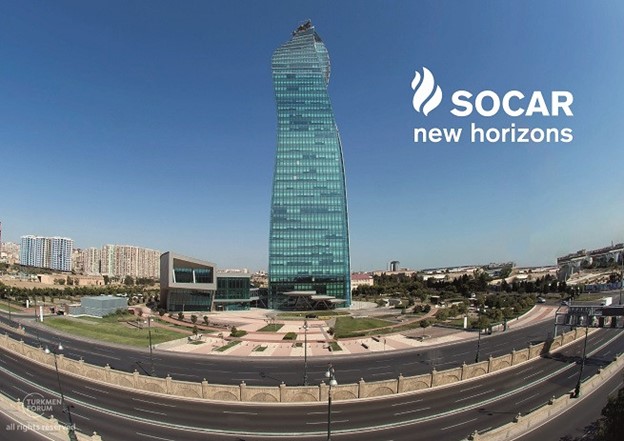
SOCAR today operates across a broad energy value chain, including exploration and production, transportation, refining, petrochemicals, trading, marketing, and energy infrastructure, while also developing new areas associated with the global energy transition.
In recent years, the company has accelerated the geographic diversification of its international portfolio.
One of its most significant recent developments has been SOCAR’s expansion in Italy, including the acquisition of 99.82% of Italiana Petroli, strengthening the company’s downstream footprint in one of Europe’s major energy markets.
With a history spanning more than 90 years, IP has played a significant role in Italy`s mobility and energy security, operating an integrated platform that includes two refineries, storage facilities, logistics, and an extensive nationwide retail network. As the European energy landscape continues to evolve, IP becomes part of SOCAR`s international portfolio, reinforcing the company’s presence in the European energy market.
SOCAR has also continued to expand its upstream portfolio.
In January 2025, the company signed an agreement to acquire an effective 10% interest in the Tamar gas field offshore Israel, adding another strategic gas asset to its international portfolio.
In January 2026, SOCAR and Eni signed an agreement under which SOCAR would acquire a 10% interest in the Baleine offshore development in Côte d’Ivoire.
Baleine is one of West Africa’s most important recent offshore developments and represents another step in SOCAR’s growing participation in international upstream projects.
Together, these investments demonstrate a broader corporate strategy in which SOCAR is combining its established Caspian resource base with selected international upstream, downstream and trading assets across Europe, the Middle East, Central Asia and Africa.
Expanding into Central Asia
SOCAR’s growing engagement in Uzbekistan is particularly relevant to the wider development of Central Asia’s energy sector.
In July 2025, SOCAR, Uzbekneftegaz, and the Ministry of Energy of Uzbekistan signed a Production Sharing Agreement for hydrocarbon exploration and potential production in the Ustyurt region.
The project includes a substantial exploration programme involving three-dimensional seismic surveys and subsequent exploration drilling.
The agreement reflects SOCAR’s increasing focus on Central Asia and the Caspian region as areas of long-term strategic importance.
The project reached another important milestone in May 2026, when bp joined the North Ustyurt production-sharing agreement with a 40% participating interest.
Following bp’s entry, the participating interests became bp 40%, Uzbekneftegaz 30%, and SOCAR 30%, with SOCAR remaining operator of the exploration project.
The development illustrates SOCAR’s ability to establish new regional positions while bringing together major international energy companies within collaborative investment structures.
Strengthening Europe’s energy security
Southern Gas Corridor has become a vital component of Europe’s energy framework. It has fundamentally transformed Europe’s energy landscape by opening the EU’s fourth gas supply corridor, ensuring both source and route diversification. It strengthens energy security while supporting the EU’s green transition objectives by providing a cleaner alternative to more carbon-intensive fuels and contributing to system stability during the ongoing transformation of the energy sector.
The commissioning of the Trans Adriatic Pipeline in late 2020 marked a historic milestone, enabling direct delivery of Azerbaijani gas to European markets. This was followed by a new phase of deeper cooperation, which began with the signing of the 2022 Memorandum of Understanding on a Strategic Partnership in the field of energy between Azerbaijan and the European Union. This agreement created a clear framework for increasing export volumes and strengthening long-term collaboration.
Today, Azerbaijani gas is supplied to 16 countries, including 10 EU member states. In 2025, nearly 13 billion cubic meters were delivered to European consumers, marking an increase of around 60% compared to 2021.
SOCAR Trading has meanwhile continued to strengthen the company’s international marketing and trading capability, connecting Caspian resources and wider commodity flows with global energy markets.
Taken together, these developments reflect SOCAR’s transformation into an increasingly diversified international integrated energy group combining upstream production, refining, distribution, gas supply, infrastructure, and global trading.
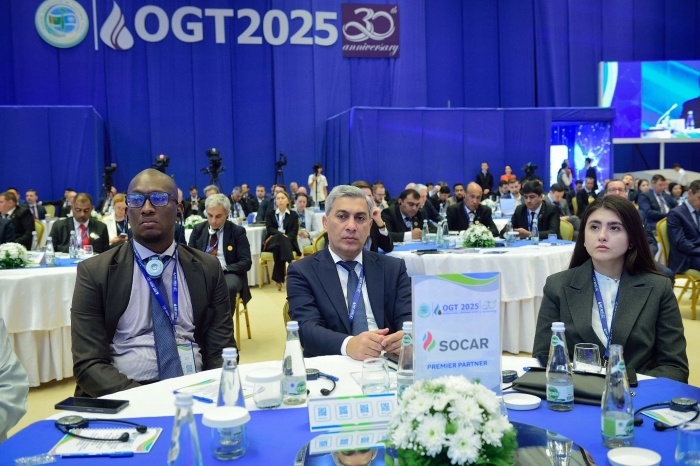
Azerbaijan and Turkmenistan: strategic partners across the Caspian
Against this broader international expansion, SOCAR’s relationship with Turkmenistan remains strategically significant.
The establishment of SOCAR’s representative office in Ashgabat in 2023 provided a permanent institutional platform for closer cooperation with Turkmenistan and its national energy companies.
SOCAR has maintained dialogue with the State Concerns Turkmengas and Turkmennebit, while bilateral discussions between Azerbaijan and Turkmenistan have increasingly addressed Caspian energy cooperation, hydrocarbon development, regional connectivity, and potential new commercial opportunities.
A central symbol of this relationship remains the Dostluk field in the Caspian Sea.
In January 2021, Azerbaijan and Turkmenistan signed an intergovernmental Memorandum of Understanding on the joint exploration and development of the Dostluk hydrocarbon field.
The agreement represented an important milestone in bilateral relations, transforming an issue that had remained unresolved for many years into a platform for cooperation.
Since then, Dostluk has become a symbol of a wider shift in the Azerbaijan–Turkmenistan relationship: from parallel national energy strategies toward greater cooperation in the Caspian.
The significance of this partnership extends beyond one offshore field.
Azerbaijan’s established export infrastructure and Turkmenistan’s substantial hydrocarbon resources create a natural basis for expanded cooperation in areas including energy transportation, trading, transit, technology, investment, and sustainable development.
This cooperation already has a physical dimension: Azerbaijan’s Baku–Tbilisi–Ceyhan (BTC) pipeline, the country’s main oil-export route, already carries crude from both Turkmenistan and Kazakhstan alongside Azerbaijani oil — a working example of the cross-Caspian infrastructure cooperation this partnership could extend further.
Azerbaijan and Turkmenistan also occupy important positions along emerging transport and energy corridors linking Central Asia, the Caspian region, the South Caucasus, Türkiye, and European markets.
Closer cooperation therefore has the potential to contribute not only to bilateral energy relations, but also to the wider economic connectivity of the Caspian region.
A broader regional role
SOCAR’s expanding activity in Central Asia, Europe, and international upstream markets increasingly positions the company as a bridge between the Caspian region and global energy markets.
Its growing involvement in Uzbekistan adds another important Central Asian dimension, while expansion in Italy, international upstream investments and long-term gas supply arrangements further strengthen its global reach.
For Turkmenistan, this creates new possibilities for cooperation with a neighbouring Caspian energy company that combines regional experience with an increasingly international operating platform.
For Azerbaijan, stronger cooperation with Turkmenistan contributes to the development of the Caspian as a region of greater energy integration, connectivity, and investment.
This makes the bilateral energy relationship increasingly relevant to discussions at OGT.
OGT 2026: Energy. Partnership. Progress.
SOCAR’s role as Premier Partner of OGT 2026 therefore reflects considerably more than corporate visibility.
It reflects the relationship between two major Caspian energy producers whose cooperation is becoming increasingly connected to the broader priorities of energy security, investment, regional connectivity, technology, and sustainable development.
OGT 2026 will be held under the theme:
Energy. Partnership. Progress.
The conference will focus on major investment opportunities in Turkmenistan’s energy sector, development of the Galkynysh gas field, diversification of gas export routes, the TAPI pipeline, Caspian offshore opportunities, gas processing, digitalisation, methane reduction, low-carbon technologies and new models of international cooperation.
The event is organised by the State Concern Turkmengas, State Concern Turkmennebit and State Corporation Turkmengeology, in cooperation with Turkmen Energy Forum.
The previous edition of OGT brought together more than 1,400 delegates from 70 countries, reinforcing the conference’s position as one of Central Asia’s leading international energy gatherings.
OGT 2026 will build on that momentum with an even stronger emphasis on investment opportunities, technology, structured business engagement and practical commercial outcomes.
As Azerbaijan and Turkmenistan continue to deepen their strategic partnership across the Caspian and SOCAR expands its international portfolio, OGT 2026 will provide an important platform for translating this momentum into new projects, technologies, investment and long-term cooperation. ///nCa, 27 August 2026 (the material provided by the OGT 2026 Organizers)