


Elvira Kadyrova
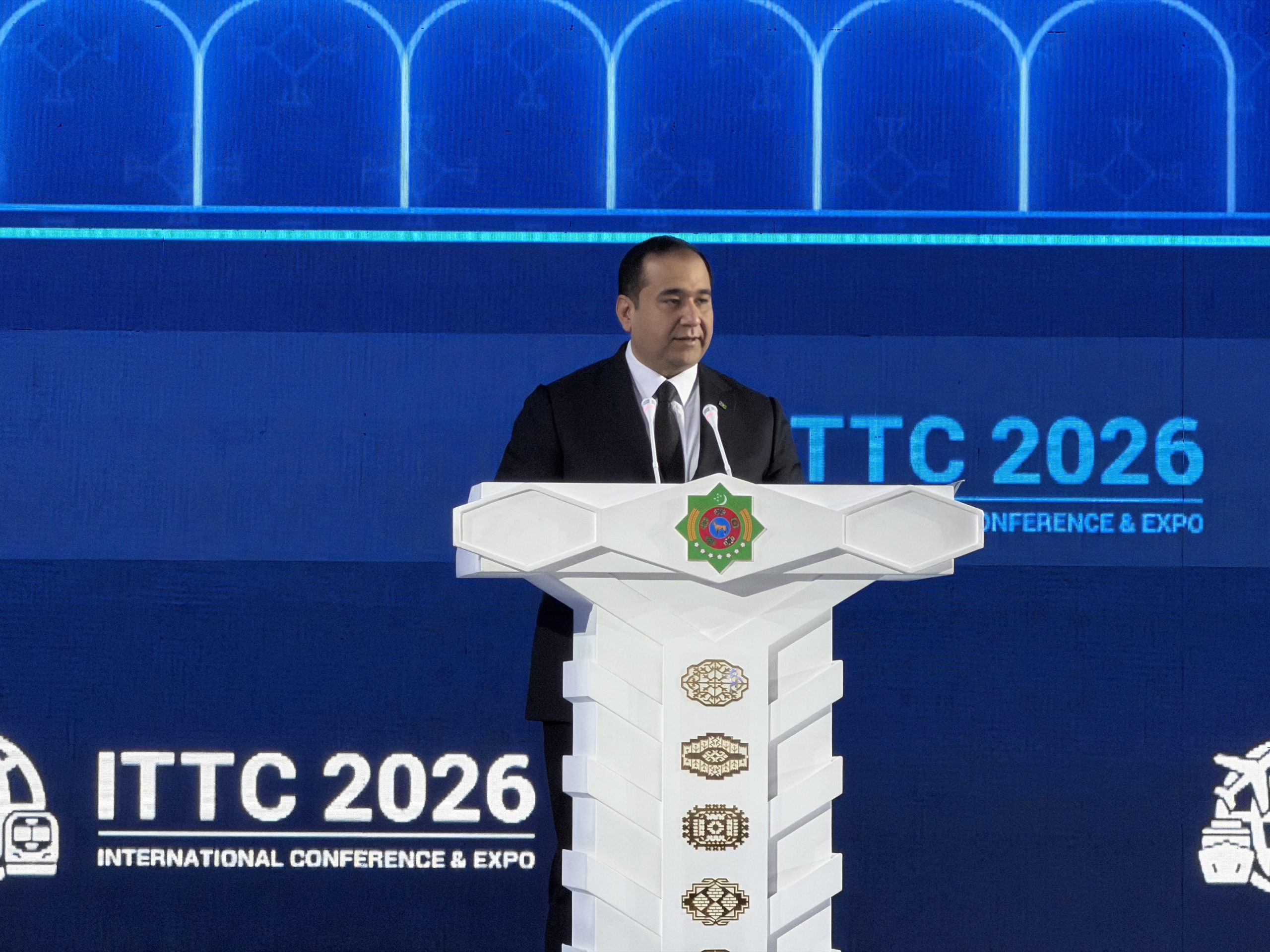
Turkmenistan views public-private partnerships (PPPs) as a key mechanism for drawing investment into the transport and logistics infrastructure of the Trans-Caspian International Transport Route. This was stated by Deputy Minister of Finance and Economy Babaniyaz Yallakov on 25 November 2026 during the second day of the international conference “International Transport and Transit Corridors: Interconnection and Development – 2026” (ITTC 2026) in Ashgabat.
Bringing in private capital, he said, makes it possible to pair state strategic priorities with the financial backing, management expertise, and technological capabilities of business needed to modernize regional transport infrastructure.
Addressing the forum, Yallakov noted that shifts across the Eurasian transport and logistics system, alongside changes in global supply chains, are heightening the value of route diversification and new links between major global economic hubs. Against this backdrop, the Trans-Caspian International Transport Route—widely known as the Middle Corridor—is gaining strategic weight as a multimodal link between Europe and Asia.
Its development carries particular significance for landlocked Central Asian countries. Distance from maritime trade routes and reliance on transit infrastructure in neighboring states push up transport costs and complicate international shipments.
According to figures cited by the deputy minister, trade costs for developing landlocked countries are on average 1.5 times higher than those of developing coastal states.
At the same time, economic indicators point to Central Asia’s expanding potential. At the end of 2025, combined foreign trade turnover across the region exceeded US $245 billion, mutual trade reached US $12.3 billion, and aggregate GDP stood at US $567 billion, up roughly 8% from 2024. That upward trend continued through the first half of 2026.
A growing domestic market and demographic scale provide further momentum, with the five Central Asian states home to more than 84 million people.
Yallakov also highlighted the scale of trade between China and the European Union. In 2025, bilateral trade reached US $825 billion, rising 5.4%. In the first six months of 2026, it totaled US $448 billion, up 14.2% year-on-year.
In his assessment, expanding trade between the two major economic centers opens additional doors for Central Asian countries not only in transit cargo, but also in broadening export capacity, attracting investment, and integrating more deeply into international production and trade chains.
Investments in the Middle Corridor
Turning to the outlook for the Middle Corridor, the deputy minister pointed to a World Bank Group report indicating that targeted modernization investments by 2040 could more than triple cargo volumes, cut transit times in half, lift GDP by 3.3%, and generate up to two million additional jobs.
Achieving those outcomes, according to the estimates cited, will require at least US $20 billion by 2040 to remove infrastructure bottlenecks and upgrade transport assets, alongside roughly US $30 billion in related investments.
In this context, Yallakov stressed the need for long-term investment planning and effective coordination between the public and private sectors. PPP arrangements, he noted, can be applied in building, upgrading, and operating transport facilities, developing terminal infrastructure, logistics hubs, and warehousing complexes, and rolling out digital tools.
Turkmenistan’s Transport Infrastructure
Separate attention in the address went to Turkmenistan’s domestic transport network. The deputy minister reported that transport and communications accounted for 10.3% of Turkmenistan’s GDP in 2025.
Since 2022, the country has been carrying out a presidential program for the development of transport diplomacy aimed at strengthening national transport capacity and broadening international cooperation.
Turkmenistan is party to more than 12 international transport conventions and has initiated six UN General Assembly resolutions focused on the role of transport and transit corridors in sustainable development.
Rail, road, maritime, and air transport are being developed in tandem to form an integrated multimodal system.
A central link in that system is the Turkmenbashi International Seaport, with a design capacity of 17 million tons of cargo annually. It connects Central Asia with the Caucasus and plays a major role in operations along the Trans-Caspian corridor.
The country’s rail network spans more than 5,000 kilometers. Among priorities for further progress, Yallakov cited renewing locomotive and rolling stock fleets, upgrading depots and repair facilities, electrifying rail infrastructure, and localizing production of relevant machinery and equipment.
Road construction and upgrades are also moving forward. In 2026, work was completed on the final section of the Ashgabat–Turkmenabat highway, which stretches roughly 600 kilometers in total.
Construction is underway on the roughly 250-kilometer Turkmenbashi–Garabogaz–Kazakhstan border road, while plans envision modernizing the roughly 550-kilometer Ashgabat–Dashoguz highway.
Aviation remains another pillar of national infrastructure policy. Seven international airports now operate in Turkmenistan, equipped to handle passenger aircraft as well as cargo flights, including heavy freighters.
According to the deputy minister, these projects are designed not only to strengthen domestic transport connectivity, but also to improve the efficiency of international East–West shipments.
Digitalization of Transport Corridors
Digital transformation of the transport and logistics system formed another key theme of the speech. Yallakov emphasized that a modern international corridor must provide not only physical links, but also smooth information exchange across all parties involved in shipping.
Under the UN Special Programme for the Economies of Central Asia (SPECA), a roadmap is being implemented to digitalize the Trans-Caspian transport corridor. It aims to improve data sharing among government agencies, seaports, transport operators, and foreign trade participants.
States along the route are working to adopt and gradually integrate international UN/CEFACT standards, while building data-exchange systems linking public bodies, the private sector, and port infrastructure.
At the Turkmenbashi International Seaport, a Terminal Operation System is already in place, automating vessel and cargo handling as well as logistics flow management.
With backing from international partners, including the European Union and German Agency for International Cooperation (GIZ), countries in the region are continuing work on a paperless transport and logistics ecosystem.
Here, Yallakov pointed to strong prospects for engaging private investors and IT integrators to introduce electronic document workflows and e-waybills that allow real-time cargo tracking.
Concluding his remarks, the deputy minister reaffirmed Turkmenistan’s readiness to make a practical contribution to developing the Trans-Caspian International Transport Route, strengthening Central Asian transport connectivity, and expanding international investment cooperation.
Pooling the efforts of regional states, international partners, and the private sector, he said, will allow Central Asia to unlock its economic and transit potential more fully and reinforce its standing in global trade and logistics. ///nCa, 25 November 2026