


Elvira Kadyrova, Liliya Zhirnova, Tamir Shakirov
Inspiration rarely arrives with fanfare. More often, it takes shape in quiet rooms, along unpaved village streets, and behind workshop doors—where ordinary people refuse to let physical limitations, empty pockets, or unspoken social rules decide the boundaries of their lives.
Across Central Asia today, a remarkable generation of women and young people is rewriting the script of what is possible. They did not wait for ideal conditions, sudden fortune, or institutional rescue.
From a seamstress in Ashgabat and a Paralympic record-breaker in Taraz to a disability advocate in Kanibadam, a blind youth leader in Uzbekistan, and self-taught coders emerging from the mountain valleys of Naryn, these five contemporary stories capture a distinctly Central Asian resilience: taking the very obstacles meant to hold them back and turning them into the foundation of their independence.
Turkmenistan: Gulnar’s Stitch Toward Independence (and Meryem’s Open Defiance of Stigma)
In Ashgabat, Gulnar, a young woman born with dwarfism, spent years hitting an invisible wall. Despite her determination to work, potential employers looked only at her stature, leaving her financially dependent and socially sidelined.
Through the vocational skills center run by Yenme (founded by physician Gulya Chorekliyeva to integrate vulnerable youth and women with disabilities), Gulnar began training in pattern-making, sewing, and embroidery. Today, she drafts her own patterns and operates a professional sewing machine independently, earning her own income through Yenme’s social enterprise.
Alongside Gulnar stands Meryem, a 24-year-old Turkmen management student whose story was documented on nCa.
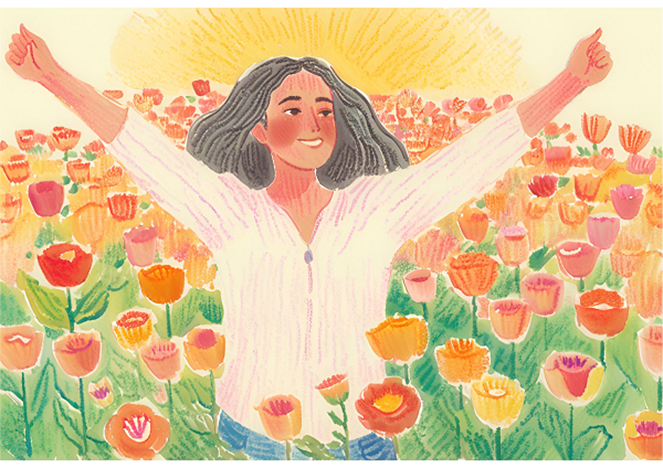
Struck by severe tuberculosis while studying abroad—leaving her temporarily unable to feel her legs below the knees and forced to pause her degree—Meryem returned home to face not only a grueling medical recovery, but a harsh social stigma that often sees young women shunned as future wives or neighbors.
Instead of hiding her diagnosis, she confronted it head-on, telling acquaintances bluntly what she was fighting. After nearly a year of disciplined treatment, her lung cavity closed, her tests turned negative, and she reclaimed both her academic path and her plans for marriage.
Kazakhstan: Zulfiya Gabidullina’s Late-Blooming World Record
In Taraz, Zulfiya Gabidullina spent decades navigating a world not built for her. Disabled at age five following a severe traffic accident that left her with spinal and head injuries, she lived on a modest disability pension in an era when ramps and accessible transport were virtually nonexistent.

Refusing to remain confined indoors, she began training herself—first in a basic wheelchair, then in the swimming pool—without sponsors or state backing initially.
At age 50, when most athletes have long retired, she won Kazakhstan’s first-ever Paralympic gold medal in Rio and shattered the 100m freestyle world record. Continuing to compete well into the 2020s, she became a business owner and the catalyst that forced Kazakhstan to invest seriously in para-sports and barrier-free infrastructure.
Uzbekistan: Saida’s Voice from the Margins
Born in 2007 as the eldest of five children in Uzbekistan, Saida grew up with a visual disability that made schoolyards a place of daily exclusion. Teased by classmates and isolated in her neighborhood, she kept the pain hidden from her parents so as not to burden them.
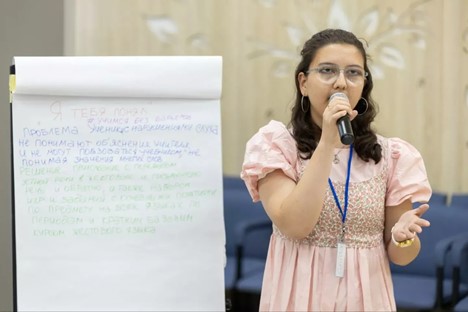
Rather than retreating permanently into silence, Saida channeled her experience into youth advocacy through U-Report and disability-inclusion initiatives in Uzbekistan. Still in her late teens, she has stepped forward as a public voice challenging the pity-based attitudes toward young people with sensory disabilities, proving that leadership does not require conventional sight.
Tajikistan: Sitora Kurbonova’s Fight for Every Step
In the northern Tajik town of Kanibadam, Sitora Kurbonova lost the use of her legs to childhood polio. Growing up in a wheelchair in a region where clinic steps and unpaved streets routinely turned routine errands into humiliations—once, medical staff even tried to draw her blood out on the street because the laboratory had no ramp—Sitora refused to accept second-class citizenship.
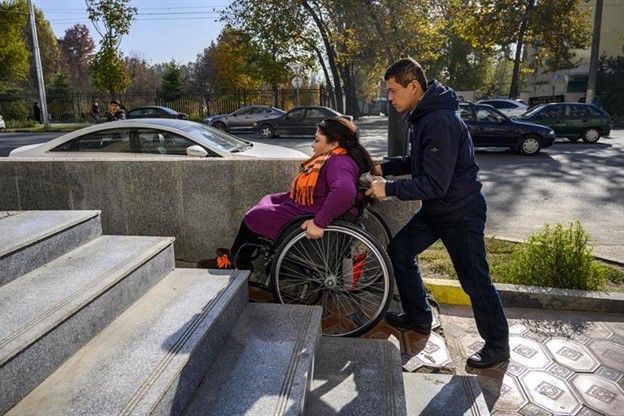
She founded and led Safoi Konibodom, a grassroots organization uniting women with disabilities across the Sughd region. From lobbying local authorities and hotels to install proper wheelchair ramps to organizing vocational training so rural women with disabilities can earn their own money, she turned personal immobility into collective momentum.
Kyrgyzstan: From High-Altitude Isolation to Global Tech
In Kyrgyzstan’s mountainous Naryn region—where winter temperatures plunge well below freezing and families rely on subsistence herding—young women like Aijan and Kanykei (alongside a growing cohort of rural girls entering Bishkek’s tech incubators and green-energy youth initiatives) have rewritten what a village girl’s future looks like.
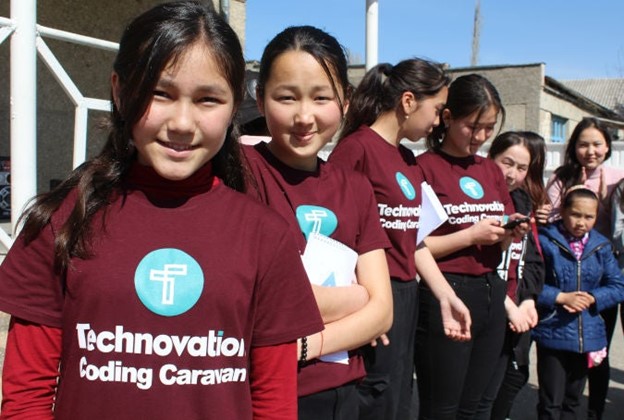
Growing up without computer labs, reliable broadband, or funds for university, many began learning coding logic and digital design on secondhand smartphones late at night when mobile networks cleared. Moving to Bishkek on scholarships and sleeping on relatives’ floors while studying fourteen hours a day, these young women have gone on to build environmental tech prototypes and land remote software engineering contracts—sending income back to mountain households that once assumed their only path was early marriage and subsistence labor.
The Common Thread
Across all five countries, none of these breakthroughs came from sudden wealth or effortless luck. Whether it is Gulnar mastering a sewing machine in Ashgabat, Meryem refusing to let illness silence her, or Sitora demanding a ramp up the clinic steps in Kanibadam, each story turns on the exact same pivot: taking the very limitation society used to write them off, and making it the foundation of their independence. /// nCa, 20 November 2026