


Tariq Saeedi
Some twenty years ago, in separate conversations, I asked two presidents of Economic Cooperation Organization (ECO) member states a candid question: why was this organization not delivering on its promise, despite possessing an elaborate administrative architecture and the clear political will of its member governments to partner within this ecosystem?
Both the leaders, in slightly different words, offered the same diagnosis. At that time, the ECO member states stood at markedly different stages of economic and institutional development, and as a consequence, their immediate national priorities were not yet in full synchronization. Yet both presidents concluded with the same quiet conviction: the time would inevitably come when those trajectories would converge, and ECO would emerge as a powerful engine of shared growth and prosperity across a vast geopolitical expanse.
Looking at the proceedings and outcomes of the 30th Meeting of the ECO Council of Ministers held in Islamabad on 15–16 November 2026, it is difficult to escape the conclusion that the moment those two presidents foresaw has finally arrived.
The Convergence of Aspirations in Islamabad
The deliberations in Islamabad—convened under the aptly chosen theme “Reviving Regionalism for a Resilient ECO” as Pakistan assumed the organization’s rotating chairmanship—revealed a striking alignment between the aspirations of the member states and the hard realities of the current global order. Unlike earlier decades when ECO gatherings were often dominated by declarative goodwill, the tone in Islamabad was unmistakably pragmatic, urgent, and anchored in mutual necessity.
Addressing the ministers and heads of delegations, Pakistan’s Prime Minister Shehbaz Sharif framed connectivity not as an abstract ideal, but as an immediate lifeline for landlocked economies, pointing directly to Pakistan’s seaports in Karachi, Port Qasim, and Gwadar as natural gateways to global markets.
Deputy Prime Minister and Foreign Minister Senator Mohammad Ishaq Dar reinforced this realism by linking economic integration directly to regional security and predictability, stating plainly that “the existence of a secure and stable environment is absolutely essential for the continuation of regional economic partnerships,” while calling for functional transport corridors, streamlined border procedures, and stronger regional value chains.
This sentiment was echoed across the table by delegations navigating the same global headwinds. Türkiye’s Deputy Minister of Foreign Affairs Musa Kulaklıkaya observed that amid spreading conflicts, a deepening climate crisis, and disrupted global supply chains, diplomacy and regional cooperation have become “the only viable solution,” urging member economies to build more dependable market links rooted in their shared Silk Road heritage. Similarly, Iranian Foreign Minister Seyed Abbas Araghchi underscored that sustainable regional cooperation is indispensable for safeguarding vital maritime and transit arteries, noting that diplomacy and regional dialogue remain the only viable path forward. Meanwhile, Uzbekistan’s Deputy Foreign Minister Bobur Usmanov emphasized the importance of translating summit-level consensus—from Tashkent to Khankendi and now Islamabad—into measurable progress on the ground.
Outcome Documents and Regional Alignment
When we examine the two principal outcome documents of the Islamabad session—the Islamabad Joint Communiqué and the landmark Strategic Goals of Economic Cooperation 2026–2035 (widely termed ECO Vision 2035)—we see an institution finally moving in lockstep with what its members are already building bilaterally and trilaterally.
The Strategic Goals 2035 blueprint prioritizes trade liberalization under the ECO Trade Agreement (ECOTA), joint trade zones, customs digitalization, multimodal transport corridors, energy security, and climate resilience.
Juxtaposed against the national development agendas and sub-regional initiatives already underway across the ECO space, the synchronization is unmistakable:
- Transport and Transit Corridors: The ECO roadmap’s focus on multimodal rail and road networks mirrors the concrete momentum behind the Uzbekistan–Afghanistan–Pakistan (UAP) railway project, the expansion of the Middle Corridor across the Caspian Sea, and the North–South and East–West transit routes linking Central Asia to the Arabian Sea and the Persian Gulf.
- Energy and Industrial Complementarity: Central Asian states are actively diversifying their energy export routes and expanding green power generation, while South Asian and West Asian members face growing industrial energy demand. ECO Vision 2035 provides the multilateral umbrella to formalize power transmission grids and energy swaps that are already taking shape in bilateral agreements.
- Trade Facilitation and Connectivity: The push for digitalized border procedures and reduced transit costs aligns seamlessly with the bilateral customs-modernization and e-TIR initiatives being implemented between Central Asian republics, Iran, Türkiye, and Pakistan.
In short, ECO is no longer trying to pull its members in a direction they are unready to go; rather, it is codifying and scaling up the exact economic architecture that its members are already constructing on the ground.
No Organization Operates in a Vacuum
To appreciate the true potential of this moment, we must broaden our perspective. Regional organizations like ECO do not exist or operate in isolation. In an increasingly interconnected—yet fragmented—world, institutional survival and relevance depend on an organization’s ability to find natural connection points and dovetail with neighboring countries, parallel multilateral frameworks, and overlapping bilateral or trilateral formats.
It was therefore deeply symbolic that the Islamabad ministerial was attended not only by member states, but also by senior leadership from the Organization of Islamic Cooperation (OIC), the Shanghai Cooperation Organization (SCO), and the Conference on Interaction and Confidence-Building Measures in Asia (CICA). Whether a project is advanced through ECO, the SCO, CICA, the Organization of Turkic States, or trilateral transit agreements, the underlying objective remains universal: shared economic growth, energy and food security, regional stability, and human prosperity. When these platforms reinforce rather than duplicate one another, the entire region gains strategic depth.
The Enduring Spirit of RCD and the Rebirth of ECO
History also offers a vital anchor for this optimism. It is worth remembering that ECO was built upon the institutional and philosophical foundations of the Regional Cooperation for Development (RCD), established in 1964 by Iran, Pakistan, and Türkiye. Those three founding nations recognized over six decades ago that geography, culture, and economic destiny bound them together. When ECO expanded in 1992 to embrace Afghanistan and the newly independent states of Central Asia and the Caucasus, it inherited that foundational vision on a continental scale.
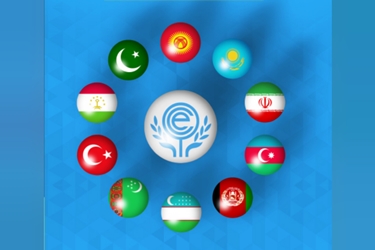
Today, the spirit of RCD is not merely intact—it is stronger and more relevant than ever. What began as a trilateral aspiration among three neighbors has matured into a ten-nation geo-economic bridge connecting Europe, the Caucasus, Central Asia, the Middle East, and South Asia.
Given the seismic geopolitical and geo-economic shifts of our era—where traditional global supply chains are fracturing, unilateral sanctions and external shocks test national resilience, and landlocked nations urgently seek reliable outlets to the sea—ECO is no longer an optional diplomatic forum. It has become a natural, logical answer to the defining challenges of our times.
The disparity in development stages that once slowed the organization twenty years ago has given way to shared urgency and complementary strengths. With the adoption of Strategic Goals 2035 and the pragmatic resolve demonstrated by its member states, the November 2026 Islamabad meeting may well be remembered by historians as the true rebirth of ECO. /// nCa, 18 November 2026