


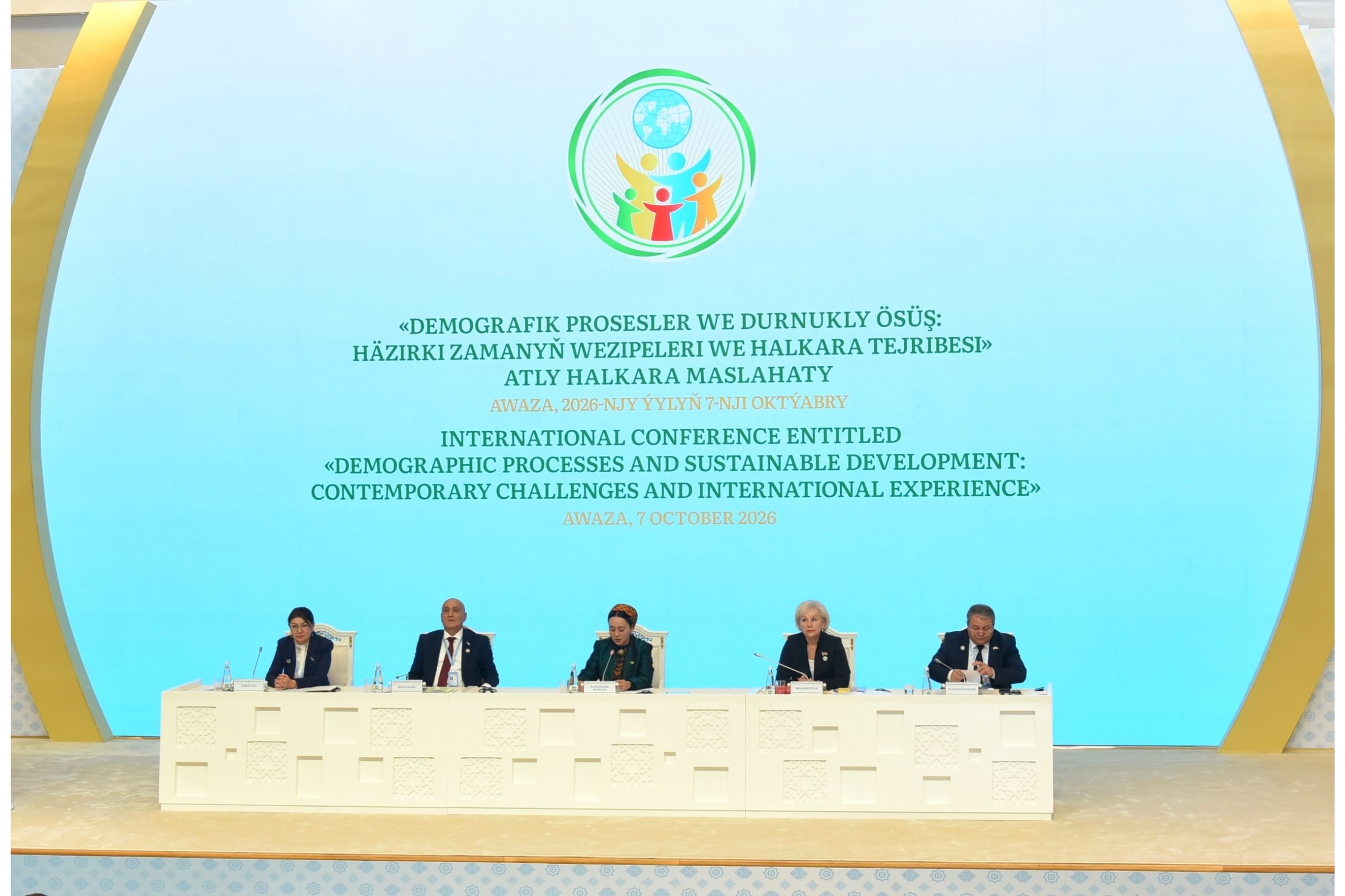
AVAZA, Turkmenistan – Demographic change, population structure, family policy, labour markets and migration have emerged as increasingly important elements of sustainable development policy following an international conference in Avaza that brought together parliamentarians, United Nations specialists and experts from across the region.
The International Conference “Demographic Processes and Sustainable Development: Contemporary Challenges and International Experience”, held on October 7 as part of Turkmenistan’s programme of international events in Avaza, concluded with the unanimous adoption of a Final Document aimed at strengthening regional and international cooperation and advancing concrete objectives in the field.
The conference was significant not simply because demographic issues were placed on the international agenda, but because the discussions approached population dynamics as part of a much wider policy equation. Participants examined population growth, family values, labour-market requirements and sustainable migration, while also considering human-capital development, living standards and the legislative foundations needed to respond to demographic change.
Among those taking part were representatives of the parliaments and governments of Azerbaijan, Russia, Belarus, Türkiye, Tajikistan and Kazakhstan, together with the United Nations Regional Centre for Preventive Diplomacy for Central Asia, the International Organization for Migration, the United Nations Population Fund and the Global Entrepreneurship Research Association.
That composition gave the conference a distinctly cross-sectoral character. Demographic policy increasingly extends beyond the traditional question of population numbers into questions of whether economies can provide sufficient employment, whether social systems can accommodate changing age structures, how migration can be managed sustainably and whether young people have the education and living conditions needed to become productive participants in economic life.
The Turkmen side placed particular emphasis on the connection between demographic policy and national social programmes. Bayramgozel Myradowa, Chairperson of the Mejlis Committee on Science, Education, Culture and Youth Policy, said demographic policy forms an important component of Turkmenistan’s national programmes and humanitarian and social strategies.
She pointed to measures concerning social protection, support for mothers with many children and young families, education and employment opportunities, as well as efforts to improve living conditions for young people. The conference also provided an opportunity to exchange national experience in developing human capital, improving housing and living conditions and strengthening the legislative framework surrounding demographic policy.
A broader perspective emerged from the discussions. In many parts of the world, demographic challenges are moving in different directions at the same time: ageing and shrinking workforces in some societies, continued population growth and pressure on infrastructure in others, and increasingly complex patterns of migration connecting the two.
For Central Asia, the demographic question also has a practical regional dimension. Population trends affect demand for housing, education, healthcare, employment and infrastructure, while migration and labour mobility increasingly connect national economies. This makes demographic information and analysis relevant not only to social policy but also to economic planning.
The conference also considered the importance of strengthening demographic analysis and making better use of international experience. Cooperation with UN agencies was highlighted in connection with improving demographic data and supporting implementation of the Sustainable Development Goals.
The unanimous adoption of the Final Document provides the forum with a more substantive conclusion than a conventional exchange of views. The document is intended to strengthen regional and international cooperation and support further work towards agreed objectives in the relevant areas.
The significance of the Avaza meeting may therefore lie less in any single demographic measure than in the recognition that population dynamics have to be considered together with economic development, social protection, human capital and the quality of living conditions.
For countries undergoing rapid economic and social change, demographic policy is ultimately about people rather than statistics. Population figures describe the scale of the challenge; education, employment, healthcare, housing and family policy determine how societies respond to it.
The Avaza conference brought those strands together in a single regional discussion and established a framework for further cooperation through its Final Document. /// nCa, 8 October 2026