


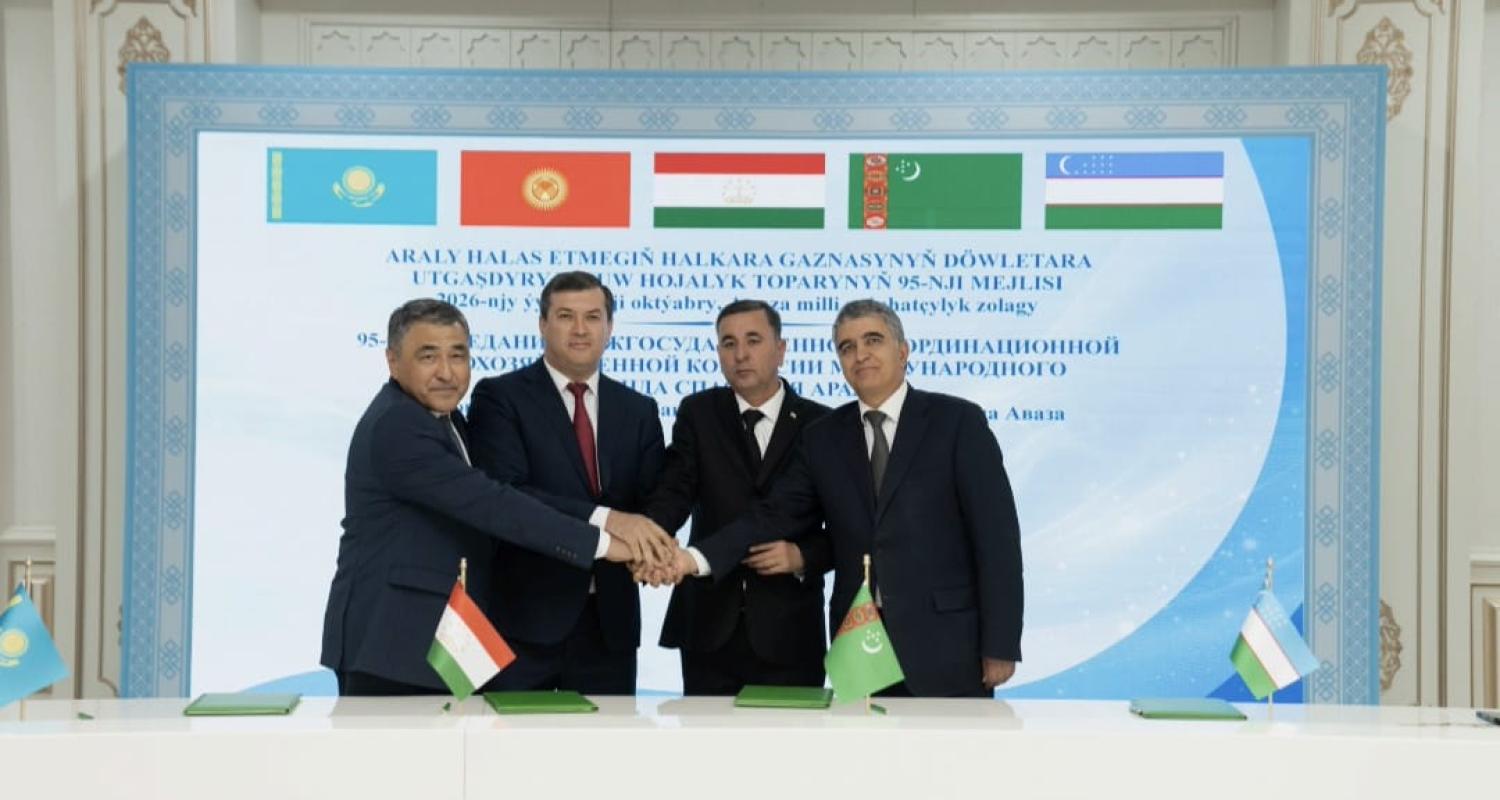
AVAZA, Turkmenistan – The five Central Asian states have agreed on water distribution arrangements and projected operating regimes for the region’s major reservoir cascades for the coming non-growing season, following the 95th meeting of the Interstate Commission for Water Coordination of Central Asia (ICWC) in Avaza on October 7.
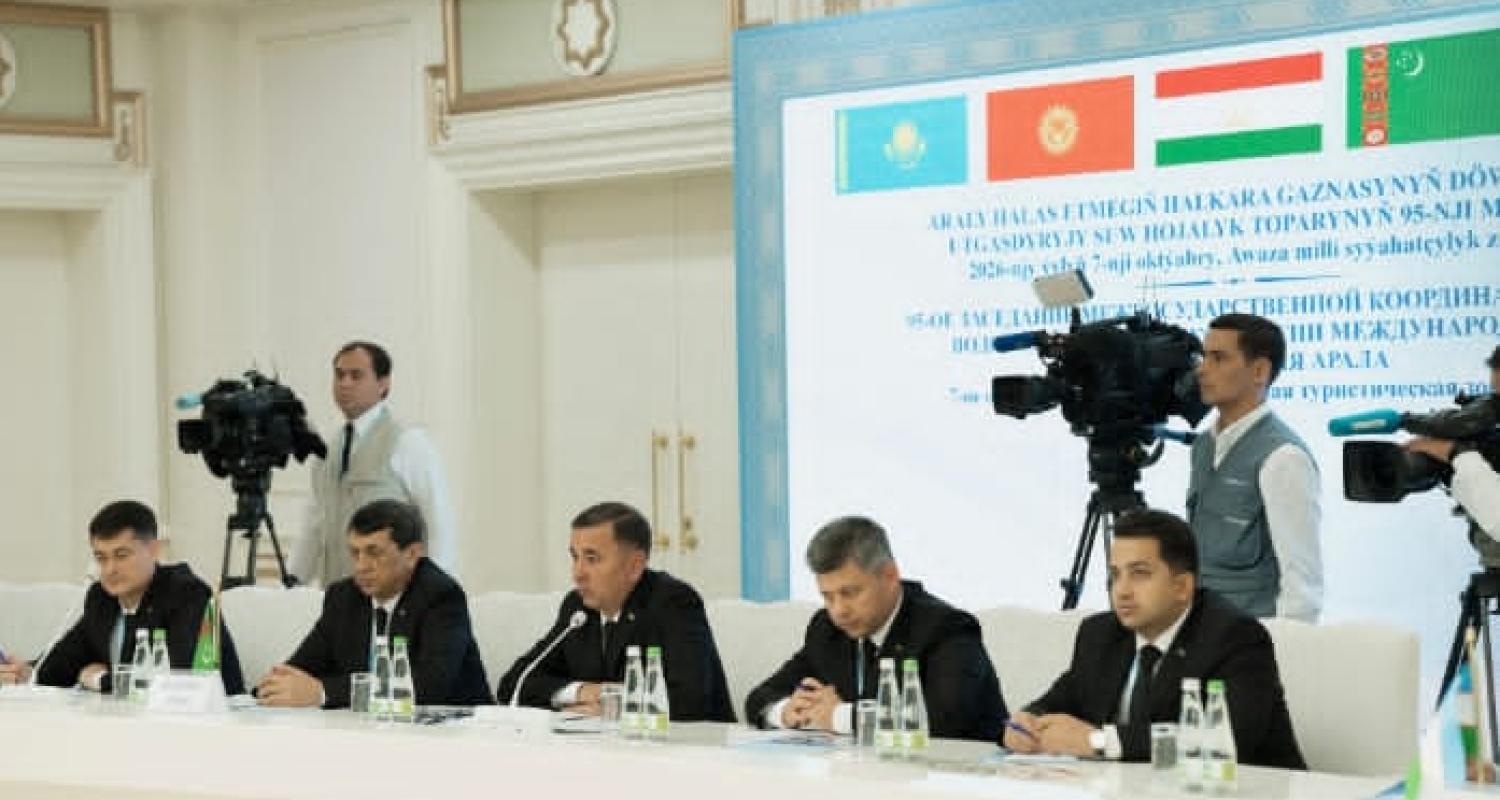
The meeting, organised by the Turkmen side and chaired by Durdy Gendzhiev, Chairman of the State Water Management Committee of Turkmenistan, brought together representatives of Kazakhstan, Kyrgyzstan, Tajikistan, Turkmenistan and Uzbekistan, along with senior officials from national water-management bodies and the regional institutions supporting the ICWC.
The participants reviewed the results of water withdrawals against agreed limits and the operation of reservoir systems during the 2026 growing season in both the Amu Darya and Syr Darya basins. They then agreed on water distribution and projected operating regimes for the reservoir cascades during the 2026–2027 non-growing season.
The minutes of the 95th meeting were adopted following the discussions.
The decision is operationally important because the non-growing season is not simply a period of lower agricultural demand. Reservoirs must be managed in a way that balances downstream water requirements, storage levels, environmental flows and the needs of the next growing season. The coordinated approach through the ICWC provides a mechanism for making those decisions collectively rather than through isolated national reservoir operations.
A long-established regional mechanism
The ICWC is the principal regional mechanism through which the five Central Asian states coordinate the management of shared water resources.
Its institutional roots go back to the 1992 agreement on cooperation in the joint management, use and protection of interstate water resources. The commission operates on a parity basis, with the five states sharing responsibility for managing transboundary water resources and maintaining the sustainability of natural processes in the shared river systems.
The Amu Darya and Syr Darya together form the principal river systems of the Aral Sea Basin. Their waters support agriculture, communities and ecosystems across several countries, meaning that decisions taken upstream can have direct consequences downstream.
That interdependence is particularly important in the lower reaches of the Amu Darya, where Turkmenistan and Uzbekistan depend heavily on the river for irrigation and other water needs.
The ICWC’s quarterly system is designed precisely for this type of coordination. Its meetings regularly review the performance of the preceding season before setting limits and reservoir operating regimes for the next one. At its 93rd meeting in April, for example, the commission reviewed the 2025–2026 non-growing season and approved country water-withdrawal limits and forecast reservoir regimes for the 2026 growing season.
The 94th meeting, held in Kazakhstan in August, then reviewed the developing 2026 growing season and agreed that the 95th meeting would be hosted by Turkmenistan. It also advanced work on a plan for automated water accounting in the Syr Darya basin.
From water allocation to digital accounting
The digitalisation of water management is becoming an increasingly important part of the regional agenda.
At the August ICWC meeting, the member states supported development of a plan for an automated water-resources accounting system for the Syr Darya basin. The initiative is intended to improve the measurement and monitoring of water resources and provide a stronger information base for regional management.
The issue is now part of a wider regional movement towards better water data and more coordinated management.
In July, the World Bank approved a $20 million grant for the Central Asia Water Efficiency Cooperation Project, to be implemented through the Executive Committee of the International Fund for Saving the Aral Sea. The project is intended to strengthen transboundary water cooperation, modernise water information systems and support digital water accounting in the Amu Darya and Syr Darya basins. The World Bank estimates that about 40 million people could benefit directly or indirectly from improved regional water management.
The World Bank has identified ageing infrastructure, limited regional data sharing and weaknesses in water and energy cooperation as continuing challenges. It also notes that climate-related droughts, floods and other extreme events are adding pressure to already complex water-management systems.
Linking the operational and strategic levels
The 95th ICWC meeting also reviewed progress on tasks arising from summits of the heads of the founding states of the International Fund for Saving the Aral Sea (IFAS).
The agenda included implementation of ASBP-4, the fourth Aral Sea Basin Programme; introduction of water-saving and digital technologies; adaptation to climate change; development of water diplomacy; and strengthening the region’s scientific capacity.
ASBP-4, covering 2021–2030, is designed to address integrated water management, environmental protection, socio-economic development and institutional and legal mechanisms across the Aral Sea Basin. Its project portfolio includes modernisation of irrigation infrastructure, improved water accounting and monitoring, water-saving technologies, climate adaptation, ecosystem restoration and development of regional information systems.
This gives the latest ICWC meeting a significance beyond the immediate allocation of water for the coming winter and spring. It places seasonal water management within a broader effort to make the region’s water systems more measurable, efficient and resilient.
For Turkmenistan, hosting the 95th meeting in Avaza also fits into the wider water diplomacy taking place during its 2026 CIS chairmanship. The same day, the country hosted a separate high-level meeting on the rational use of Amu Darya and Syr Darya resources, bringing the operational work of the ICWC together with a broader political discussion of regional water cooperation.
The practical test will come during the 2026–2027 non-growing season, when the agreed reservoir regimes and water-distribution arrangements will have to be implemented under actual hydrological conditions.
For now, however, the principal result from Avaza is clear: the five Central Asian states have put in place a jointly agreed operational framework for managing the two major river systems through the coming non-growing season. /// nCa, 8 October 2026