


Elvira Kadyrova
There are many ways to discover Gaziantep. You can explore its museums and historic landmarks, or sometimes it is enough simply to walk through its old commercial quarters, step into a few shops, enjoy a cup of traditional coffee or taste a local sweet.
That was the route taken by a group of journalists from Turkmenistan, Kazakhstan and Azerbaijan as we explored the old part of Gaziantep.
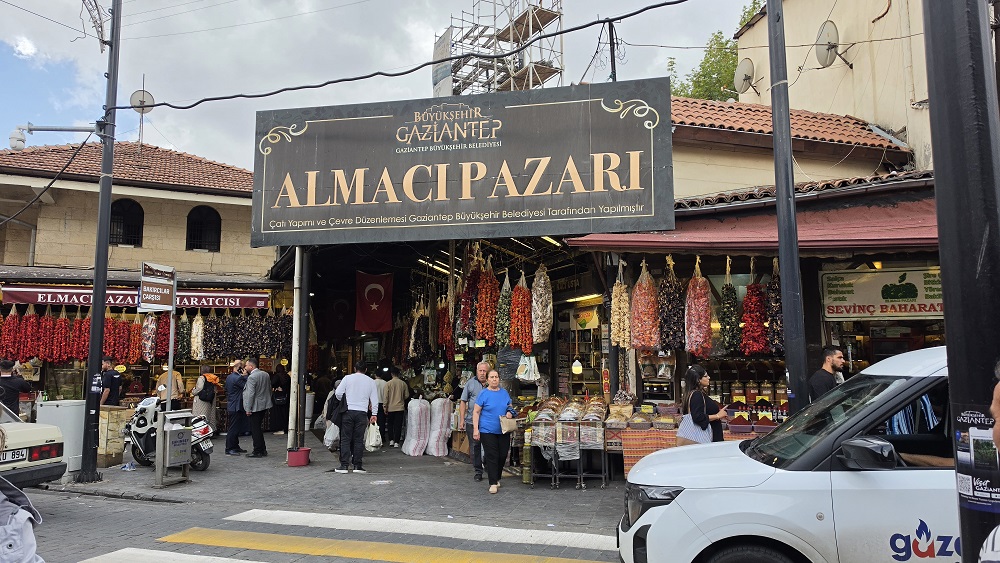
Our first visit to Almacı Pazari was brief. We walked quickly through the rows of shops, catching glimpses of colourful spices, pistachios, copperware and souvenir stalls. But the real culinary discoveries were still ahead.
Not far from Tahmis Kahvesi, in the Buğday Pazarı area, is Beyoğlu Katmercim, a place specialising in one of Gaziantep’s traditional delicacies: katmer.
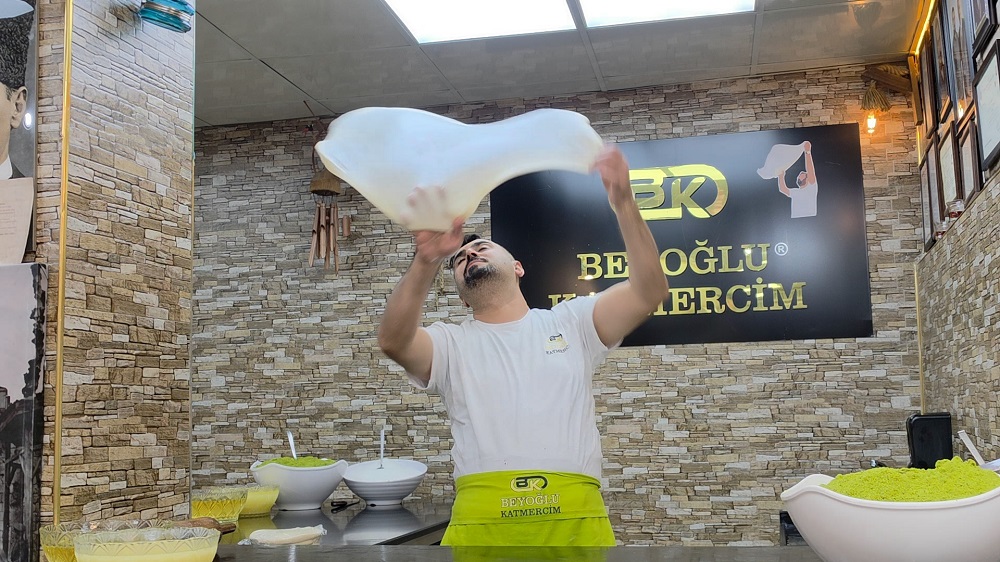
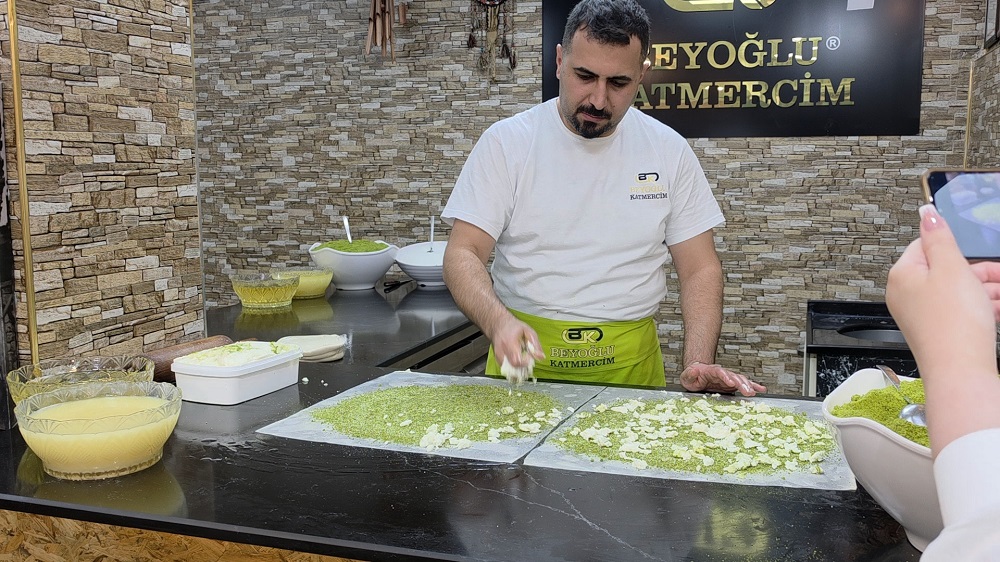
Each katmer is prepared individually for the customer. The dough is rolled out incredibly thin, filled with carefully selected ingredients and baked in a stone oven.
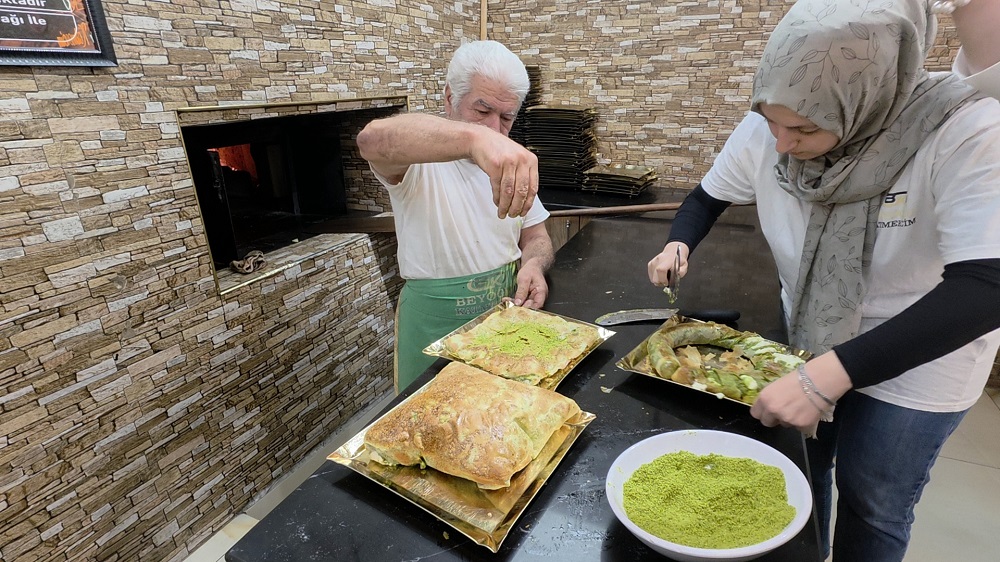
The master worked with remarkable skill, twirling the delicate sheets of dough in the air before spreading them out. Then came the filling: a generous scattering of bright green pistachios, kaymak — thick, rich clotted cream — and fine sugar or powdered sugar.
Before long, a warm, crisp katmer arrived at our table.
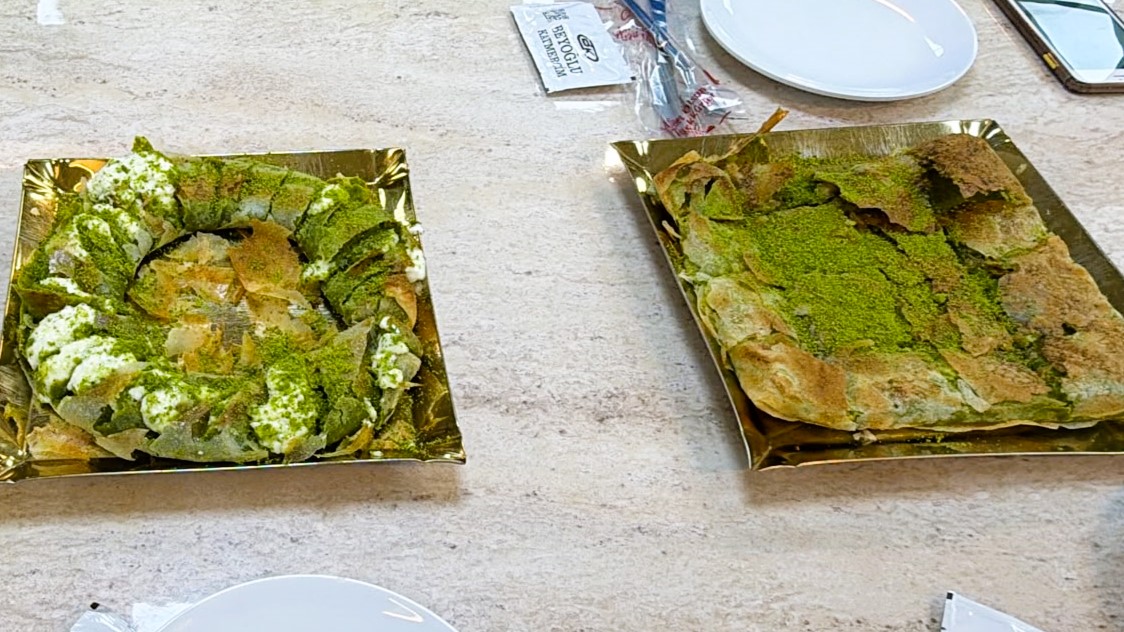
Its taste is difficult to capture in words. It is something that really has to be experienced — and for that, Gaziantep is certainly worth the journey.
Having enjoyed the katmer, we continued on to the historic Tahmis Kahvesi.
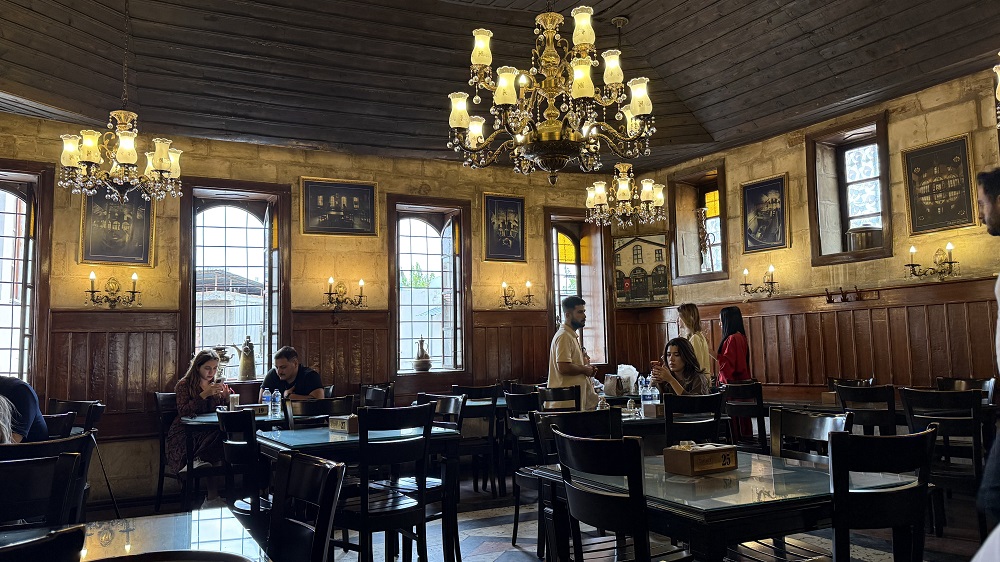
The coffeehouse dates back to 1635. It was built by Mustafa Ağa bin Yusuf, who served as a sanjak-bey — the governor of a sanjak, an administrative district of the Ottoman Empire — as well as Türkmen Ağası, a military and administrative leader of the region’s Turkmen tribes.
The coffeehouse is also associated with an old local legend. It is said that Sultan Murad IV stopped here for coffee during his Baghdad campaign.
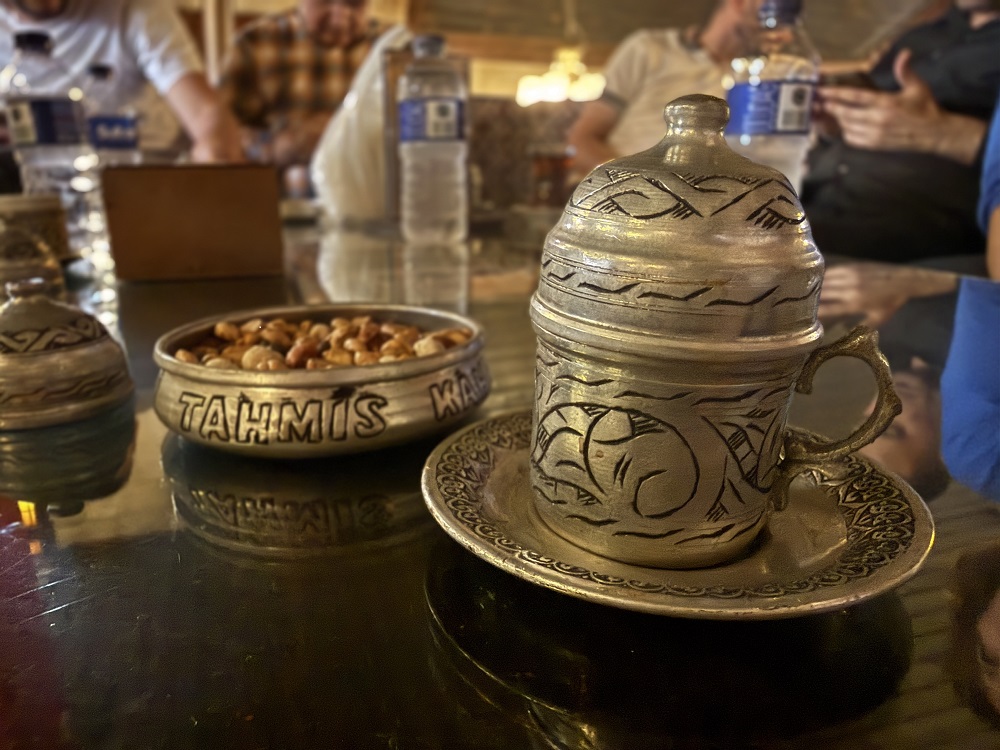
Today, visitors can enjoy not only traditional Turkish coffee but also menengiç coffee, a distinctive drink made from the roasted fruits of the terebinth tree, which is related to the pistachio family. Its flavour and aroma are quite different from those of conventional coffee, making it a memorable culinary discovery for many of us.
Then we returned to the bazaar.
This time, Almacı Bazaar revealed itself through the rhythm of everyday life in Gaziantep.
The stalls were a riot of colour and aroma, filled with spices of every kind. Nearby were different varieties of pistachios, while shops displayed trays of baklava in countless varieties.
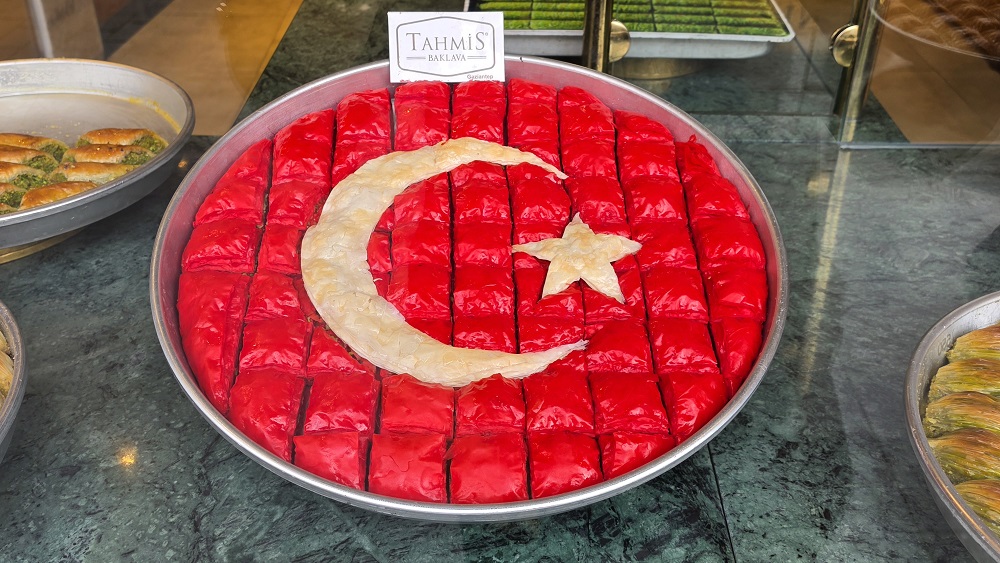
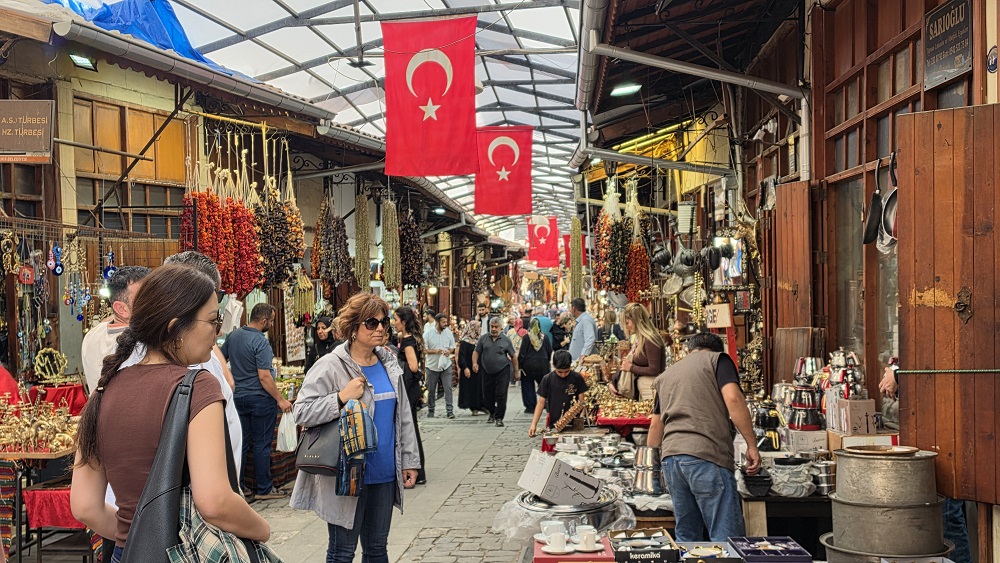
For a city renowned for its culinary culture, it was hardly surprising.
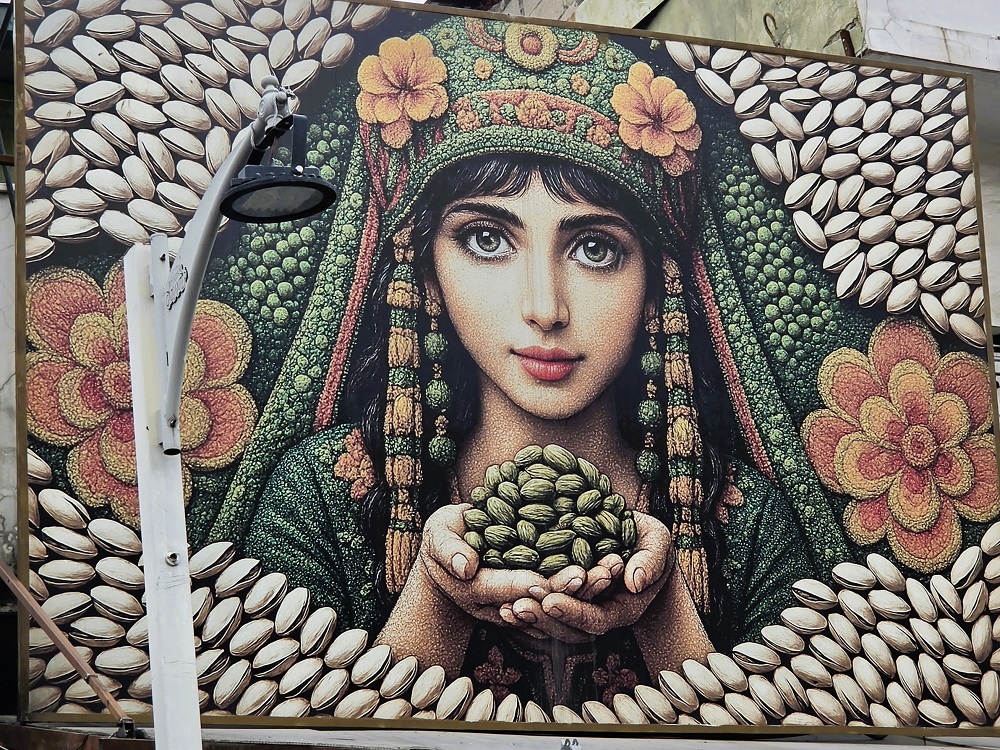
Here, the pistachio is much more than just a food product. It is an essential part of the local cuisine and an important agricultural product that also contributes to the region’s business activity and economy.
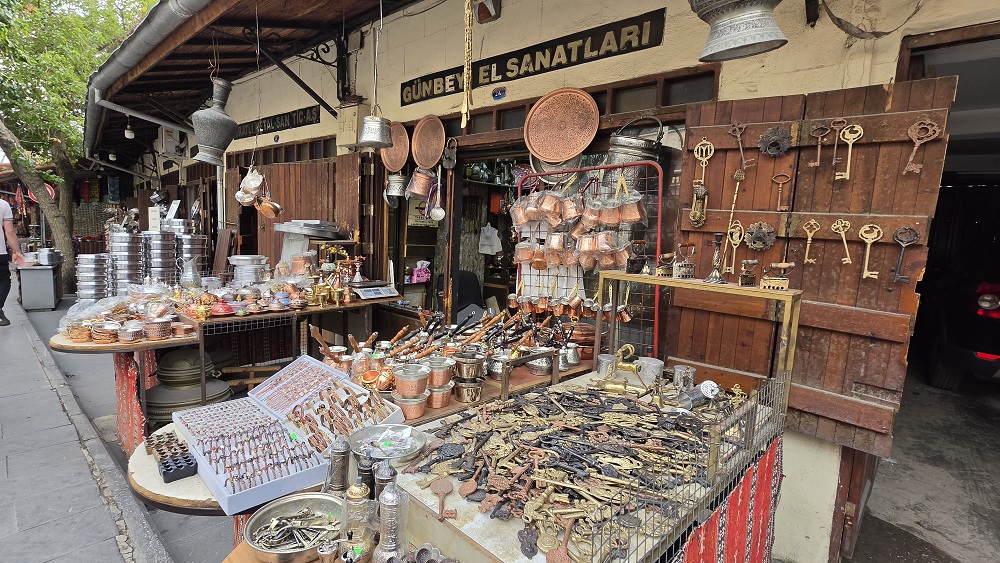
As we continued through the bazaar, our eyes constantly caught new details. There were copper jugs, trays, cups and other handmade vessels — reminders of the craft traditions that continue to thrive in the old commercial quarters of the city.
Nearby were natural soaps, dried fruits, spices and countless other goods.
Modern shoppers moved among the stalls, yet there was something timeless about the scene. Looking around, it was easy to imagine that centuries ago, beys and merchants might have walked these same passages between similar rows of shops.
Our walk through old Gaziantep turned out to be much more than a visit to a few popular places.
Through the flaky layers of katmer, a cup of menengiç coffee, the aroma of spices, pistachios piled on the stalls, the gleam of copperware and the scent of natural soap, the character of the city gradually revealed itself.
In Gaziantep, centuries-old traditions continue to live in everyday life — in food, craftsmanship, trade and the simple pleasure of pausing for a cup of coffee. ///nCa, 5 October 2026