


Vladislav Tyan, Leading Research Fellow, Institute for Strategic and Regional Studies under the President of the Republic of Uzbekistan
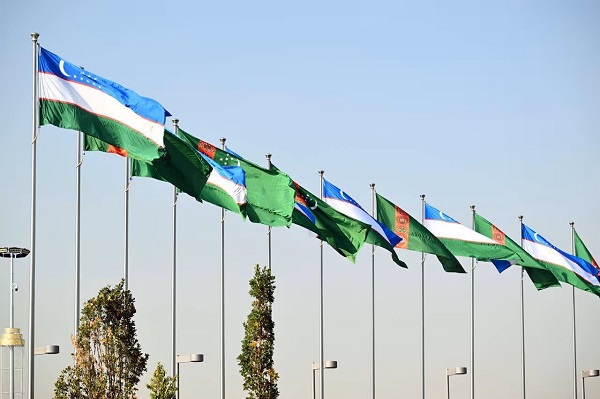
The eighth Consultative Meeting of the Heads of State of Central Asia and Azerbaijan, scheduled for 8 October 2026 in Awaza, lends particular significance to the strategic partnership between Uzbekistan and Turkmenistan. The agenda proposed by Turkmenistan covers security, the economy, energy, transport, water resources and humanitarian ties. In each of these areas, cooperation between Tashkent and Ashgabat can deliver benefits for the region as a whole.
Against a backdrop of global instability and the restructuring of Eurasian logistics networks, this partnership is becoming a pillar of regional stability. Its broader significance rests on a combination of political trust, complementary economies and responsibility for shared resources. Coordination between the two neighbours creates a more predictable environment for trade, investment and long-term planning across Central Asia.
From Strategic Partnership to Regional Trust
The 1996 Treaty of Friendship, Cooperation and Mutual Assistance laid the foundations for bilateral relations. A new stage began in March 2017, when President Shavkat Mirziyoyev made his first foreign visit as head of state to Turkmenistan. The visit culminated in the signing of the Treaty on Strategic Partnership. The Declaration of 21 October 2022 reaffirmed the commitment to deepening this partnership, expanding economic ties and strengthening cooperation on the international stage.
The settlement of border issues through negotiated agreements is equally significant. On 10 November 2017, Uzbekistan, Turkmenistan and Kazakhstan signed a treaty concerning the area where their state borders meet. Such agreements strengthen regional trust and provide legal certainty for the development of cross-border cooperation.
Regular dialogue between Shavkat Mirziyoyev, President Serdar Berdimuhamedov and the National Leader of the Turkmen People, Gurbanguly Berdimuhamedov, ensures continuity in this approach. The state visit of the President of Turkmenistan to Uzbekistan in November 2025 gave fresh impetus to cooperation. Agreements were signed on border trade, agriculture, healthcare and ties between the regions of the two countries. Political trust is steadily being translated into practical mechanisms for joint action.
Ashgabat’s diplomatic engagement plays a particular role. On Turkmenistan’s initiative, the UN General Assembly adopted the resolution “Zone of Peace, Trust and Cooperation of Central Asia” on 28 July 2022, with Uzbekistan among its co-sponsors. The resolution secured international political support for regional dialogue and the peaceful settlement of disputes. By advancing this agenda, Turkmenistan assumes an important responsibility for strengthening trust in Central Asia. This approach is consistent with Uzbekistan’s policy of good-neighbourly relations: joint efforts to prevent risks create the conditions needed for national development programmes and regional projects.
Economic Cooperation as a Foundation for Integration
Trade growth demonstrates the economic foundations of closer ties. According to Uzbekistan’s National Statistics Committee, bilateral trade rose from $177.9 million in 2017 to $1.2 billion in 2025, an increase of approximately 6.8 times. In January–August 2026, it reached $807.4 million, up 5.7 per cent on the same period of the previous year.
A free trade regime has been in effect since 25 February 2025, eliminating customs duties on goods originating in the two countries, subject to certain exceptions. In November 2025, the Shavat–Dashoguz border trade zone opened, bringing together trading, warehousing and service facilities. It enables businesses to store and sell products, complete shipment formalities and access essential services in one location. The two sides agreed to extend this model to the Alat–Farap area. Establishing a similar zone between Bukhara Region and Lebap Province would bring more local producers into direct trading relationships.
These arrangements are turning border areas into centres of economic cooperation. Simpler trade and border procedures reduce business costs and create more opportunities for small enterprises and employment. Bilateral cooperation provides a practical setting for developing solutions that can subsequently be discussed at Consultative Meetings and applied across the wider region. This approach builds integration around measurable benefits for producers and local communities.
The leaders’ target of increasing bilateral trade to $2 billion calls for closer industrial cooperation, including in the production of construction materials, pharmaceuticals and food products.
Joint processing activities and the manufacture of finished goods could diversify both countries’ exports and strengthen regional production links. Cooperation in the purchase, supply and transit of gas and electricity complements these efforts. It offers Uzbekistan opportunities to secure reliable energy supplies for its growing economy, while enabling Turkmenistan to expand its export markets. Predictable supplies provide a more stable basis for industrial cooperation in Central Asia.
From Landlocked Geography to Eurasian Connectivity
Turkmenistan provides Uzbekistan with access to the Caspian Sea and, through the South Caucasus, to Europe. Uzbekistan’s infrastructure, in turn, connects Turkmen businesses with markets elsewhere in Central Asia. The Turkmenabat–Farap bridges, opened in 2017, strengthened this connection. Its further development marks a shift from the constraints of being landlocked towards becoming active, land-linked hubs in international transport networks.
The Awaza Programme of Action for Landlocked Developing Countries for the Decade 2024–2034 provides a global framework for this transformation. Adopted by the UN General Assembly on 24 December 2024, it was endorsed at the Third UN Conference on Landlocked Developing Countries in Awaza in August 2025. Hosting the conference and advancing its outcomes highlight Turkmenistan’s role in mobilising international support for transport connectivity, trade and climate resilience. For Tashkent and Ashgabat, this is a shared agenda for overcoming geographical constraints on development.
Practical steps include the trilateral dialogue between Uzbekistan, Turkmenistan and Azerbaijan, launched at the highest level in Awaza in August 2025, and the November agreement on the joint development of the Port of Turkmenbashi. Azerbaijan’s full participation in the Consultative Meetings creates further opportunities to coordinate Caspian transport operations. Priorities include through tariffs, electronic documentation and coordinated border-crossing operations, which are essential to turning infrastructure into a competitive transport route.
Combining Caspian and southern transport links with existing routes gives exporters across Central Asia more options and expands transport opportunities along the East–West and North–South axes. This reduces exposure to disruptions on individual routes, strengthens the region’s economic autonomy and improves its position in Eurasian trade. In this area, the value of the partnership is measured by the reliability of deliveries and access to external markets.
Awaza and Central Asia’s Long-Term Prospects
The “Central Asia 2040” Concept for the Development of Regional Cooperation, adopted in Astana in 2024, provides a long-term framework for joint action. The forthcoming meeting in Awaza offers an opportunity to translate that framework into practical decisions. The Uzbek–Turkmen partnership contributes concrete elements to this agenda: production links, reliable energy supplies, access to Caspian and southern transport routes, and responsible water use. Together, these areas strengthen the ability of the region’s states to shape their own development paths.
Lasting cooperation requires support from society and professional communities. Expanding cultural and people-to-people ties is particularly important in this regard. A shared cultural heritage and appreciation of the works of Alisher Navoi and Magtymguly Pyragy sustain mutual interest between the two peoples. The Days of Turkmen Culture and screenings of Turkmen films held in Urgench and Tashkent in 2025 were followed by agreements on regular exchanges. The Cultural Cooperation Programme for 2026–2027 provides a basis for bringing the two countries closer together. Joint educational programmes and the training of specialists in water management, logistics and industry could make a valuable further contribution.
Expert dialogue is also intended to support these processes. In November 2025, the Institute for Strategic and Regional Studies under the President of the Republic of Uzbekistan and the Institute of International Relations of the Ministry of Foreign Affairs of Turkmenistan signed a memorandum establishing an Uzbek–Turkmen Expert Council. This mechanism creates opportunities to assess regional risks jointly and develop proposals on trade, transport and water use. Its practical value lies in providing research-based input into interstate decisions while taking account of the interests of businesses and the public.
The new stage in the partnership between Tashkent and Ashgabat is thus defined by its contribution to the broader framework of security and sustainable development. By translating political trust into accessible markets, reliable transport and infrastructure links, and coordinated resource management, the two countries strengthen the foundations of regional cooperation. This is their strategic contribution to the future of Central Asia as a region of good-neighbourly relations, economic interconnectedness and open engagement with the Caspian basin and other parts of Eurasia. ///nCa, 4 October 2026 (in cooperation with the Embassy of Uzbekistan to Turkmenistan)