


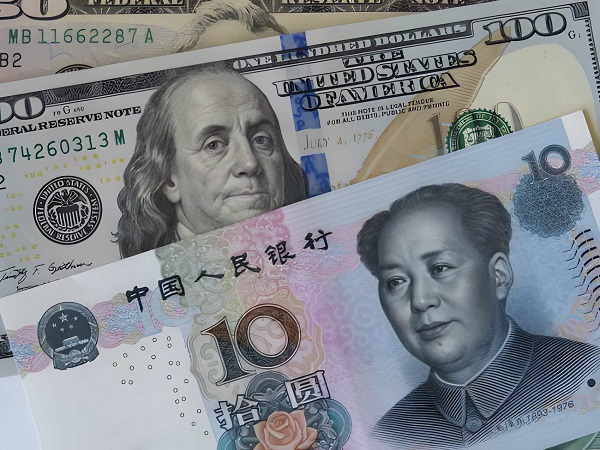
It’s interesting to see how trade dynamics are shifting in subtle ways across the globe, driven more by practical needs than any grand showdown.
Take the recent buzz from Central Asia, for instance. — According to a fresh report from Eurasianet, the Chinese yuan is quietly picking up steam as a payment option in regional commerce, especially in Kazakhstan.
There, on the Kazakhstan Stock Exchange (KASE), trading volumes in the yuan-tenge (CNY/KZT) pair skyrocketed by over 100% year-on-year, hitting around $2 billion from January to November 2025. That’s compared to the same period last year, showing how businesses are finding it handy for cross-border deals.
Sure, the U.S. dollar still rules the roost with over $60 billion in USD/KZT trades (up about 15%), and the Russian ruble comes in second at $18 billion, but the yuan’s growth highlights a natural pivot toward currencies that align with major trading partners.
In Uzbekistan, the dollar remains the go-to for most transactions, as per their central bank’s latest data, with no big mentions of other currencies yet. Overall, this isn’t about drama—it’s about streamlining payments and cutting costs in a region where China is a huge trade buddy, making everyday business smoother without the extra hassle of converting everything through a third currency.
This fits into a bigger picture where plenty of countries are teaming up with China on mutual currency setups, like bilateral swaps or local currency settlements for trade.
These aren’t flashy power plays; they’re just smart economics—reducing reliance on volatile exchange rates, lowering transaction fees, and making imports/exports more predictable when you’re dealing a lot with Beijing.
It’s like choosing the shortest route on a map because it saves time and fuel, not because you’re trying to avoid a particular highway. The rise or dip of any currency, including the dollar, is really just the market’s way of sorting itself out based on trade flows, investment patterns, and global needs. — Nature doesn’t pick favorites; it follows efficiency.
To give you a sense of who’s in on this, here’s a rundown of some key players based on recent developments. We focus on active or recently highlighted arrangements, pulling from official sources and reports for accuracy. For each, we note the type (like a swap line for liquidity support or direct trade settlements in local currencies), a quick status update, and why it makes sense economically.
| Country | Arrangement Type | Brief Status | Economic Sense |
| Kazakhstan | Forex trading and potential settlement in yuan | Yuan-tenge trades doubled to $2B in 2025; no formal swap listed, but growing use in commerce as per KASE data. | With China as a top trade partner, it cuts conversion costs and speeds up deals in energy and goods. |
| Russia | Local currency trade settlements | By late 2025, 99% of bilateral trade settled in rubles and yuan, up from earlier levels; also a 15B yuan swap line.Details here. | Amid heavy energy and manufacturing ties, it shields against external volatility and keeps cash flowing smoothly. |
| Brazil | Local currency trade settlements | Agreement since 2023 to use real and yuan for trade; expanded in 2025, covering over $100B annual bilateral flows; 19B yuan swap.More on the deal. | As China’s biggest South American trade partner (soy, iron ore), it simplifies payments and reduces dollar dependency fees. |
| Indonesia | Local currency transaction framework | Launched in Sept 2025 for settlements in rupiah and yuan; full rollout by end-2025; 40B yuan swap renewed.Launch announcement. | Boosts efficiency in palm oil and electronics trade, with ASEAN surveys showing businesses prefer it for stability. |
| Argentina | Currency swap line | 13B yuan line active, drawn upon in 2023-2025 for reserves; supports import payments in yuan.CFR tracker. | Helps manage economic turbulence by providing liquidity without high-interest dollar loans. |
| Saudi Arabia | Currency swap line | 5B yuan agreement signed in 2024, active into 2025; explores yuan for oil trades.Updated status. | Aligns with massive energy exports to China, hedging oil price swings in local terms. |
| Pakistan | Currency swap line | 3B yuan line renewed; used for trade financing in infrastructure projects.PBC list. | Supports CPEC investments, making repayments easier without forex shortages. |
| South Africa | Currency swap line | 3B yuan active; part of BRICS push for local settlements.From PBC. | Enhances mining and manufacturing trade, reducing costs in a volatile rand environment. |
| European Central Bank (for Eurozone) | Currency swap line | 35B yuan renewed in 2025; facilitates euro-yuan trades. Renewal info. | Provides liquidity for European firms in China, smoothing supply chains in autos and tech. |
| Australia | Currency swap line | 20B yuan ongoing; supports AUD-yuan direct trades. PBC details. | Convenient for iron ore exports, avoiding extra conversions in a $200B+ trade relationship. |
These are just highlights—China has over 40 such swap deals globally, as per the People’s Bank of China, ranging from big players like Korea (40B yuan) to smaller ones like Mauritius (0.2B yuan).
Many started post-2008 for stability and have evolved into everyday tools.
At the end of the day, these arrangements ebb and flow with real-world economics: as trade volumes grow (China’s now the top partner for 120+ countries), using local currencies just becomes the path of least resistance.
It’s not orchestrated upheaval; it’s the natural tide of global business adapting to what’s most convenient and sustainable. /// nCa, 26 December 2025