


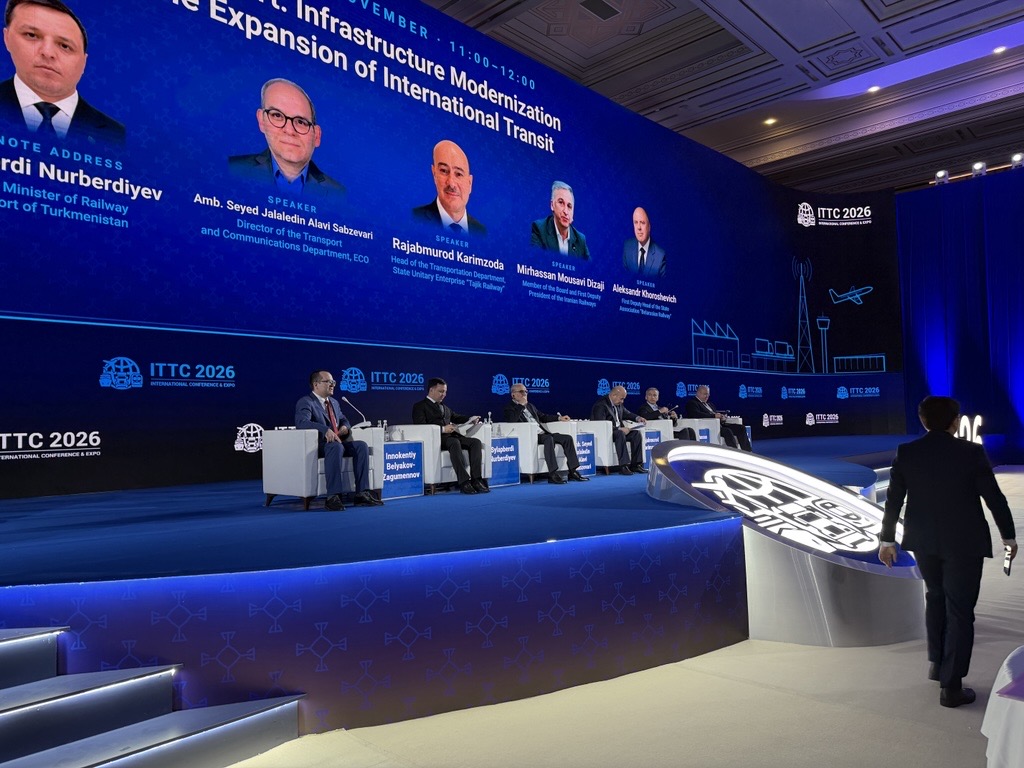
Strengthening the country’s transit role in Eurasia, transitioning to environmentally sustainable rail transport, technological modernization, expanding international investment partnerships, and establishing a unified digital space—these are the five priority areas of strategic development for Turkmenistan’s railway sector.
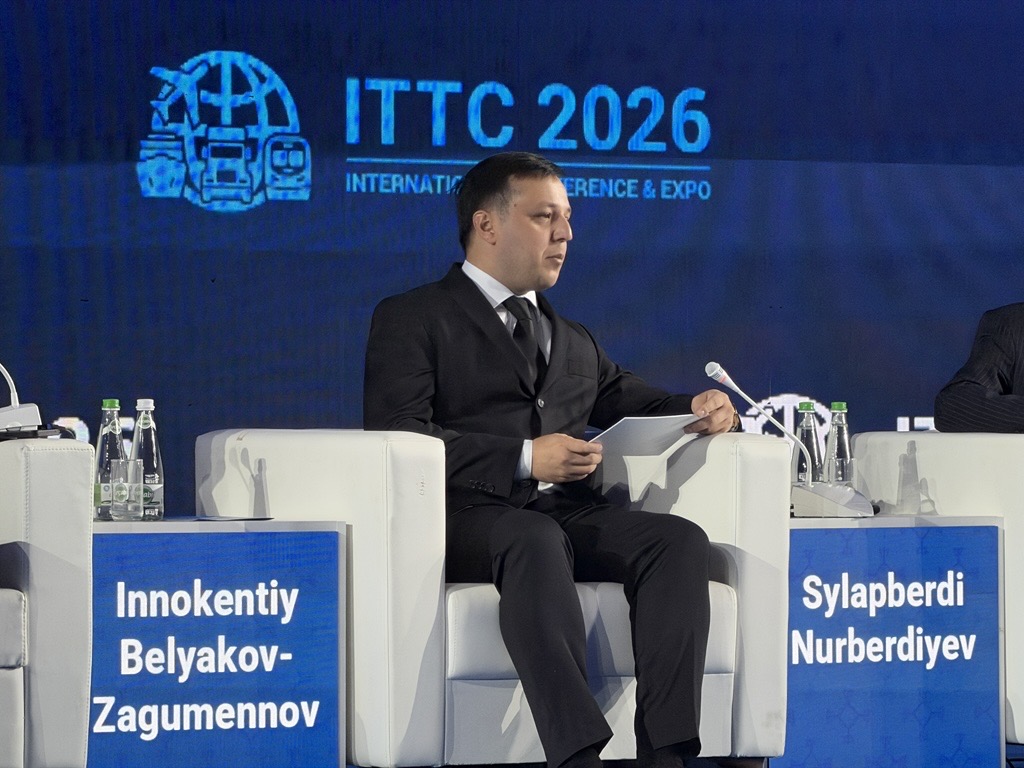
These priorities were outlined by Silapberdy Nurberdiyev, Deputy Minister of Railway Transport of Turkmenistan, speaking at the Fifth International Conference “International Transport and Transit Corridors: Interconnection and Development – 2026” (ITTC 2026) in Ashgabat.
According to him, the country is implementing comprehensive national programs to modernize the physical and technical base of the railway sector, expand existing trunk lines, and build new ones. These measures aim to integrate the national rail system more deeply into the global transport network and establish modern multimodal logistics hubs.
1. Eurasian Transit Hub
Nurberdiyev identified strengthening Turkmenistan’s strategic role as a key Eurasian transit hub as the first priority.
The country’s geographical location enables the development of transport routes along the East–West and North–South axes. At the same time, investments in rail infrastructure are carried out in coordination with the development of seaports, highways, and air transport.
This integrated approach is intended to ensure the efficient movement of cargo through Central Asia to markets in Europe, Russia, China, India, and the Persian Gulf states.
According to the deputy minister, developing transit routes matters not only for strengthening transport links with neighboring countries, but also for enhancing the resilience of international supply chains.
2. Greening Rail Freight
The second priority is the transition to environmentally sustainable rail transport.
Turkmenistan is consistently introducing environmental and energy-saving standards in the transport sector. Key tasks include upgrading track infrastructure, renewing traction rolling stock, reducing carbon footprints, and electrifying trunk lines.
Nurberdiyev highlighted the phased electrification of the Turkmenbashi–Ashgabat–Mary–Turkmenabat railway line as one of the flagship projects.
The project is expected to improve the environmental safety of transport operations, increase train speeds, and establish a technological foundation for green corridors across the region.
3. Technological Modernization and Smart Control
The third priority is the digital and technological modernization of railway infrastructure.
As the deputy minister noted, the competitiveness of international transport routes largely depends on the speed, safety, and predictability of haulage.
In this regard, Turkmenistan is upgrading railway signaling, interlocking, telecommunications, and power supply systems, while introducing automated train control and real-time infrastructure condition monitoring.
Such solutions are especially important for multimodal transport involving numerous transport operators and logistics companies. Their deployment will increase line capacity and improve service quality for shippers.
4. International Financial and Institutional Partnerships
The fourth area of the strategic vision is expanding cooperation with international financial institutions and foreign partners.
Nurberdyev stressed that delivering large-scale infrastructure projects requires international cooperation, mobilization of financial resources, and long-term engagement with development institutions.
Among the partners with which Turkmenistan is building constructive cooperation in this field, he named the Asian Development Bank, the World Bank, the Islamic Development Bank, and the Export-Import Bank of China.
5. Unified Digital Space and Paperless Logistics
The fifth priority is establishing a unified digital space and transitioning to paperless logistics.
Modern challenges call for qualitative improvements in border-crossing procedures and faster document workflows.
Turkmenistan consistently advocates digitalizing logistics business processes, rolling out electronic consignment notes, and creating a single window for all supply chain participants—shippers, carriers, freight forwarders, and customs authorities.
As Nurberdiyev emphasized, building smart digital corridors has become a vital necessity for ensuring economic security and uninterrupted international trade.
Concluding his remarks, the deputy minister expressed confidence that the conference would help move from discussing cooperation prospects to signing concrete agreements, increasing freight volumes, and launching new joint projects.
He underscored the importance of pooling the efforts of participating states to unlock the full transit potential of the region and further expand international transport ties. ///nCa, 25 November 2026