


AVAZA, Turkmenistan – The concentration of senior officials in Avaza for the major regional and Commonwealth of Independent States events has provided Turkmenistan with an additional platform for bilateral diplomacy, with Foreign Minister Rashid Meredov holding separate meetings on October 7 with senior representatives of Iran, Russia and Belarus.
The meetings covered different areas of bilateral and regional cooperation, reflecting the breadth of the diplomatic agenda unfolding alongside Turkmenistan’s 2026 CIS chairmanship. In the case of Russia and Belarus, the discussions also produced new two-year programmes for cooperation between their respective foreign ministries.
The meetings took place as Avaza hosted the CIS Council of Foreign Ministers and a series of other high-level gatherings involving officials from across the region and beyond.
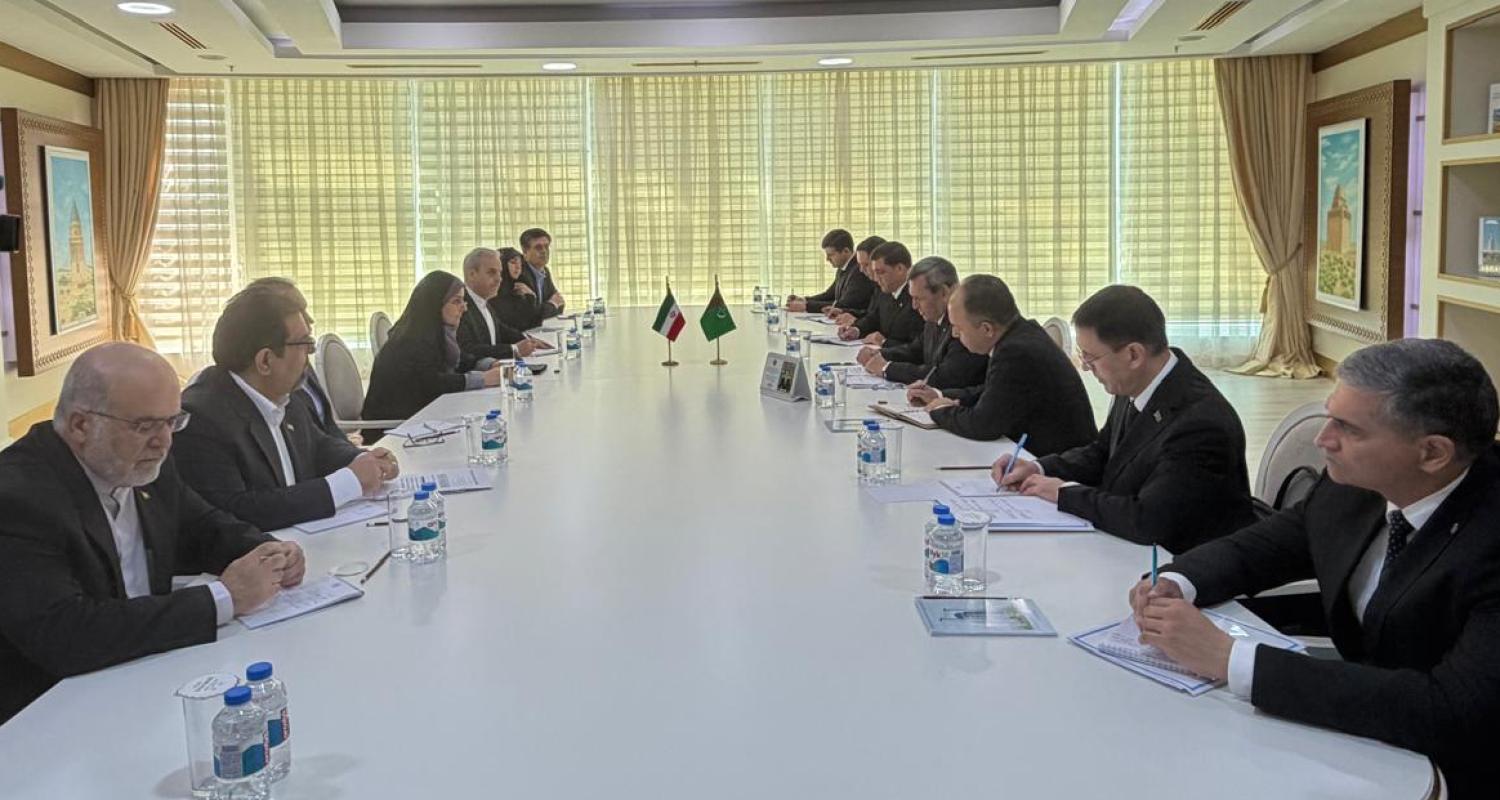
Transport at the centre of Turkmenistan–Iran talks
Meredov met Iran’s Minister of Roads and Urban Development Farzaneh Sadegh, with transport and transit forming the main focus of the discussions.
The two sides reviewed the current state of bilateral cooperation and prospective areas for further interaction, paying particular attention to the development of transport cooperation, expansion of transit opportunities and strengthening regional transport connectivity.
They stressed the importance of further developing transport infrastructure and making effective use of the transit potential of the two countries. The discussions also covered cooperation within regional and international transport initiatives.
The emphasis is consistent with the wider transport agenda visible in Avaza this week. Turkmenistan has been promoting its role in regional transit connectivity, while its geographical position gives cooperation with Iran particular relevance for routes linking Central Asia with the Persian Gulf and other international markets. No new transport agreement was announced in the MFA account of the meeting. Instead, both sides reaffirmed their interest in strengthening Turkmen–Iranian cooperation and continuing dialogue on areas of mutual interest.
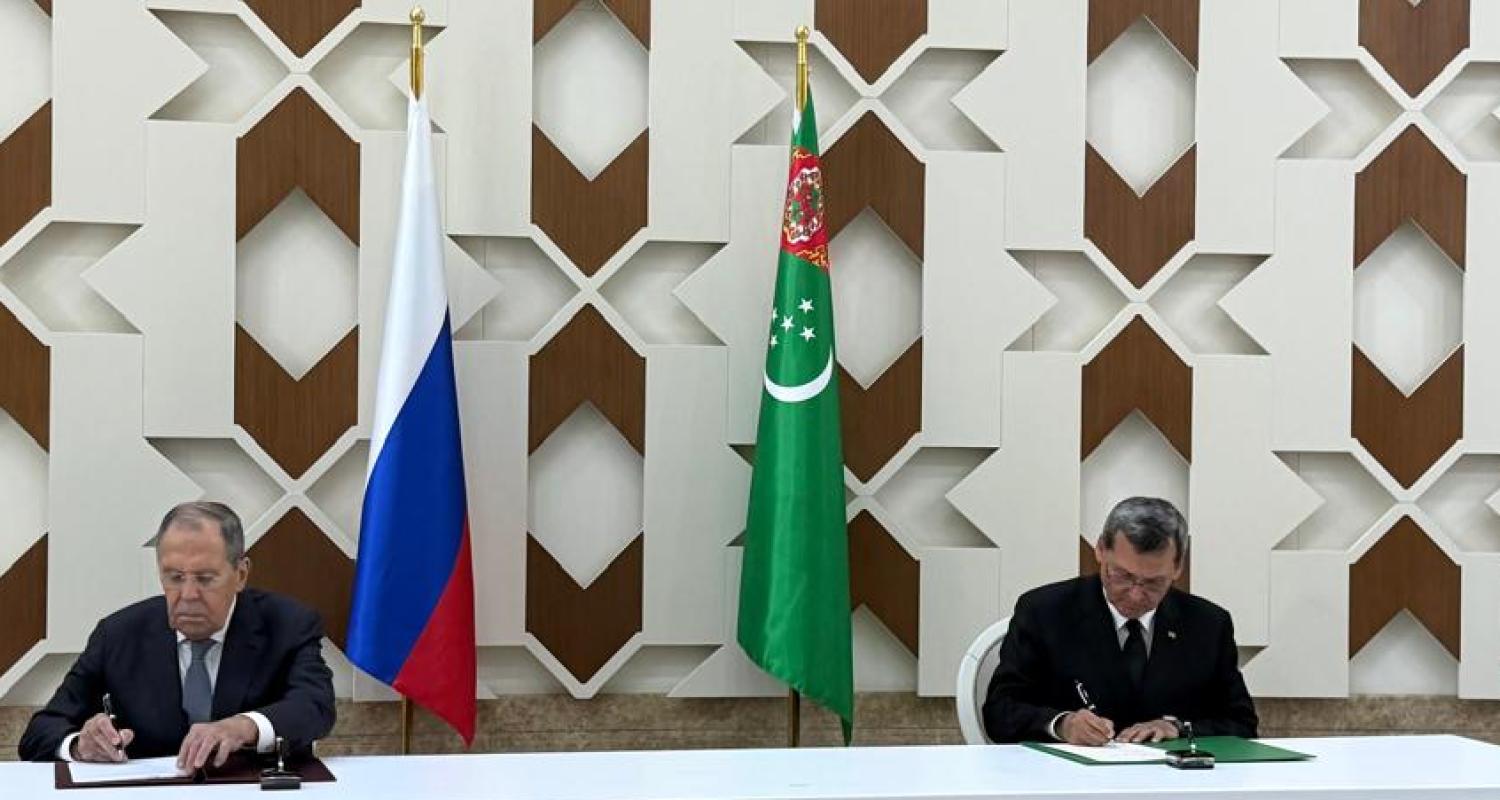
Turkmenistan and Russia establish a 2027–2028 diplomatic programme
The meeting between Meredov and Russian Foreign Minister Sergei Lavrov addressed the current state of Turkmen–Russian cooperation, prospects for further interaction and selected regional and international issues of mutual interest.
The two foreign ministers emphasised the importance of regular political and diplomatic dialogue and contacts in maintaining what the Turkmen Foreign Ministry described as friendly and constructive relations between the two countries. They also reaffirmed their interest in developing bilateral interaction and strengthening cooperation through multilateral formats.
The meeting produced a concrete institutional outcome: Turkmenistan’s Foreign Ministry and Russia’s Foreign Ministry signed a Cooperation Programme for 2027–2028.
According to the Turkmen MFA, the programme provides for further development of interaction between the two foreign ministries. The announcement did not give details of individual activities under the programme, leaving its implementation to the diplomatic contacts and consultations that will take place during the two-year period.
The signing adds a formal framework for continued diplomatic engagement at a time when the two countries are also maintaining contacts through the CIS and other multilateral organisations.
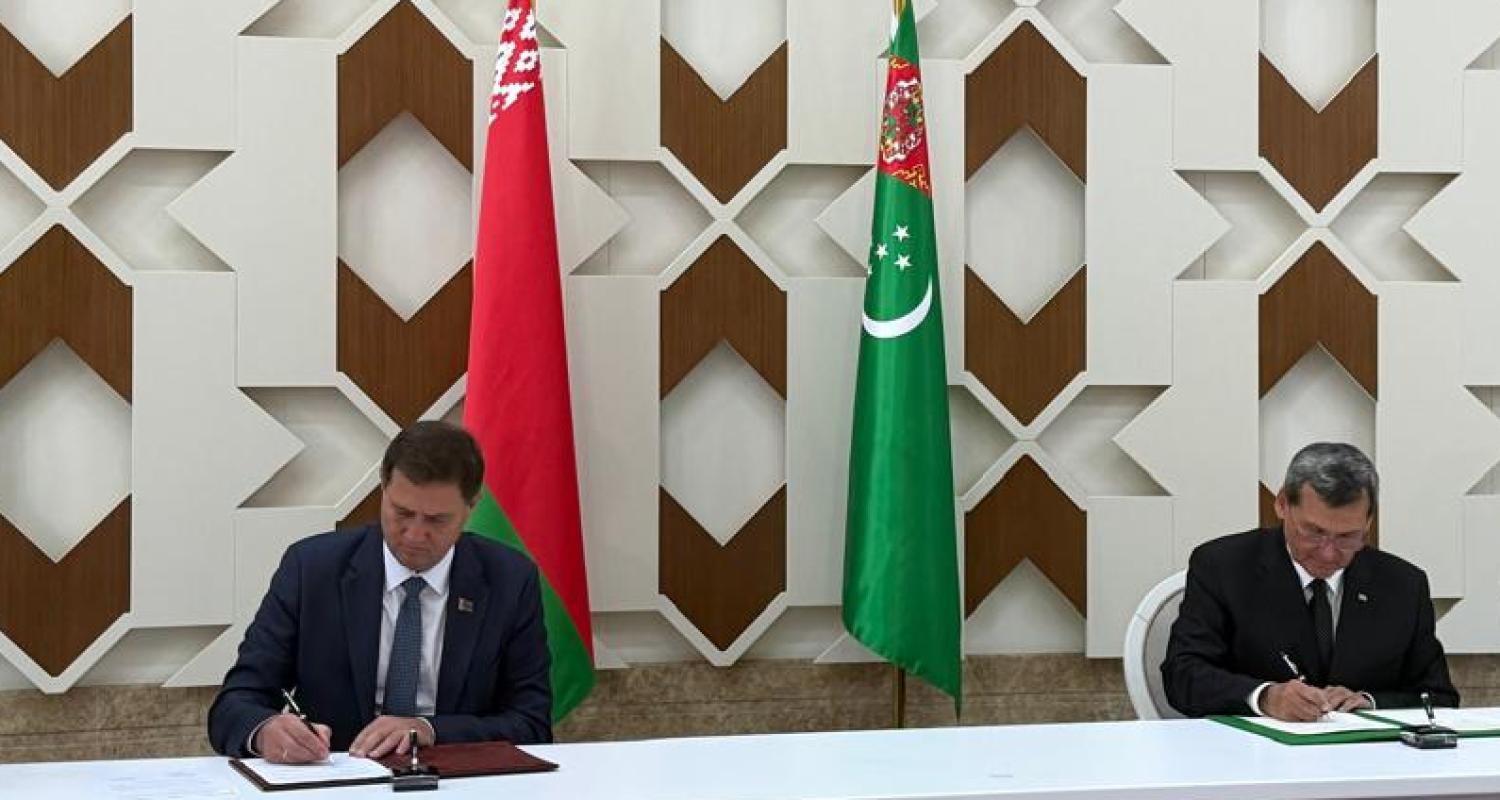
Belarus talks focus on broader bilateral cooperation
A separate meeting with Belarusian Foreign Minister Maxim Ryzhenkov focused on the current state and prospects of Turkmen–Belarusian relations and key areas of bilateral cooperation.
Meredov and Ryzhenkov stressed the importance of maintaining regular political dialogue and strengthening interagency contacts. Particular attention was given to expanding cooperation in trade and the economy, culture and humanitarian affairs.
The meeting also resulted in the signing of a 2027–2028 Cooperation Programme between the Foreign Ministry of Turkmenistan and the Foreign Ministry of Belarus. The Turkmen MFA said the document is intended to further develop and systematise interaction between the two foreign ministries.
As with the Russian programme, the MFA announcement did not specify individual projects or commitments under the Belarus document. Its immediate significance is therefore as an institutional framework for maintaining and organising bilateral diplomatic contacts over the next two years.
Bilateral diplomacy alongside the multilateral agenda
The three meetings illustrate an important secondary dimension of the Avaza programme.
While the CIS meetings and the other international events are addressing multilateral issues, the presence of foreign ministers and other senior officials has also created opportunities for Turkmenistan to review bilateral relations and establish frameworks for future cooperation.
The subjects discussed range from transport and transit with Iran to political and diplomatic coordination with Russia and broader economic, cultural and humanitarian cooperation with Belarus.
The two foreign-ministry programmes signed with Russia and Belarus also demonstrate that the bilateral meetings are not limited to ceremonial exchanges. They are being used to put continuing intergovernmental contacts on a more structured footing.
At the same time, the three meetings should not be regarded as a complete account of Turkmenistan’s bilateral diplomacy during the Avaza events. With a large number of foreign delegations and senior officials present in the National Tourist Zone, further bilateral meetings may take place as the programme continues.
For now, the October 7 meetings show how the Avaza diplomatic marathon is operating on two levels simultaneously: the formal multilateral agenda of the CIS and other regional gatherings, and a parallel series of bilateral contacts through which Turkmenistan is maintaining relationships and preparing the ground for cooperation beyond the current meetings.
The information in this story has been published earlier by nCa but we are repositioning it by combining the account of these three meetings to highlight the underlying dynamics at work. /// nCa, 8 October 2026