


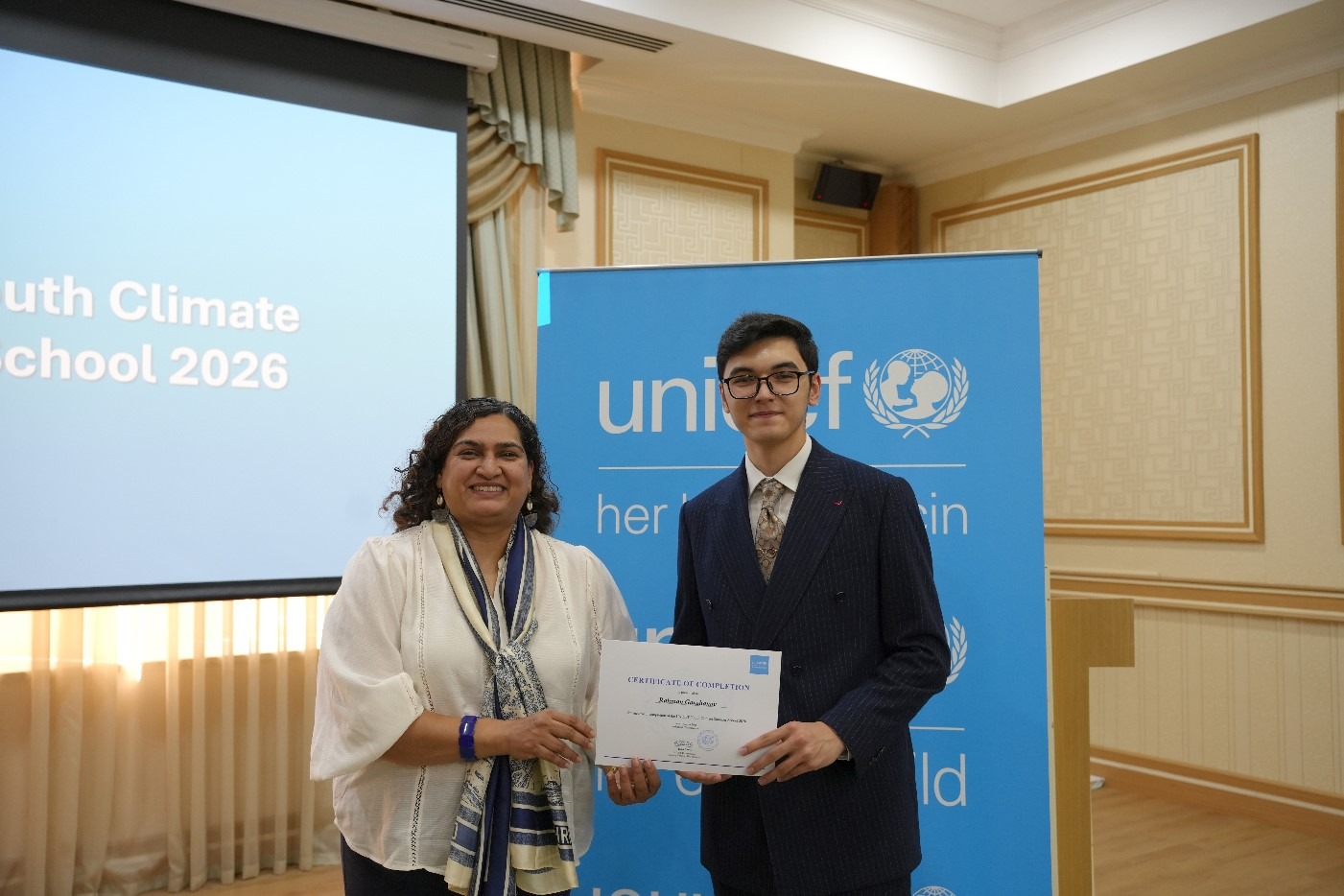
Ashgabat, Turkmenistan, 28 August 2026 — The second edition of the UNICEF Youth Climate Summer School has concluded with 33 young people from every region of Turkmenistan strengthening their knowledge and practical skills in climate action and developing a draft National Youth Statement for COP31.
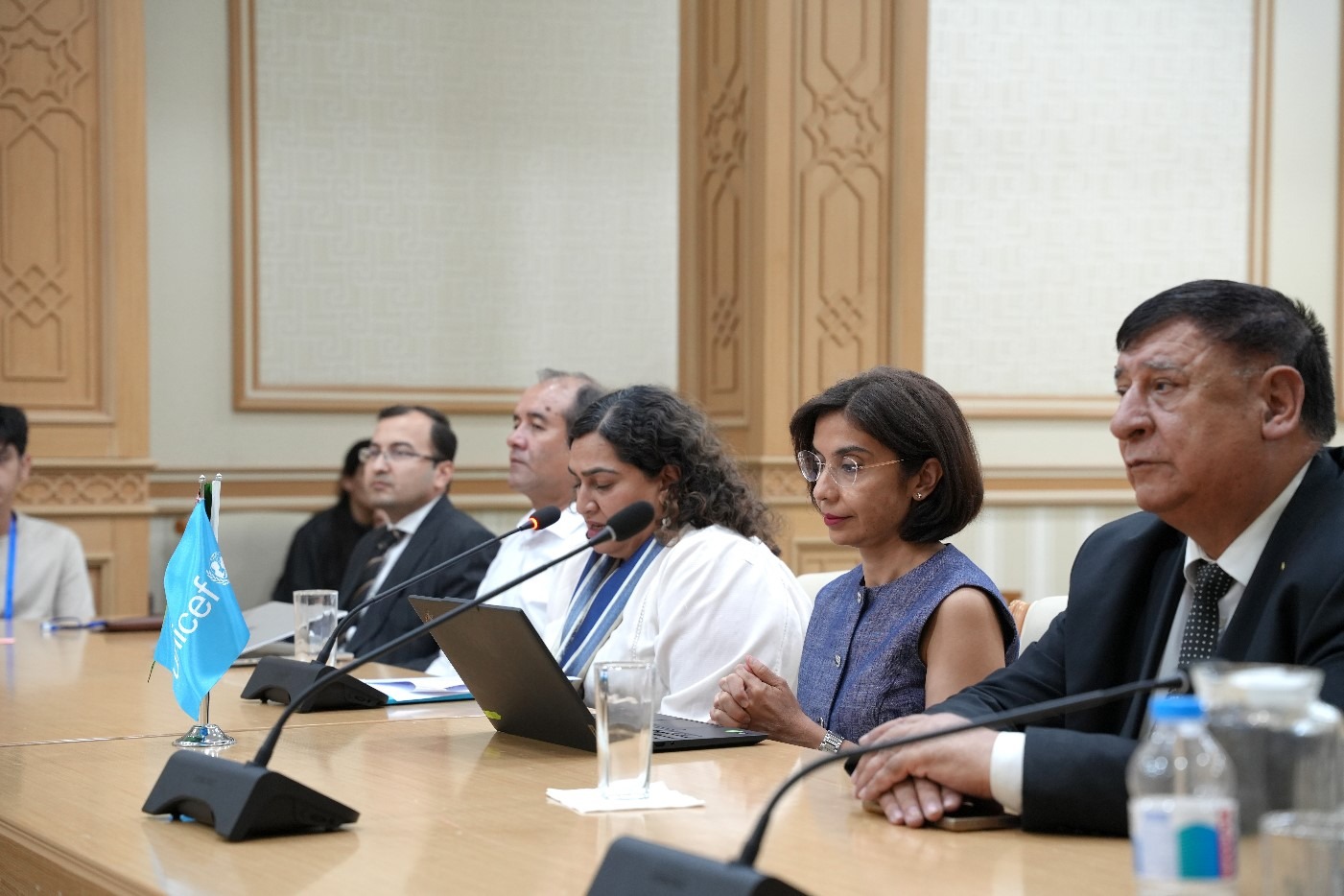
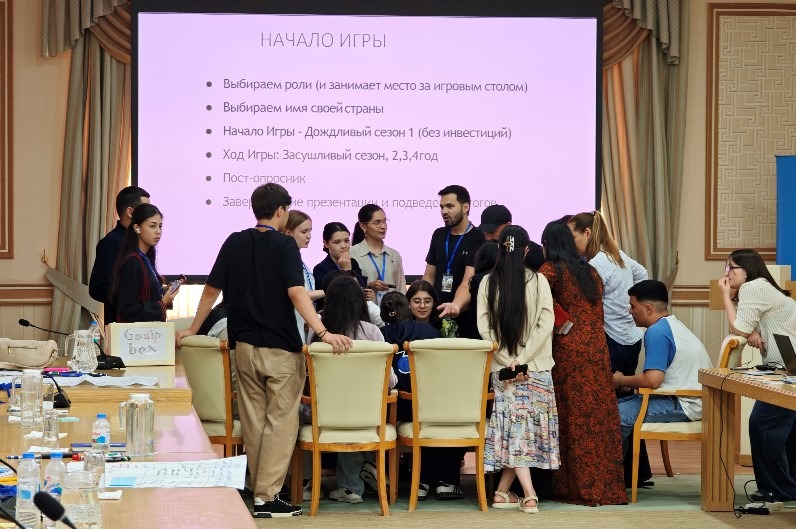
Implemented under the 2026 Joint Work Plan between the Ministry of Education of Turkmenistan and UNICEF, the Summer School brought young people together over four in-person sessions from July to August 2026 to strengthen their climate knowledge, peer networks and practical skills. Through expert sessions, simulations, group work and field visits including to the Kopetdag Nature Reserve and private enterprise “Tudana”, participants explored key climate and environmental issues and developed concrete ideas for community-level climate action.
“Climate change is not something distant for us in Turkmenistan — we can see how it affects our daily lives, especially during the hot summer months,” said one participant of the Youth Climate Summer School. “This programme helped us better understand these challenges and think about what we, as young people, can do in response. It gave us knowledge, confidence and practical ideas to turn our concern into action.”
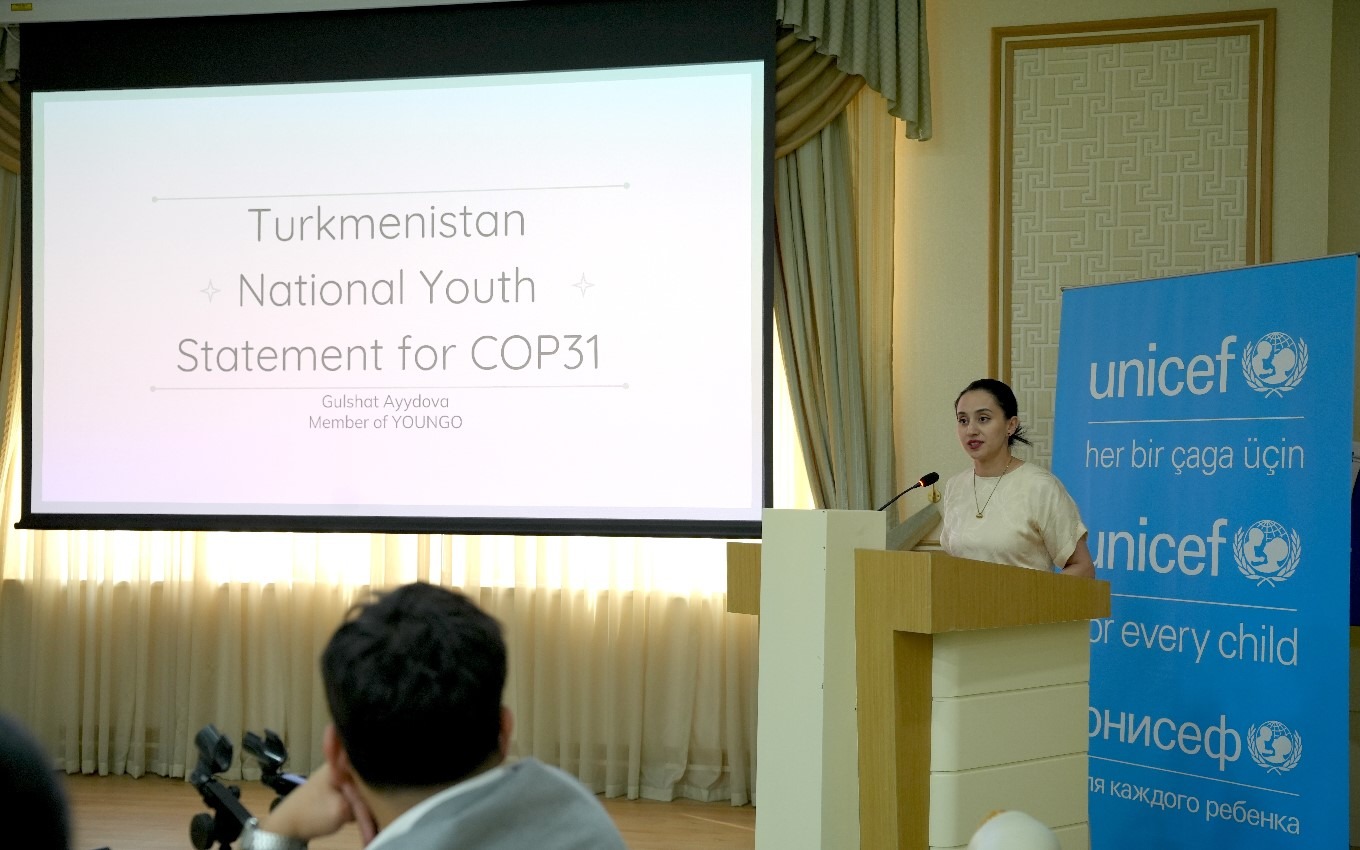
A key outcome of the programme is the draft National Youth Statement for COP31, developed by participants to reflect the climate priorities, concerns and recommendations of young people in Turkmenistan. The statement will be further discussed with youth across the country before contributing to the global youth statement process and being submitted to YOUNGO, the official youth constituency of the UNFCCC, ahead of COP31. This process will help ensure that the priorities and perspectives of Turkmen youth are reflected in international climate discussions.
Participants also developed and pitched youth-led climate project ideas addressing local environmental challenges. Selected initiatives will receive continued mentoring and technical support from UNICEF Turkmenistan and local partner organizations, helping young people move from learning to implementation.
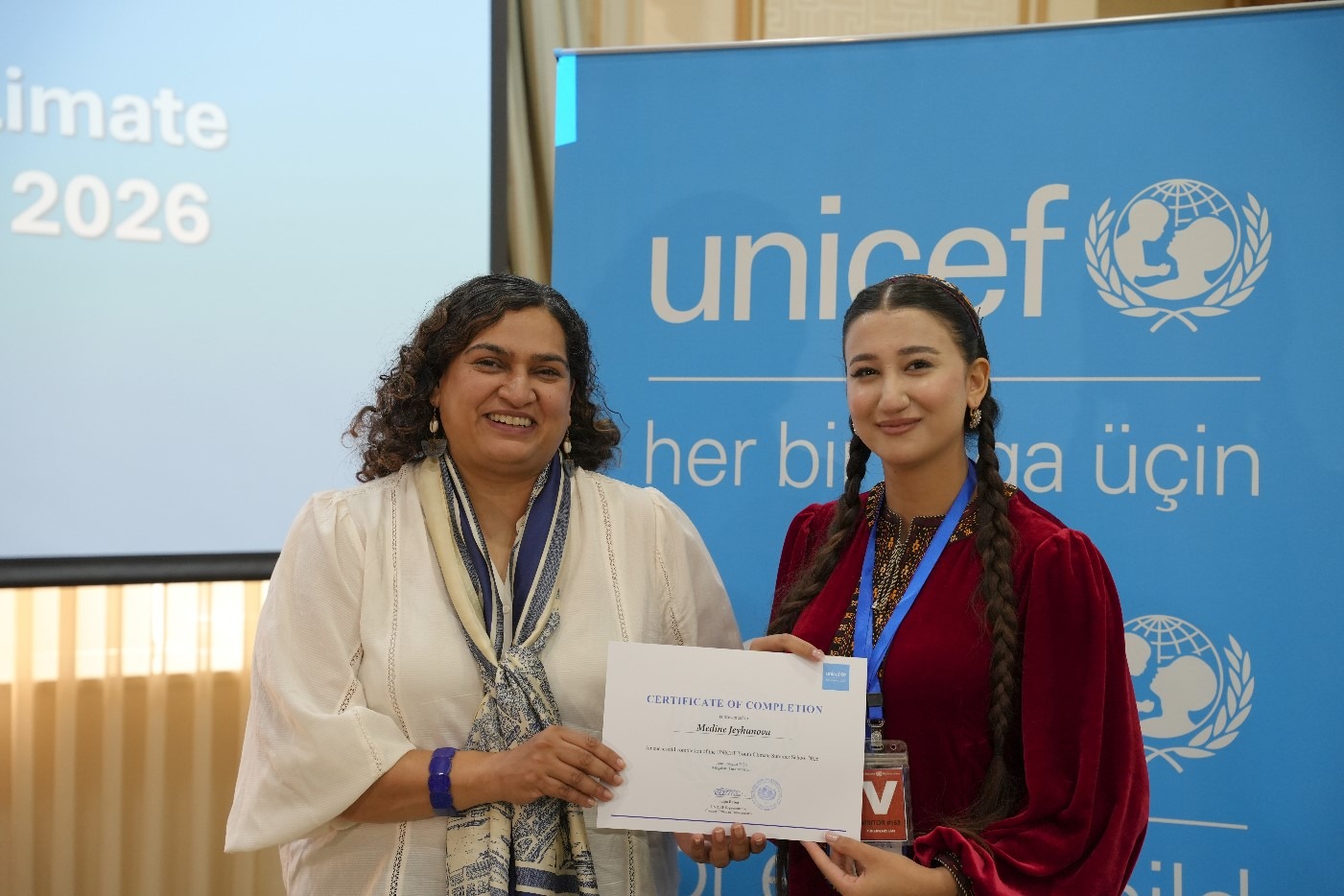
The 2026 edition builds on the first Youth Climate Summer School held in 2025, which strengthened climate literacy and leadership skills among participants and led to the submission of Turkmenistan’s National Youth Statement for COP30. Alumni of the first programme also proudly represented Turkmenistan at the Regional Ecological Summit in Kazakhstan in April 2026, demonstrating how the initiative is helping young people take their climate advocacy beyond national platforms. This year’s programme further expanded the national network of young climate leaders and supported deeper engagement of youth in climate action, sustainable development and environmental governance.
“The ideas and actions of young people can help drive positive change,” said Jalpa Ratna, UNICEF representative in Turkmenistan. “It can begin with one good question, one practical idea, one conversation with a friend, or one small change at home. Your voice matters — and when it reaches your family, your classmates, your university and your community, it can inspire many others to act as well.”
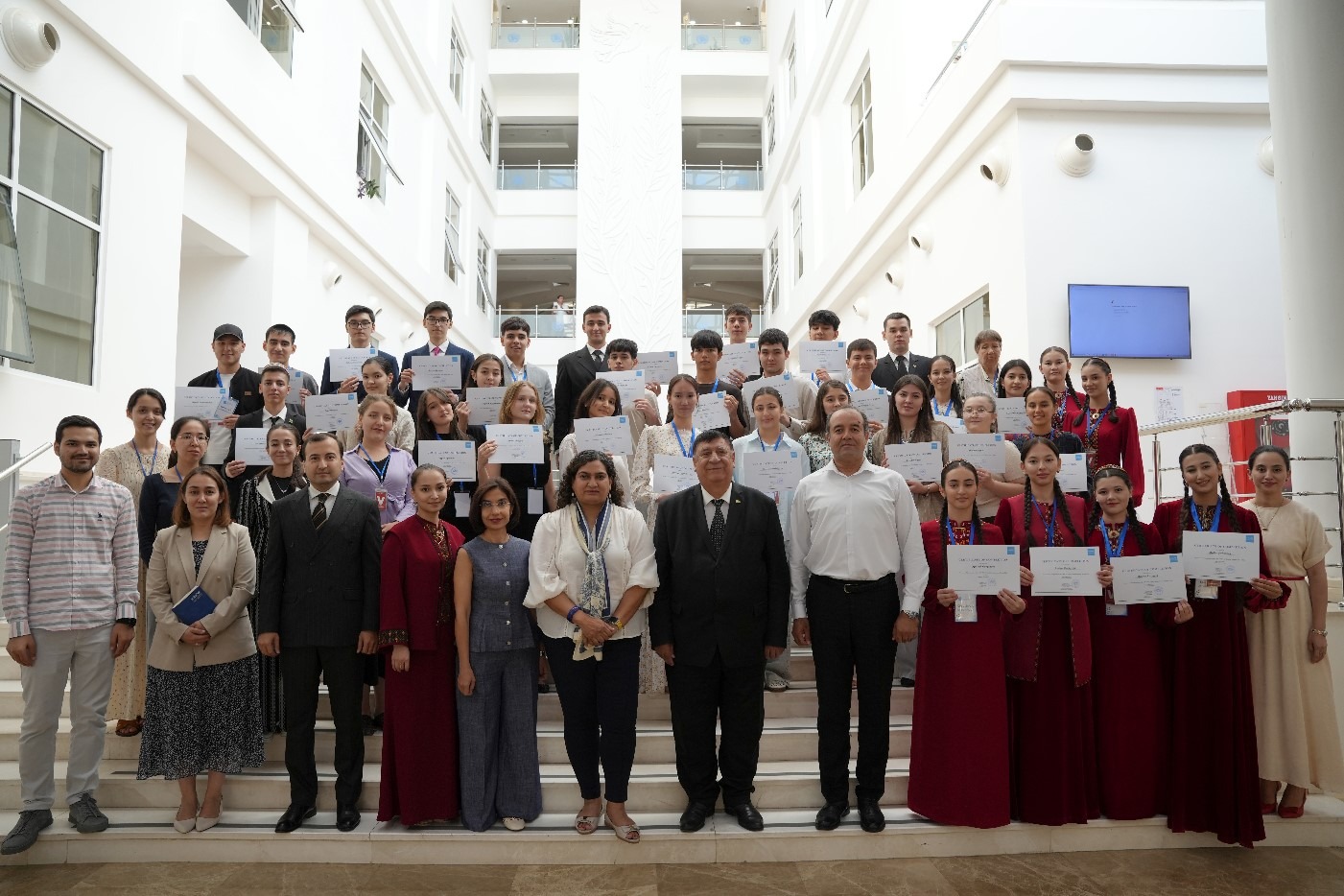
About the Youth Climate Summer School: Launched by UNICEF in partnership with the Ministry of Education of Turkmenistan in 2025, the Youth Climate Summer School brings together young people aged 16 to 25 from across the country who have a demonstrated interest in climate action, environmental protection and community engagement. The 2026 edition took place from July to August 2026 and was implemented under the Joint Work Plan between the Ministry of Education of Turkmenistan and UNICEF.
UNICEF expresses its sincere appreciation to UNDP; GIZ; the Secretariat of the Interstate Commission on Sustainable Development (ICSD); the Resident Coordinator’s Office; Team Bars; ConservationXLabs; the Kopetdag Nature Reserve; UNRCCA; the UN Convention to Combat Desertification (UNCCD); the Nature Protection Society of Turkmenistan; the Sustainable Finance Center; “Tebigy Kuwwat”; “Tudana” strawberry production greenhouses; and the Ministry of Education’s Bilim Institute for their valuable contributions to the programme, including support to the field visits that enriched participants’ learning experience. ///nCa, 28 August 2026 (in cooperation with UNICEF Turkmenistan)