


nCa Analysis
The global energy transition was never going to be linear. But few anticipated a disruption of this magnitude.
The unfolding Iran war has shaken the foundations of the global energy system. With the Strait of Hormuz under persistent stress, LNG infrastructure in the Gulf damaged, and supply chains fraying, the world is confronting a sudden and uncomfortable truth: energy systems built for efficiency are often fragile under pressure.
Now add a seemingly narrower but consequential decision—Vladimir Putin’s announcement that Russia will suspend gasoline (petrol) exports from April through July 2026. On the surface, this is not a crude oil shock. But in a tightly interconnected fuel market, even a targeted restriction can ripple outward, tightening refined product availability, raising transport costs, and amplifying volatility across the energy spectrum.
The cumulative effect is not just higher prices. It is a systemic stress test—and under such stress, energy systems tend to fall back on what is available, affordable, and reliable.
That is where coal re-enters the conversation.
A Return Nobody Planned For
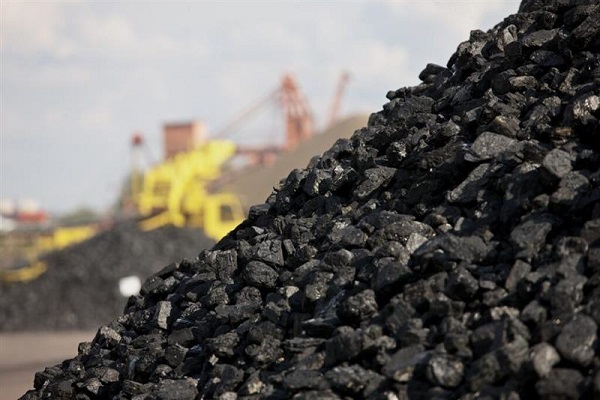
Coal is not making a comeback because policymakers have reconsidered its environmental cost. It is reappearing because, in moments of disruption, it remains the most accessible fallback.
Unlike LNG, coal does not depend on vulnerable maritime chokepoints. Unlike renewables, it does not require new infrastructure to scale in the short term. And unlike oil, it is not as tightly bound to global refining and transport bottlenecks.
In practical terms, coal offers something that is suddenly in short supply: predictability.
Across Asia, early signals are already visible. Price-sensitive economies are scaling back LNG imports and leaning more heavily on coal-fired power generation. Industrial users, facing volatile gas prices, are quietly shifting fuel mixes. Even in countries that had committed to phasing down coal, the urgency of keeping lights on and factories running is beginning to override long-term preferences.
This is not a policy pivot—yet. But it is a behavioral shift, and those often precede policy.
The Nature of This Shift: Temporary, but Real
It would be a mistake to frame this as a full-scale reversal of the energy transition. The structural forces favoring renewables—cost declines, technological innovation, climate commitments—remain intact.
What we are witnessing instead is a temporary rebalancing.
In the immediate term (2026–2027), coal is likely to regain marginal share as countries respond to supply shocks. In the medium term (toward 2030), as LNG infrastructure stabilizes and alternative supplies come online, this reliance should plateau. Beyond that, the longer trajectory of decline is likely to resume.
But “temporary” does not mean insignificant.
Even a three- to five-year increase in coal usage can:
- Lock in emissions trajectories
- Delay investment in cleaner alternatives
- Reshape regional energy trade patterns
For policymakers, the question is not whether coal will return—it already has. The question is how to manage its return without derailing long-term goals.
Central Asia: Between Opportunity and Risk
For the countries of Central Asia, this shift carries particular implications—some promising, others deeply challenging.
The region sits at a crossroads of energy systems. Rich in fossil fuel resources yet increasingly integrated into global markets, countries like Kazakhstan, Uzbekistan, and Turkmenistan must navigate both opportunity and exposure.
First, the opportunity.
Kazakhstan, with its substantial coal reserves, could see renewed demand both domestically and regionally. In a high-price environment for gas and LNG, coal-fired generation may appear economically attractive, particularly for maintaining grid stability and supporting industrial activity.
Uzbekistan, which has been steadily reforming its energy sector, may face a more complex calculus. Its ambitions to modernize and diversify energy sources could be tested by short-term pressures to ensure affordability and reliability. Coal, even if not central to long-term planning, may become a necessary bridge.
Second, the risk.
For gas-rich countries like Turkmenistan, the disruption of global gas markets presents a paradox. On one hand, constrained LNG supply could increase the strategic value of pipeline gas exports. On the other, if key markets pivot—even temporarily—toward coal, demand growth for gas could soften in the short term.
Turkmenistan has nearly 900 million short tons of coal. While not as large as Kazakhstan or Uzbekistan, the deposits are substantial and deserve evaluation for serious exploration.
More broadly, a coal resurgence elsewhere could delay the energy transition in Central Asia itself. Governments may be tempted to prioritize immediate energy security over structural reform, particularly if external financing for clean energy tightens amid global uncertainty.
A Strategic Wake-Up Call
The deeper lesson here is not about coal. It is about resilience.
The current crisis has exposed a vulnerability at the heart of the global energy system: overreliance on interconnected, efficiency-optimized supply chains that can be disrupted by geopolitical shocks.
Coal, for all its drawbacks, offers a form of energy sovereignty. It can be stored, controlled, and deployed domestically. That is why it persists—not as a preferred option, but as a dependable one.
For policymakers, especially in emerging and transition economies, this raises uncomfortable but necessary questions:
- Should energy systems be optimized solely for cost and emissions—or also for resilience?
- How much redundancy is enough?
- And what role should legacy fuels play as “insurance” in an increasingly uncertain world?
Managing the Detour
If coal’s return is a detour, it must be a managed one.
This means:
- Treating increased coal use as explicitly temporary
- Avoiding long-term investments that lock in dependence
- Accelerating parallel investment in renewables, storage, and grid modernization
In other words, the response to short-term disruption must not compromise long-term direction.
The Paradox We Must Accept
Coal today embodies a paradox.
It is both a declining fuel and a necessary fallback. A relic of the past and a stabilizer of the present.
The real challenge for decision-makers is not to deny this contradiction, but to navigate it intelligently.
Because coal is not returning because the world wants it back. — It is returning because, for now, the alternatives are under strain—and the system needs something it can rely on. /// nCa, 1 April 2026