


Tariq Saeedi
The Ministry of Cultural Heritage, Tourism and Handicrafts of Iran has issued a detailed official report titled A Wound on the Body of History and Culture.
Circulated in March 2026 and addressed to international bodies including UNESCO, the document provides Tehran’s assessment of the impact of the ongoing conflict on the country’s irreplaceable cultural legacy.
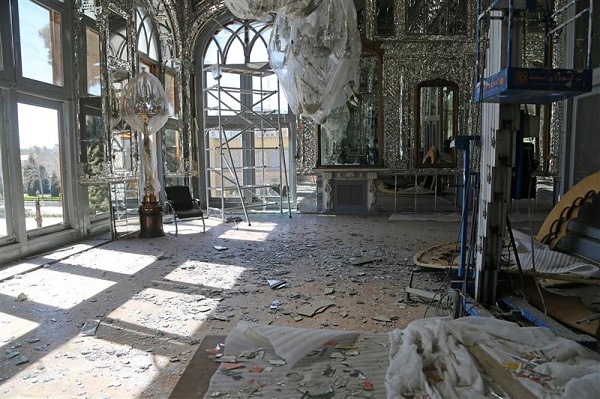
According to the ministry, the military operations that began on 28 February 2026 have caused damage to 116 historical monuments and museums across 16 provinces and 21 cities. This includes harm to four UNESCO World Heritage Sites, 49 museums, and six historic urban areas.
The report emphasises that these were not incidental effects but, in many cases, the result of targeted or near-targeted strikes whose shockwaves, fires, and debris affected structures of profound national and global significance.
Among the most prominently cited examples are:
- Golestan Palace in Tehran (UNESCO World Heritage) — severe structural damage, collapse of sections, and destruction of large areas of historic tilework, mirrorwork, murals, and wooden elements.
- Naqsh-e Jahan Square in Isfahan (UNESCO World Heritage), including the Imam Mosque, Sheikh Lotfollah Mosque, and Ali Qapu Palace — extensive cracking and loss of tiling, stucco, and architectural features.
- Chehel Sotoun Palace in Isfahan (UNESCO World Heritage) — partial collapse, deep cracks, and damage to frescoes and decorations.
- Multiple museums and sites in provinces such as Kurdistan, Lorestan, Kermanshah, and others, including archaeological museums, palaces, and religious complexes.
The ministry frames these losses not merely as physical destruction but as an assault on Iran’s collective memory and civilisational identity.
It argues that the attacks violate core provisions of the 1954 Hague Convention for the Protection of Cultural Property in Armed Conflict, the 1972 World Heritage Convention, and related international humanitarian law. The report notes that many of the affected sites bore the Blue Shield emblem designating them as protected civilian cultural property.
In response, the ministry has documented the damage, shifted the movable artefacts to safer storage where possible, and formally notified UNESCO and other international cultural organisations. It calls for independent investigation and accountability, describing the events as “a cultural and humanitarian crime.”
This report adds a distinct dimension to the broader picture we have been tracing in this series.
Earlier parts examined resilience, institutional continuity, and the Hiss-e Mohasereh (sense of siege) that shapes Iranian national consciousness. The deliberate or incidental harm to sites that embody centuries of Persian artistic, architectural, and spiritual achievement touches directly on that identity.
For a nation whose literary and cultural heritage has long served as a source of endurance through conquest and upheaval, such losses are experienced as wounds not only to stone and tile but to the living memory of the people.
The ministry’s document does not claim that cultural heritage can be fully protected in modern warfare. Instead, it insists that the international community has a responsibility to recognise and respond when such heritage is placed at risk. Whether or not every detail or legal characterisation is universally accepted, the report stands as an official record of what Iran believes has been lost or endangered in these weeks of conflict.
As the search for de-escalation continues, this cultural accounting serves as a reminder that wars leave scars far beyond the battlefield. — Some of those scars are visible in damaged palaces and museums; others are carried in the collective memory of a people who have, throughout their long history, repeatedly rebuilt and renewed their cultural legacy after moments of destruction.
The question now is whether the international community will treat these wounds as mere collateral footnotes or as something requiring urgent attention and, ultimately, reparation.
In the Iranian view, protecting the “body of history and culture” is not a secondary concern — it is inseparable from any meaningful vision of peace. /// nCa, 31 March 2026