


Elvira Kadyrova, Xi’an, Chins
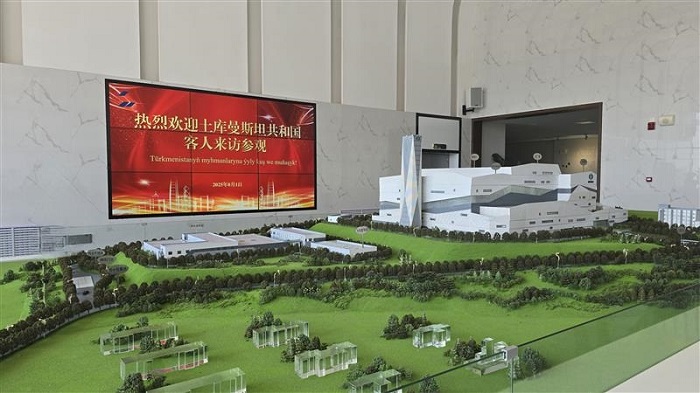
In Xi’an, Shaanxi Province, China, a youth delegation from Turkmenistan visited a groundbreaking project focused on generating electricity from household waste. Implemented through a public-private partnership (PPP), this initiative showcases how modern technologies can transform waste into a valuable resource, ensuring environmentally friendly disposal and energy production.
The operational principle of the Xi’an waste-to-energy incineration complex is straightforward yet technologically advanced. Household waste is processed without prior sorting and undergoes fermentation, during which water is extracted. This water is thoroughly purified and used solely for technical purposes. The remaining waste is incinerated, and the resulting thermal energy powers two 35 MW steam turbines. Equipped with turbo-generators, these turbines produce electricity that feeds into the city’s power grid.
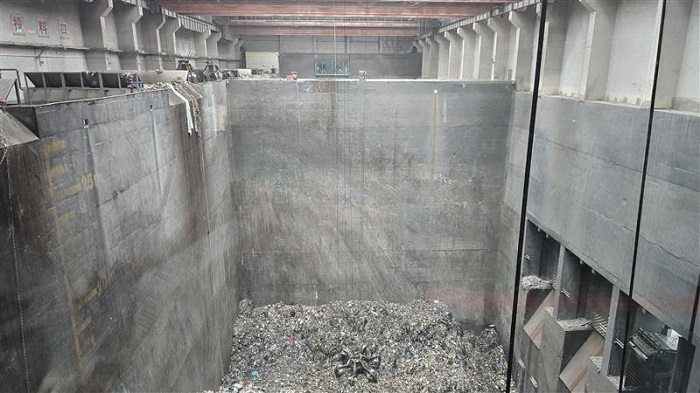
The plant’s design capacity is impressive: it processes 3,000 tons of household waste daily, equivalent to 1 million tons annually. Four incineration lines, each handling 750 tons of waste per day, ensure the facility’s seamless operation. Upon completion, the plant will generate 425.6 million kWh of electricity annually, with 340.6 million kWh supplied to the grid. Additionally, it will produce 59.88×10⁴ joules of heat per year, making a significant contribution to the region’s energy supply.
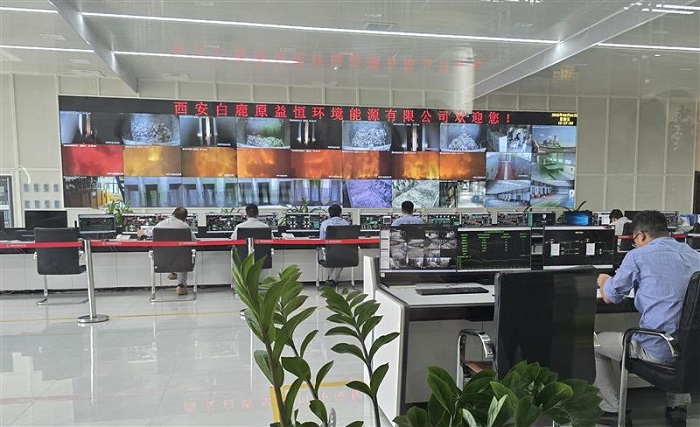
The facility is fully automated and digitized. Operators monitor the incineration process across four furnaces in real time, with all data displayed on a large composite monitor. This ensures not only high efficiency but also minimal environmental impact. Water purification and emissions control systems guarantee compliance with stringent environmental standards.
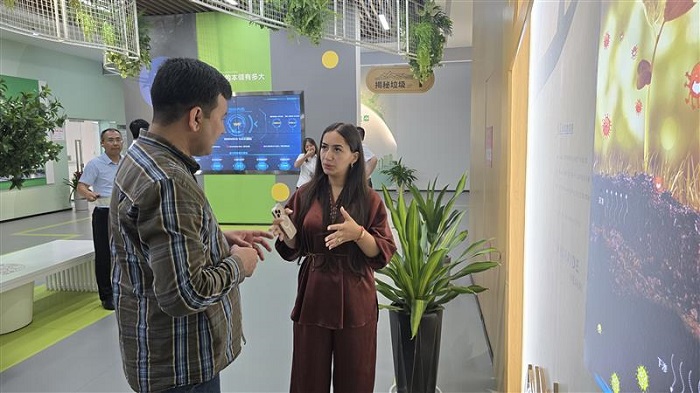
This approach to waste management serves as a vivid example of responsible environmental stewardship. The Xi’an project illustrates how industrial development can harmonize with ecological care. The plant’s scalability allows it to be adapted to the needs of specific populations, making this model versatile and appealing to other countries.
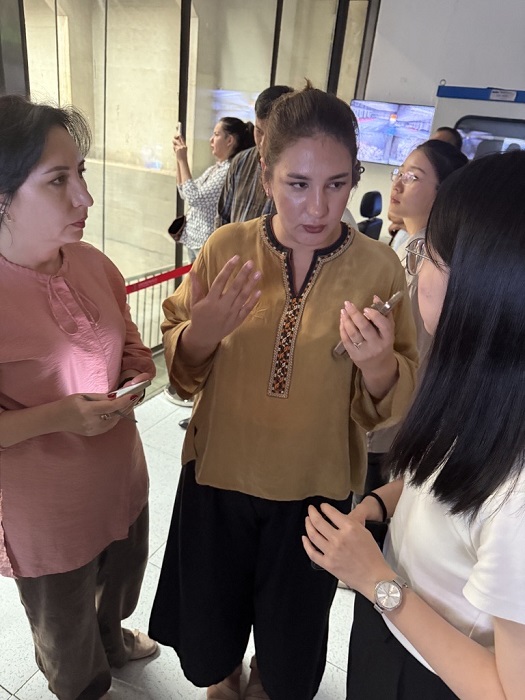
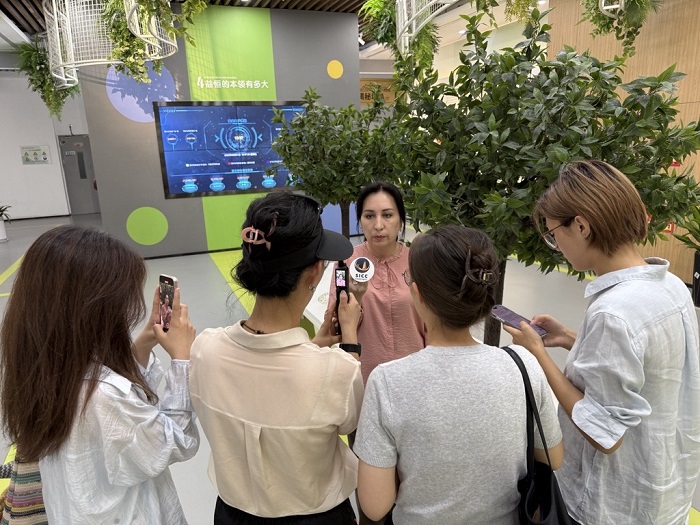
For the Turkmen delegation, the visit provided an opportunity to explore cutting-edge green technology practices. Such projects could find application in Turkmenistan, where the adoption of green economy principles is increasingly relevant. The technology’s flexibility enables the plant’s capacity to be tailored to the needs of both large cities and small settlements, opening prospects for implementing similar solutions in Turkmenistan. ///nCa, 2 August 2025