


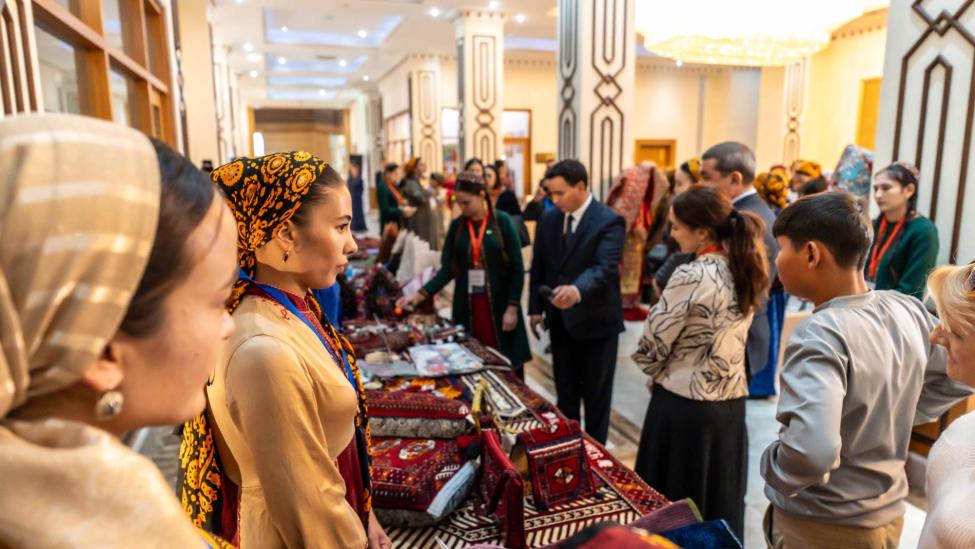
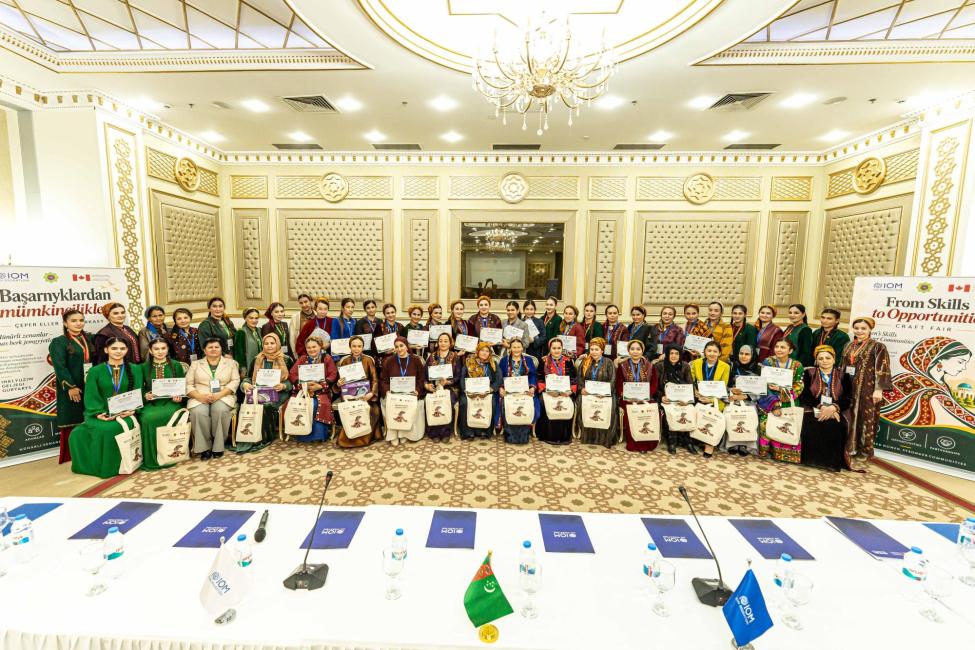
Mary, 20 November 2026. More than 30 women from Afghan and local communities of Mary velayat showcased their products, experience and talent at the “From Skills to Opportunities” handicraft fair, organized by the International Organization for Migration (IOM) in the city of Mary with support from local authorities and partner civil society organizations. For Afghan women, the fair was an opportunity to demonstrate the sewing skills they had acquired through vocational training supported by IOM by showcasing their own creations, and to explore how these skills could support income-generating activities. The exhibition attracted more than 200 visitors, including representatives of the private sector, students and members of the wider public.
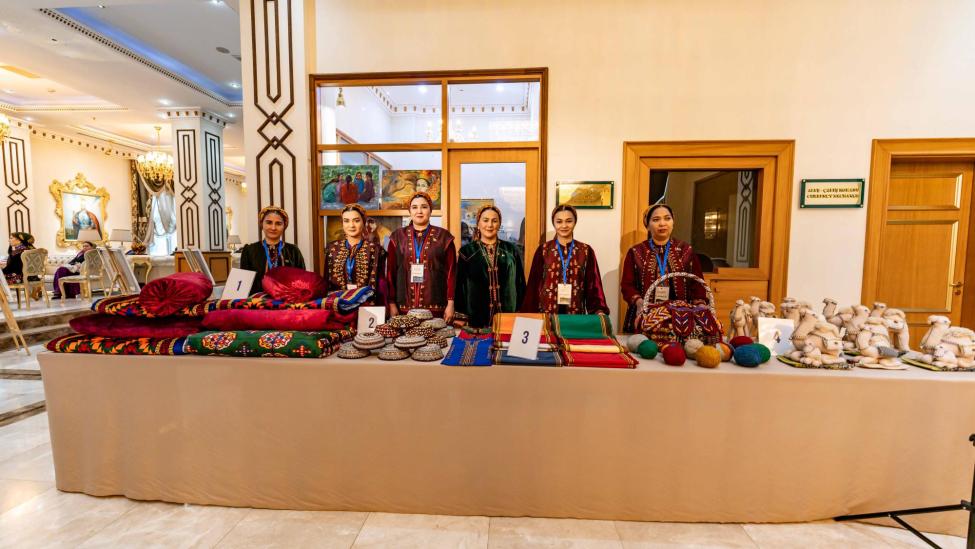
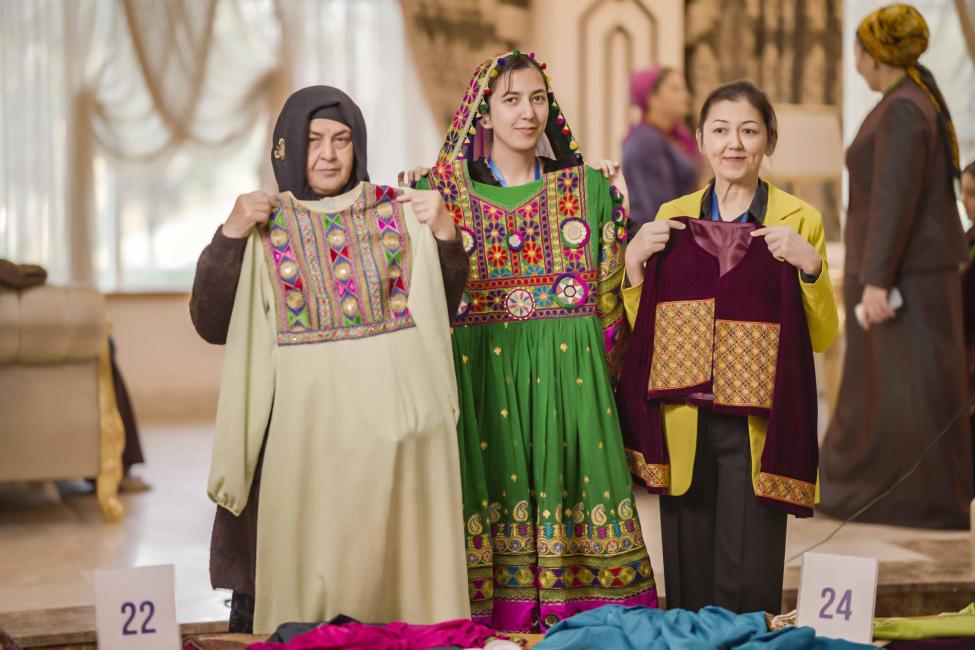
The programme featured displays of handmade products and stories shared by women from the Afghan community. Participants presented a wide range of handmade products and traditional crafts: silver jewellery, traditional skullcaps (takhya), embroidery for dresses, traditional wedding garments (kurte), handwoven carpets, felt products, bouquets of knitted flowers and traditional Afghan costumes embellished with hand embroidery and decorative elements.
A key part of the programme was a roundtable discussion exploring opportunities for cooperation between the women participating in the fair, the local business community and partner organizations. The discussion focused on strengthening the skills and income-generating activities of women from Afghan and local communities through greater access to orders from customers and markets, temporary or part-time employment, participation in local production chains and partnerships with producers.
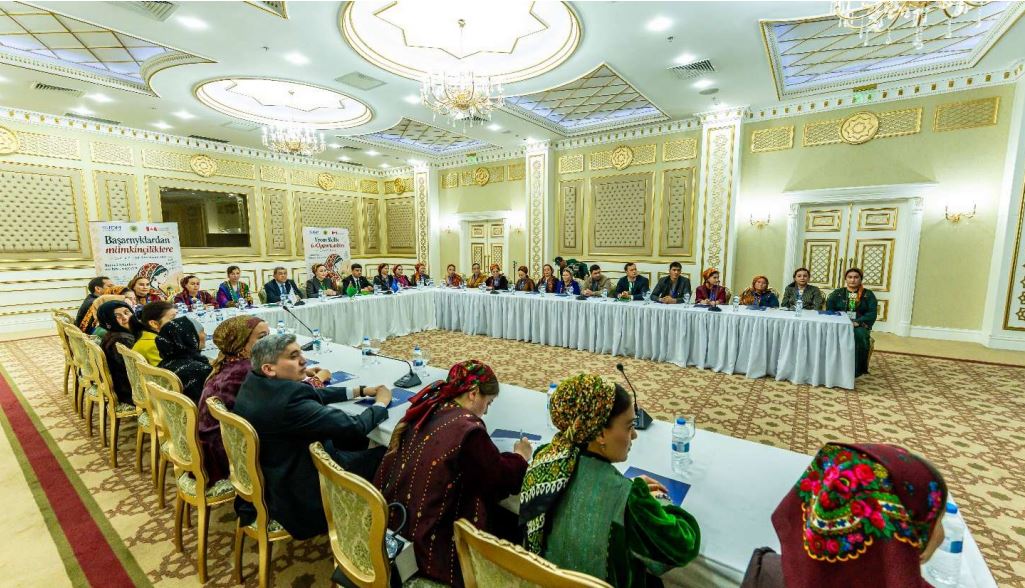
Direct dialogue with representatives of local authorities and the private sector provided a platform to identify next steps towards creating more sustainable income opportunities for women from the Afghan community in Mary province. Participants discussed concrete measures to expand employment and professional development opportunities for these women. Working in groups, they explored potential business partnerships and exchanged information about their capabilities and needs. Businesses taking part included “Tyaze Ay”, a food producer; “Gerchek Yigit”, specializing in silk weaving; “Rovshen”, a footwear manufacturer; and many others. Their representatives put forward specific proposals to expand employment opportunities for women artisans within their production operations. These included transport for workers from remote villages and meals, free work placements and mentoring, followed by opportunities to work in their production operations, among other forms of support.
At the close of the fair and roundtable, participants expressed confidence that initial discussions would lead to dialogue, dialogue to concrete agreements, and agreements to new opportunities.
The handicraft fair marked the final event of IOM’s three-year regional project in Turkmenistan. Through the vocational training component, IOM supported a total of 219 women and girls from Afghan and local communities in Lebap and Mary provinces. They completed three months of sewing training at the Ministry of Energy’s vocational school in Mary, with support from “Mashgala” public association, and at Secondary School No. 23 in Dyanev District of Vocational and Technical Lyceum No. 15 of the Seydi Oil Refinery in Lebap Province, with support from “Ynamly Durmush” public association. The training combined theory and practice. All graduates received certificates and professional sewing machines as gifts to help them apply their newly acquired skills in income-generating activities.
****
The event was organized under IOM’s regional project, “Comprehensive Action Plan for Afghanistan and Neighbouring Countries”. With support from the Government of Turkmenistan and coordination by the Ministry of Foreign Affairs, IOM implemented the country component in cooperation with local authorities and non-governmental organizations, with the direct participation of Afghan and local communities. The project supported the socioeconomic integration of Afghan nationals, strengthened mutual understanding and practical cooperation between Afghan and local communities, and expanded opportunities for women and girls. It also strengthened the capacity of national partners to prepare for emergencies and crises involving population displacement. ///МОМ Туркменистан, 20 ноября