


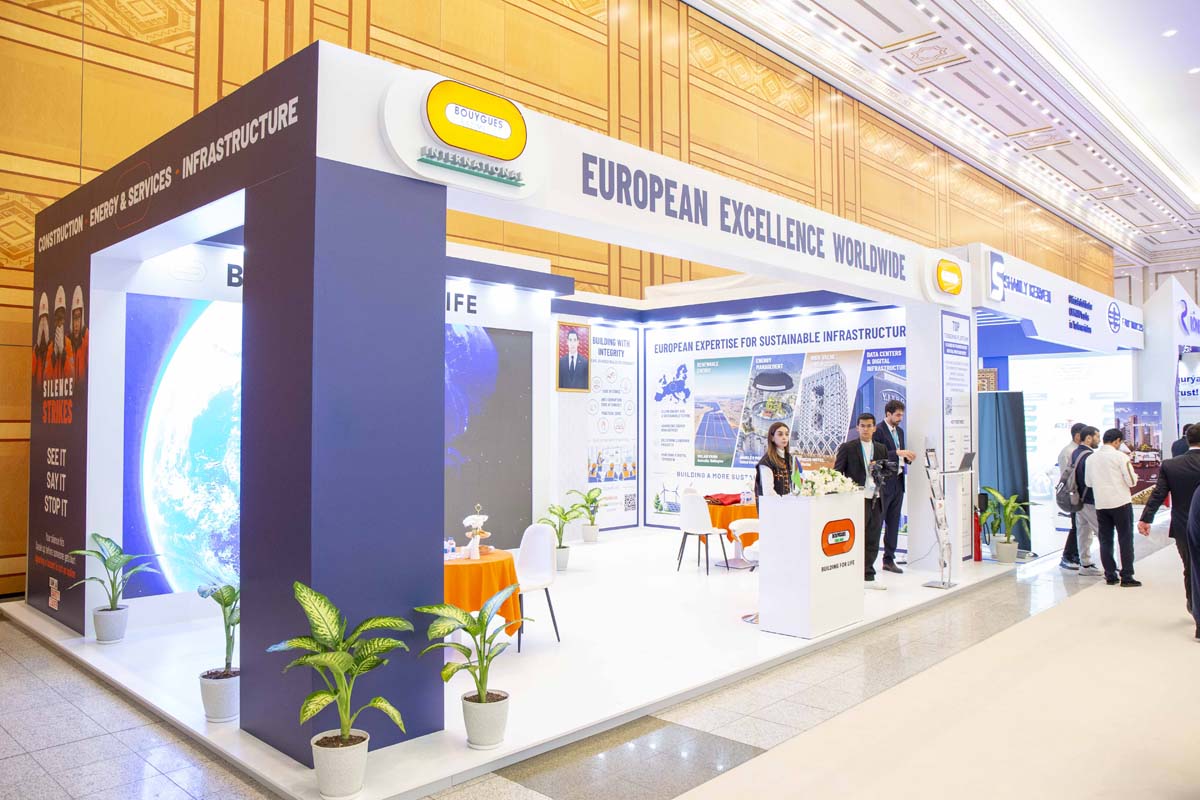
An international exhibition showcasing Turkmenistan’s construction, industrial, chemical and energy sectors opened in Ashgabat on November 3, bringing together domestic manufacturers, international engineering companies, construction contractors and technology suppliers to present their products and explore opportunities for cooperation.
Held at the Chamber of Commerce and Industry of Turkmenistan, the exhibition is part of the three-day International Conference and Exhibition “Development of the Construction, Industrial, Chemical and Energy Sectors of Turkmenistan” (CIET 2026). The event coincides with the country’s Day of Workers of the Construction and Industrial Complex and is being held under the theme “Innovation. Investment. Growth.”
More than 800 delegates from 60 countries registered for the event, according to the organisers. The exhibition brings together national ministries and state concerns alongside domestic and international companies, providing a platform for presenting industrial capabilities, construction technologies, equipment and infrastructure-related products.
The opening ceremony was attended by Chairperson of the Mejlis Dunyagozel Gulmanova, members of the government, representatives of ministries and industry agencies, diplomatic missions and international organisations accredited in Turkmenistan, entrepreneurs and media representatives. A welcoming address from President Serdar Berdimuhamedov was read to participants.
The exhibition is intended to demonstrate the capabilities of sectors central to Turkmenistan’s economic development programme, while providing opportunities for international companies to establish contacts with government bodies and local enterprises.
Beyond the display of equipment and industrial products, the exhibition has developed into a platform for discussing infrastructure projects, technological cooperation, domestic manufacturing and the application of modern engineering solutions to construction and urban development.
Construction, industrial production and infrastructure
The exhibition’s principal focus is the construction and industrial complex, reflecting the scale of infrastructure development underway in Turkmenistan and the demand it generates for construction materials, machinery, engineering services and industrial equipment.
Stands presented by the Ministry of Construction and Architecture, the Ministry of Industry and Construction Production, the Ministry of Energy, the State Concern Türkmenhimiýa and the State Agency for Highway Construction Management displayed developments and projects in their respective fields.
The exhibition also brought together private Turkmen companies and foreign contractors involved in construction, industrial production and the installation of technical equipment at major facilities.
Among the international companies represented are established partners of Turkmenistan, including Çalık Enerji, GAP İnşaat, Rönesans and Bouygues. Their participation reflects the continuing importance of foreign engineering and construction expertise in the implementation of major projects in the country.
A particular point of interest is the work of Interbudmontazh, which is developing a project for underground road-transport infrastructure in Ashgabat. The project is presented as an example of the application of modern engineering solutions to the capital’s transport system.
The exhibition also highlights the growing participation of domestic businesses in major construction projects. Turkmen entrepreneurs are involved in road construction, transport services, electricity supply, industrial production and the development of facilities in Ashgabat and the new city of Arkadag.
The Arkadag project has created opportunities for local companies to participate in construction and infrastructure development, while gaining experience in the implementation of large-scale urban projects.
The exhibition’s emphasis on construction materials and industrial equipment also reflects the importance of strengthening the domestic supply base. Turkmenistan is seeking to expand the production of materials using local raw resources, improve the competitiveness of manufactured goods and reduce reliance on imported products in selected sectors.
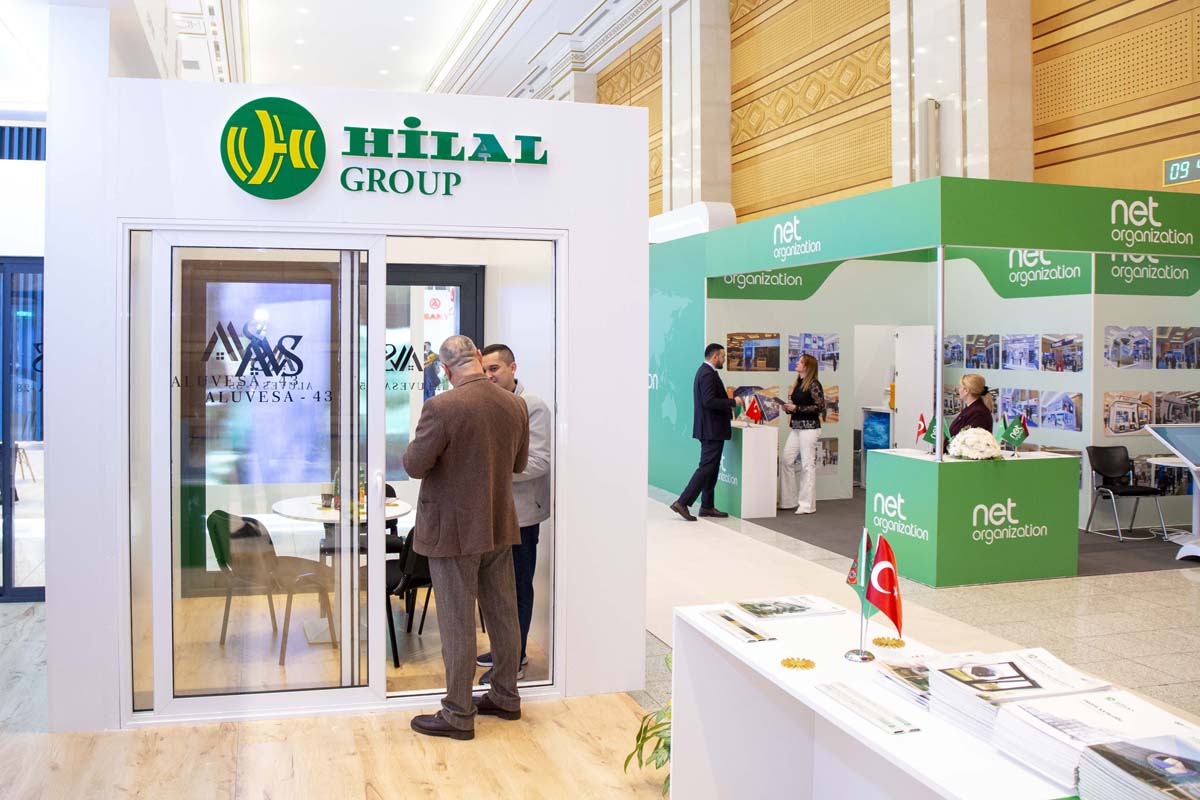
Aýdyň Gijeler: domestic manufacturing and technological development
The participation of Aýdyň Gijeler illustrates the expanding range of activities undertaken by Turkmenistan’s domestic industrial enterprises.
Established in 2016, the company has developed a production base comprising more than ten facilities, according to information published by Turkmenportal. Its products include lighting equipment, streetlights, lighting poles, LED systems, traffic lights, road signs, barriers and controllers.
The company also manufactures aluminium and copper cables, metal structures, profiles and pipes, as well as electronic products under national brands. These include smartphones, tablets, laptops, televisions, routers and household appliances.
Its activities extend to the production of bank cards, SIM cards and identity documents.
Aýdyň Gijeler’ participation is significant because its product range connects several areas of economic activity: construction, road infrastructure, electrical equipment and electronics.
The company has also been developing projects outside Turkmenistan. In Eswatini, it established two companies focused on identity documents and biometric passports, as well as infrastructure and electrical products.
In Uzbekistan, Aýdyň Gijeler Construction Technologies has signed a memorandum of cooperation with the Tashkent city administration, with a production complex planned for road barriers, signs, lighting poles and other transport infrastructure components.
These developments demonstrate how a domestic manufacturing enterprise can seek to move beyond the national market and establish production and commercial links abroad.
The company is participating in CIET 2026 as a premier partner. Its presence provides a prominent example of the role assigned to domestic enterprises in the development of industrial production and technological capabilities.
International contractors and the industrial supply chain
The exhibition brings together international companies whose activities in Turkmenistan extend beyond participation in trade events and include existing projects, equipment supply and industrial cooperation.
Japan’s TOYO Engineering is among the companies supporting CIET 2026 as a silver sponsor. Its earlier work in Turkmenistan includes participation in the development of the polymer complex in Kiyanly, where it carried out work on gas separation units and ethylene and polypropylene production facilities. The project was completed in 2018.
In 2025, TOYO, in partnership with Rönesans Endüstri Tesisleri, received a contract for the first phase of a major overhaul of the complex. A memorandum of cooperation with Türkmenhimiýa concerning the second phase was signed in December 2025 and announced in February 2026.
South Korea’s Daewoo Engineering & Construction is another participant with an established industrial presence. The company is constructing a mineral fertiliser production complex at the S. A. Niyazov Turkmenabat Chemical Plant. The project, launched in October 2025, includes facilities for producing superphosphate and ammonium sulfate.
In September 2026, Daewoo E&C also signed a memorandum of cooperation with the State Committee for Water Management concerning the modernisation of a section of the Karakum Canal.
Japan’s ITOCHU Corporation, which operates across machinery, metals and mineral resources, energy, chemicals and information technology, is represented among the event’s silver sponsors and maintains a branch in Ashgabat.
These companies illustrate the diversity of international participation in Turkmenistan’s industrial development. Their activities encompass engineering, construction, equipment, industrial modernisation and the supply of technologies required for large production facilities.
The exhibition also includes Turkish, European, Chinese, Iranian, Russian and Uzbek companies, reflecting the broad geographic range of Turkmenistan’s commercial and industrial relationships.
Kawasaki Heavy Industries: industrial cooperation built on completed projects
Japan’s Kawasaki Heavy Industries used CIET 2026 to reaffirm its intention to develop long-term industrial cooperation with Turkmenistan.
Speaking at the exhibition, company Vice President Kenji Sanada described Turkmenistan as an important partner with whom Kawasaki has established longstanding relationships through the implementation of major industrial projects.
The company’s experience in Turkmenistan includes three major facilities.
The first is the cement plant in Kelata, constructed between 2002 and 2005 for the Ministry of Construction and Architecture. The plant has a production capacity of 3,000 tonnes per day.
The second is the Mary mineral fertiliser plant, built between 2009 and 2014. Its daily production capacity is 1,200 tonnes of ammonia and 1,925 tonnes of urea.
The third is the natural-gas-to-gasoline plant in Ahal province, constructed between 2014 and 2019. The facility is designed to produce 1,800 tonnes of gasoline and 350 tonnes of liquefied petroleum gas daily.
According to Sanada, the gas-to-gasoline facility is the first industrial plant of its type and its technological achievement was recognised by Guinness World Records. The gasoline produced there contains neither sulfur nor lead.
Kawasaki was responsible for engineering and equipment supply at all three facilities. At the Mary plant, construction was undertaken by Rönesans, while Kawasaki participated in a consortium with Rönesans in the gas-to-gasoline project.
The company’s involvement has continued beyond the construction phase.
Sanada said the gas-to-gasoline plant and the Marykarbamid fertiliser facility were operating reliably with the support of specialists from the State Concern Türkmenhimiýa.
Under comprehensive maintenance agreements, Kawasaki supplies spare parts and consumables and sends technical specialists to support the facilities.
This continuing relationship is an important element of the company’s cooperation with Turkmenistan, demonstrating how industrial partnerships can extend from engineering and construction to maintenance, operational support and the supply of specialised equipment.
Kawasaki also presented environmental technologies that could potentially be relevant to Turkmenistan’s industrial and urban development.
These include waste-to-energy systems, a patented technology for capturing carbon dioxide at waste-incineration plants that is undergoing demonstration testing in Japan, and water-treatment solutions covering wastewater treatment and seawater desalination.
The company believes these technologies could contribute to the development of a circular economy.
The presentation illustrates how the exhibition is being used not only to showcase existing industrial cooperation but also to introduce technologies that may support future projects.
Sverdlovsk Region seeks industrial cooperation with Turkmenistan
The exhibition also brought a substantial regional industrial delegation from Russia’s Sverdlovsk Region, which is seeking to expand its commercial and industrial cooperation with Turkmenistan.
Deputy Governor Dmitry Ionin said a delegation comprising representatives of 15 enterprises had arrived in Ashgabat at the invitation of Turkmenistan’s Minister of Industry and Construction Production, Toyguly Nurov.
The companies have different objectives. Some are seeking export opportunities, while others are interested in establishing production operations in Turkmenistan and finding local partners.
Ionin described Sverdlovsk as a major industrial region with capabilities extending beyond manufacturing to science and technology.
He also highlighted the region’s educational institutions, including the Ural State Mining University and Ural Federal University.
More than 500 Turkmen students are currently studying in Yekaterinburg, according to Ionin. He said expanding educational cooperation could help establish a foundation for industrial partnerships by providing access to trained specialists.
The region is particularly interested in imports of construction materials and glass from Turkmenistan.
Sverdlovsk representatives also invited a broader Turkmen delegation, including local enterprises, to participate in the international industrial exhibition Innoprom in Yekaterinburg next summer.
Turkmenistan has already participated in the two most recent editions of the exhibition.
The Sverdlovsk delegation’s participation adds a regional dimension to CIET’s business programme. It provides an example of how the exhibition can facilitate contacts between industrial regions and enterprises, rather than limiting cooperation to individual companies or national-level agreements.
The potential relationship encompasses exports, localisation of production, industrial supply chains and cooperation in education and technology.
These are areas for further discussion, however, rather than evidence that specific joint production projects have already been agreed.
Rosatom presents nuclear technologies and related industrial applications
Russia’s state nuclear corporation Rosatom presented a broad range of technologies at CIET 2026, including a model of an integrated nuclear power station combining large- and small-capacity units.
The company’s exhibition stand also featured nuclear medicine, additive manufacturing, composite materials and personnel training.
According to Dmitry Konstantinov, deputy director general of Rosatom’s representative office in Central Asia, the purpose of the company’s participation was to introduce Turkmen partners to its technologies in nuclear energy and related high-technology industries.
He emphasised that nuclear energy involves not only electricity generation but also scientific research, education and the preparation of qualified specialists.
The model displayed at the exhibition combines two large-capacity units rated at 1,000 megawatts each with two small-capacity units rated at 55 megawatts each.
The combined configuration is intended to demonstrate the possibility of integrating large and small reactors within a single power-generation complex.
Konstantinov said small-capacity nuclear power was attracting interest from countries seeking to enter the nuclear energy sector but whose electricity systems were not yet sufficiently large to support major conventional nuclear facilities.
The presentation also included an explanation of how a combination of large and small units could provide greater flexibility in managing generation capacity.
Rosatom’s participation is relevant to Turkmenistan’s broader industrial and energy development discussions, particularly in relation to future electricity demand, technology transfer and the training of specialists.
However, the display of a combined nuclear power station model should not be interpreted as an announcement that Turkmenistan has decided to build such a facility.
The exhibition report describes technologies presented by Rosatom and the company’s stated interest in introducing them to potential partners. It does not establish that a nuclear power project has been approved, contracted or scheduled for construction in Turkmenistan.
The inclusion of nuclear medicine, advanced materials and additive technologies also broadens the industrial dimension of Rosatom’s presentation beyond electricity generation.
These areas may be relevant to healthcare, construction materials and manufacturing, although their application in Turkmenistan would depend on subsequent technical and commercial discussions.
Domestic construction companies and the private sector
Turkmenistan’s private construction sector is represented by companies engaged in civil engineering, industrial construction, infrastructure development and installation work.
Among the silver sponsors are Türkmen Bina Gurluşyk, Rysgally Zähmet, Sahra Gurluşyk, Altyn Nesil, Saýaly Menzil, Aga-Gurluşyk, Ýiti Galam and Rysgally Inžener.
Their activities include construction of residential and industrial facilities, infrastructure works, transport services, bridges, pile foundations, reinforced-concrete products and landscaping.
Several companies have participated in major projects in Ashgabat, Arkadag and other parts of the country.
Altyn Nesil, for example, carried out construction and landscaping work on the Tejen–Mary section of the Ashgabat–Turkmenabat motorway under the general contractor Türkmen Awtoban. The section was commissioned in April 2024.
Saýaly Menzil is among the contractors involved in the second phase of Arkadag, while Aga-Gurluşyk participated in development work in Ashgabat and signed a contract in October 2025 for the design and construction of a mosque in the Azerbaijani city of Fuzuli.
Sahra Gurluşyk is involved in bridge construction, pile foundations, industrial buildings and earthworks, and manufactures precast reinforced-concrete products.
The participation of these companies highlights the contribution of domestic contractors to the implementation of infrastructure and construction projects, alongside international companies supplying engineering expertise and specialised equipment.
The exhibition’s business programme includes meetings between domestic enterprises, government bodies and foreign companies. These contacts are intended to facilitate discussion of investment projects, equipment supplies and possible forms of cooperation.
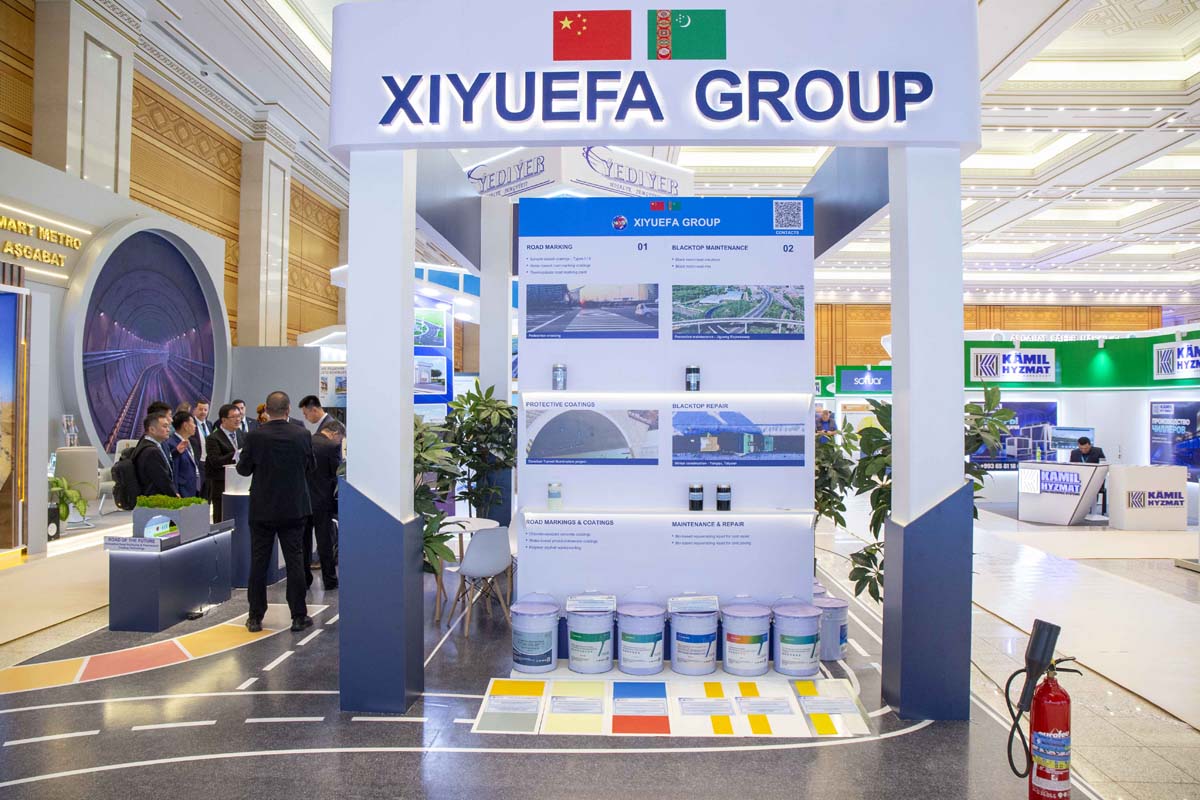
BVS Construction: road development and flood protection
BVS Construction Limited presented two infrastructure projects at CIET 2026, illustrating the range of construction and engineering activities represented at the exhibition.
The first concerns road construction and landscaping in the area around Ashgabat Mall.
The project envisages a 1.4-kilometre road connecting Bikrovin and Tehran streets, together with improvements to the surrounding area.
The planned works include granite-tile facing of slopes, sidewalks, modern lighting and landscaping with trees and shrubs.
The road is intended to improve transport connections in the area, while the associated landscaping would enhance the urban environment around the shopping and entertainment centre.
The company’s second presentation concerns an updated flood-protection system for the city of Anau and surrounding areas in Ahal province.
Developed jointly with Turkmen specialists, the revised scheme extends beyond Anau to include the villages of Gyami and Makhtumkuli and adjacent territories.
The project is designed to intercept flood flows in stages, collect sediment and channel water through drainage canals into a new reservoir with a planned capacity of 13 million cubic metres.
The scheme also incorporates interception and reinforcement of a section of the Kelte-Chinar riverbed.
According to the company, water flowing from the surrounding slopes would be directed through an organised drainage system and could subsequently be used for agricultural purposes and landscaping.
The flood-protection project also includes a proposed digital component.
BVS Construction said the system would incorporate a digital twin and artificial-intelligence tools for analysing precipitation, water levels and the condition of infrastructure.
These technologies are intended to help specialists assess conditions, identify potentially dangerous changes in advance and plan maintenance.
The presentation is notable because it connects conventional civil engineering with water management and digital monitoring.
The 13-million-cubic-metre reservoir is a planned project component, not a completed facility. Similarly, the digital twin and AI applications are presented as elements of the proposed system rather than as an already operational flood-monitoring network.
The project nevertheless illustrates how construction companies are seeking to combine infrastructure development with technologies intended to improve resilience and operational management.
Garagum Transit: logistics company expands into construction
The participation of Garagum Transit provides another example of diversification among Turkmenistan’s private enterprises.
The company, which belongs to the Ojar Aziya group, was established in 2021 as a transport and logistics business.
It subsequently expanded its technical capabilities and diversified into construction.
According to the company, its current activities include road construction and infrastructure development, combining experience in logistics with its own production and technical resources.
Garagum Transit participated in CIET 2026 as an exhibition company and sponsor.
Its representatives held business-to-business and business-to-government meetings to discuss cooperation, development of the construction sector and potential joint infrastructure projects.
The company’s development illustrates the possibility of transport and logistics businesses expanding into related infrastructure activities.
It also reflects the exhibition’s emphasis on the connection between construction, transport, industrial equipment and supporting services.
Arkadag, Ashgabat and the development of modern urban infrastructure
Urban development occupies a prominent place in the exhibition, with projects in Ashgabat and Arkadag illustrating Turkmenistan’s approach to modern construction, infrastructure and the integration of digital technologies.
Arkadag is presented as a major example of contemporary urban development in the country. The city’s construction has involved residential and public buildings, social infrastructure, digital systems and the application of modern urban planning concepts.
The exhibition also highlights the second phase of Arkadag, which is continuing at an accelerated pace.
The development of the city has created opportunities for domestic construction companies and manufacturers to participate in the supply of materials, infrastructure components and services.
The Arkadag Medisina Klasteri Menejment enterprise, whose products were displayed at the exhibition, is associated with the city’s medical manufacturing complex. Its participation reflects the connection between urban development and the establishment of industrial facilities serving social and healthcare needs.
The exhibition also presents projects aimed at transforming Ashgabat’s architectural and urban environment, including transport infrastructure and the development of modern residential and public facilities.
BVS Construction’s proposed road and landscaping project near Ashgabat Mall adds a specific example of this urban development dimension.
The national architectural competition gallery, titled “Architectural Solutions,” displays selected works by Turkmen architects and designers. The winners are scheduled to be recognised at the forum’s closing ceremony on November 5.
The gallery provides a domestic architectural dimension to an exhibition otherwise dominated by industrial technologies, construction projects and equipment.
Sustainable urban development and cooperation with the United Nations
Sustainable urban development emerged as a distinct theme of CIET 2026, with a high-level United Nations round table bringing together representatives of government, international organisations and companies.
The discussion focused on creating cities that are open, safe, resilient and environmentally sustainable.
Turkmenistan’s Minister of Construction and Architecture, Abdulla Geldiyev, said the country was open to international partnerships in construction and urban development, particularly those oriented towards practical projects and mutually beneficial investment.
He described modern urban development as a process extending beyond buildings and infrastructure to include architecture, industry, energy, transport, environmental protection and quality of life.
Geldiyev cited Ashgabat’s transformation and the construction of Arkadag as examples of the country’s urban development priorities.
Arkadag, he said, incorporates intelligent transport management, digital municipal solutions, smart-home technologies and electric transport.
The experience accumulated through the city’s development is intended to inform future urban planning.
The minister also referred to the long-term development vision for Ashgabat, including the Ashgabat-2045 strategy.
Its priorities include modernising urban infrastructure, energy-efficient construction, digital solutions for municipal management and the creation of a comfortable urban environment.
According to Geldiyev, more than 900,000 square metres of housing are planned to be commissioned in Turkmenistan in 2026.
He emphasised the importance of reliable engineering networks, construction quality and the rational use of resources.
The minister also linked sustainable urban development to the country’s industrial capabilities.
Modernisation of construction-material production, greater use of local raw materials and the introduction of advanced technologies are intended to strengthen the domestic supply base.
He identified energy-efficient buildings, innovative construction materials, intelligent infrastructure, digital city management and modern industrial facilities as areas for international cooperation.
The discussion therefore connected the construction sector’s immediate project requirements with broader questions of resource efficiency, environmental resilience and technological development.
Ashgabat’s Mayor Rahim Gandymov also expressed the capital’s readiness to expand cooperation with the United Nations, international development institutions and cities in other countries.
He highlighted the challenges facing cities worldwide, including climate change, growing demand for energy and water, infrastructure modernisation and environmental safety.
For Ashgabat, located in an arid region, priorities include efficient water use, urban greenery, energy-saving technologies and environmentally responsible construction.
Gandymov also pointed to the role of digital transformation in improving resource efficiency and municipal services.
Intelligent transport systems, digital municipal services and monitoring of engineering networks were among the areas identified for further development.
He referred to cooperation with UN-Habitat and the United Nations Development Programme, noting that a high-level UN round table had also taken place during the White City of Ashgabat forum in May 2026.
The current discussion was presented as a continuation of that dialogue, with a stronger emphasis on the relationship between urban planning, industrial development, energy efficiency and environmental sustainability.
The mayor identified energy-efficient construction, sustainable infrastructure, digitalisation of urban management, rational water use and environmentally responsible transport as potential areas for cooperation.
The discussion reflects an increasingly integrated approach to urban development, in which infrastructure and construction are considered alongside the environmental and resource-management challenges facing cities.
Environmental policy and Turkmenistan’s preparations for COP31
The sustainable urban development discussion also provided a platform for Turkmenistan to outline its environmental priorities and preparations for the forthcoming United Nations climate conference.
Deputy Minister of Environmental Protection Nury Jumashov announced that Turkmenistan would organise a national pavilion at the 31st Conference of the Parties to the UN Framework Convention on Climate Change, COP31, scheduled to take place in Antalya, Türkiye, from November 9 to 20.
The pavilion is intended to host thematic events presenting national and regional environmental initiatives.
Turkmenistan plans to showcase its Fourth National Communication, its Third Nationally Determined Contribution and its Biennial Transparency Report.
The programme will also include attention to the participation of young people in the development and implementation of climate solutions.
Jumashov described sustainable urban development as an important component of the country’s environmental policy.
He said modern cities should provide good air quality, rational use of water and energy, accessible green spaces, effective waste management and infrastructure capable of withstanding climate and natural hazards.
The deputy minister referred to national legislation on renewable energy and energy efficiency, the National Renewable Energy Development Strategy through 2030, the National Forest Programme and the National Climate Change Strategy.
Turkmenistan’s participation in the Paris Agreement and its emissions-reduction commitments through 2030 were also highlighted.
The National Forest Programme includes annual planting of millions of seedlings, according to Jumashov.
The programme is intended to improve urban microclimates, protect soils and reduce the effects of dust storms.
The selection of plant species adapted to arid conditions is an important element of this work.
The deputy minister also described the project “Sustainable Cities in Turkmenistan: Integrated Development of Green Cities in Ashgabat and Awaza,” implemented jointly with the United Nations Development Programme.
According to his account, the project included upgrading electricity networks, installing modern power transformers and energy-efficient LED lighting, and strengthening environmental monitoring capacity.
The ministry conducts regular observations of atmospheric conditions and collects samples of water, air and soil, with particular attention to the effects of transport and industrial activity.
Arkadag was cited as an example of contemporary urban development incorporating energy efficiency, landscaping and resource management.
Turkmenistan is also pursuing initiatives to establish a Regional Centre for Climate Technologies for Central Asia and a Regional Centre for Combating Desertification.
These initiatives are intended to support regional scientific and technical cooperation, access to climate finance, project preparation and the exchange of experience.
The announcement of the national pavilion adds an international climate-policy dimension to the exhibition.
It demonstrates that the event’s urban-development discussions are connected not only with construction technologies and infrastructure investment but also with Turkmenistan’s efforts to present its environmental policies and regional initiatives internationally.
The pavilion itself is a forthcoming COP31 activity, rather than an exhibition project being implemented in Ashgabat.
Energy, electricity and chemical production
Energy and chemical industries form another major component of CIET 2026.
The exhibition presents the work of Turkmenistan’s energy sector, including electricity generation, transmission infrastructure and projects connected with expanding the country’s industrial capacity.
The development of electricity generation and transmission facilities is closely linked to Turkmenistan’s efforts to support industrial growth and expand opportunities for electricity exports.
The exhibition also highlights the proposed high-voltage electricity transmission line connecting Turkmenistan, Afghanistan and Pakistan. The project is intended to strengthen regional electricity connectivity and support economic development across the participating countries.
Its presentation at CIET reflects the wider role of infrastructure in linking Turkmenistan’s domestic production capacity with regional markets.
The chemical industry is represented by Türkmenhimiýa and its production facilities, including enterprises manufacturing mineral fertilisers and other chemical products.
Turkmenistan’s natural gas and mineral resources provide the raw-material base for the development of chemical production.
The government’s industrial strategy places importance on increasing the range of products manufactured domestically and expanding processing capacity.
Kawasaki’s account of its work at the Mary fertiliser plant and the Ahal gas-to-gasoline facility provides an additional illustration of the relationship between engineering, industrial production and continuing technical maintenance.
Rosatom’s exhibition stand, meanwhile, introduced nuclear power technologies and related applications in medicine, materials and education.
The presence of international companies specialising in renewable energy and nuclear power indicates the range of technologies being presented to participants.
These displays should be understood as part of the exhibition’s broad technology and equipment showcase, rather than evidence of specific agreements or projects in all these fields.
The exhibition’s wider business programme includes discussions between domestic companies, international contractors and government institutions.
The participation of Sverdlovsk Region, Kawasaki, Rosatom and BVS Construction illustrates the different forms these contacts can take: industrial partnerships, technical maintenance, technology presentations, regional trade and infrastructure proposals.
A platform for industrial cooperation
CIET 2026 brings together a broad range of participants whose activities connect construction, industrial production, energy, chemical processing, infrastructure and technology.
The exhibition demonstrates the scale of Turkmenistan’s construction and industrial ambitions and the range of domestic and international companies involved in supporting them.
For domestic enterprises, the event provides an opportunity to present products, establish contacts with government bodies and international partners, and explore new markets.
For foreign companies, it offers a platform to engage with Turkmenistan’s industrial and infrastructure development priorities, discuss equipment supply and technical cooperation, and establish contacts with potential local partners.
The exhibition’s importance lies not only in the products and projects displayed but also in the relationships it seeks to facilitate between public institutions, domestic manufacturers and international businesses.
The participation of Sverdlovsk Region illustrates the potential for regional industrial cooperation and the development of production partnerships.
Kawasaki’s presentation demonstrates how established relationships can continue through technical maintenance, equipment supply and the introduction of new technologies.
Rosatom’s display broadens the discussion to nuclear energy and related technological fields, while BVS Construction’s projects connect road development with flood protection and digital monitoring.
The United Nations round table adds a sustainability dimension, linking urban construction with energy efficiency, water management, environmental monitoring and climate resilience.
The signing of cooperation memoranda on the opening day adds a concrete dimension to these efforts, while the exhibition itself provides a view of the sectors and technologies that Turkmenistan is seeking to develop.
CIET 2026 continues through November 5. Its exhibition programme, alongside the conference and scheduled business meetings, is intended to support further cooperation in construction, industrial production, energy, chemical processing and infrastructure development.
The exhibition offers a broad picture of Turkmenistan’s development priorities: expanding domestic production, modernising industrial facilities, strengthening infrastructure, encouraging private-sector participation and attracting international expertise.
The extent to which these priorities translate into new projects and measurable industrial outcomes will depend on the implementation of the agreements and initiatives discussed during the event. /// nCa, 4 November 2026