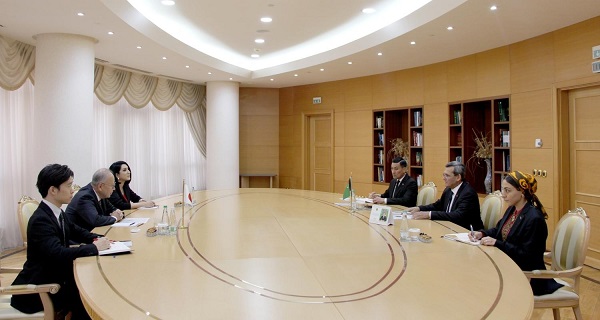
On 26 February 2026, London hosted the meeting of the Foreign Ministers of Central Asian countries and the United Kingdom in the CA5+UK format.
The meeting was attended by:
- Yvette Cooper, Secretary of State for Foreign, Commonwealth and Development Affairs of the United Kingdom
- Yermek Kosherbayev, Minister of Foreign Affairs of Kazakhstan
- Zheenbek Kulubaev, Minister of Foreign Affairs of Kyrgyzstan
- Sirojiddin Muhriddin, Minister of Foreign Affairs of Tajikistan
- Rashid Meredov, Minister of Foreign Affairs of Turkmenistan
- Bakhtiyor Saidov, Minister of Foreign Affairs of Uzbekistan
This marks the first time since the Central Asian nations gained independence in 1991 that the Foreign Ministers of the region and the United Kingdom have convened in such a format.
During the plenary session, Yvette Cooper emphasized that the very fact the meeting took place reflects the high priority of relations with Central Asia.
According to the Kazinform news agency, the head of British diplomacy noted that the rapidly changing global environment would impact the security, economies, and communities of all nations involved. She pointed out that while these shifts carry inherent risks, they also present new opportunities—provided that the countries act in coordination and partnership.
According to the Secretary of State, cooperation with the region offers significant prospects for future partnership. Cooper further characterized Central Asia as a dynamically developing region with steady economic growth rates, strengthening regional cooperation, and an increasing role in international processes.
The agenda of the “Central Asia – UK” meeting included issues of increasing trade and investment cooperation, as well as joint efforts to support regional connectivity and the development of international transport routes.
Each Central Asian country presented its vision of synergy with British capital and technology.
Kazakhstan’s Foreign Minister Kosherbayev emphasized the importance of pragmatic, mutually beneficial strategic interaction between the region and the United Kingdom, which would contribute to the economic development and sustainable growth of all countries involved.
According to Minister Kosherbayev, Kazakhstan plays a leading role in ensuring regional connectivity, with 13 major transit corridors passing through its territory and about 85% of land freight traffic between Europe and Asia being carried out through the country. He noted that the “CA5+UK” format emerged from these priorities. Within this framework, Kazakhstan views the United Kingdom as a long-term partner and is ready to work together to achieve practical results for their economies, societies, and shared future.
Turkmen Foreign Minister Rashid Meredov emphasized the interest of Central Asian countries in forming a sustainable and competitive economy capable of effectively responding to global challenges. In this regard, priority areas for cooperation with the United Kingdom were identified.
Among the key sectors, Turkmenistan highlights the modernization of the oil and gas industry, the development of renewable energy, financial technologies, the legal, consulting, and auditing sectors, as well as transport and logistics.
Kyrgyz Foreign Minister Kulubaev noted the relevance of expanding bilateral and regional cooperation with the United Kingdom in the fields of trade, finance, energy, transport, climate, and education. He expressed hope that the success of the “C5+UK” format would be measured by concrete projects, investments, educational programs, and sustainable mechanisms of interaction.
Additionally, Kulubaev raised the issue of the potential negative impact of unilateral sanctions on trade, economic, and financial cooperation between Central Asian countries and the United Kingdom. According to the Minister, Kyrgyzstan opposes the politicization of international economic and commercial ties and remains ready for an open and constructive dialogue to achieve mutually acceptable and effective solutions.
Uzbek Foreign Minister Bakhtiyor Saidov noted on his social media: “The Dialogue served as a timely and substantive platform to exchange views on the region’s economic development challenges and opportunities, and to outline priority areas for expanding trade, investment and connectivity with the United Kingdom. Particular emphasis was placed on trade diversification, industrial cooperation, sustainable infrastructure development, and unlocking Central Asia’s potential in critical minerals and renewable energy.”
The inauguration of the CA5+UK dialogue signals a strategic pivot for London, marking the United Kingdom’s move toward a more proactive and structured engagement with the region. Throughout the summit, there was a clear consensus: Central Asia is no longer merely a chessboard for global powers. Instead, the region has emerged as a decisive, pragmatic player, actively shaping the new architecture of international cooperation on its own terms.
Bilateral Deals
Beyond the regional dialogue, the ministers secured a series of landmark agreements for their respective nations.
Astana and London signed a strategic Roadmap for Critical Minerals through 2027. The educational landscape also saw a major boost with a memorandum to open a licensed Coventry University campus in Almaty, alongside plans for a Charterhouse School branch. Additionally, Cardiff University will launch an AI Center, while Heriot-Watt University confirmed a new campus in Aktau.
Uzbekistan focused on “technological sovereignty” by signing a Memorandum of Understanding on pharmaceutical manufacturing and healthcare. Discussions also centered on listing Uzbekistan’s industrial giants on the London Stock Exchange.
The delegation of Kyrgyzstan prioritized economic resilience. At the Kyrgyz-British Business Council, officials advanced talks on developing rare earth metal deposits and strengthening interbank cooperation.
Turkmenistan solidified ties by signing a Cooperation Program for 2026–2027 between the respective Foreign Ministries. On the cultural front, a new agreement with the UCL Institute of Archaeology will pave the way for joint expeditions and specialized scientific training. A package of documents has been signed in the field of education.
The visit of Tajikistan’s foreign minister was bolstered by high-level political consultations on 25 February 2026, where Dushanbe focused on attracting British investment into the nation’s science, education, and economic sectors.///nCa, 27 February 2026

