


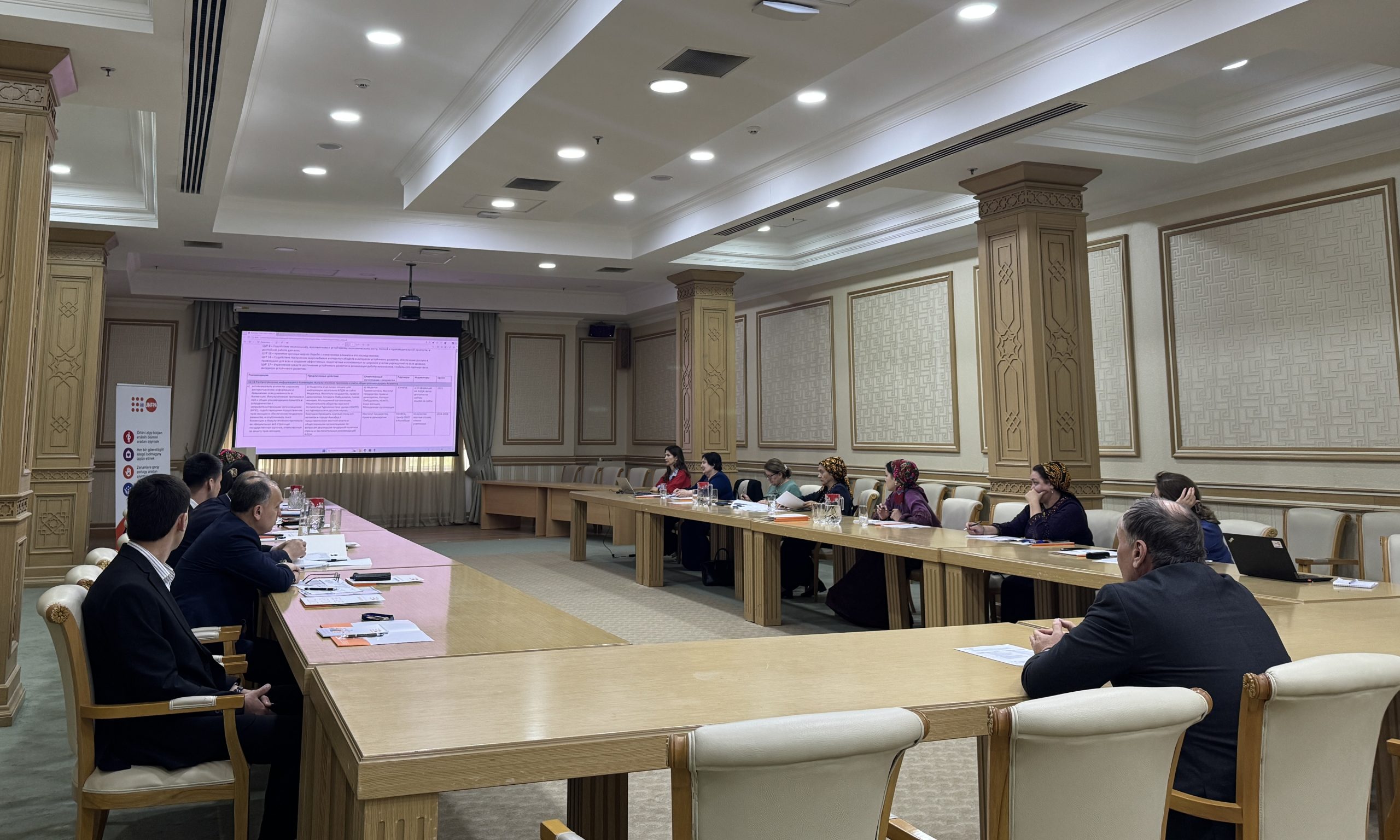
29 апреля 2026 г. в здании ООН в Ашхабаде состоялась рабочая консультативная встреча с участием представителей Межведомственной комиссии по обеспечению выполнения международных обязательств Туркменистана в области прав человека и международного гуманитарного права. Мероприятие было организовано Представительством Фонда ООН в области народонаселения (ЮНФПА) в Туркменистане совместно с Институтом государства, права и демократии Туркменистана.
Основной целью встречи стал мониторинг хода реализации Дорожной карты по выполнению Заключительных замечаний Комитета по ликвидации дискриминации в отношении женщин (КЛДЖ). Участники встречи представили отчеты о выполнении мероприятий, предусмотренных Дорожной картой, и обсудили достигнутый прогресс в различных секторах государственного управления и общественной жизни. Данная деятельность осуществляется в рамках совместного Рабочего плана на 2026–2027 годы по укреплению систем и механизмов продвижения гендерного равенства.
В консультациях приняли участие представители широкого спектра министерств и ведомств, включая Меджлис, Верховный суд, Генеральную прокуратуру, министерства здравоохранения, образования, финансов, внутренних дел, а также профильные общественные организации и Коллегию адвокатов. В ходе сессий участники детально рассмотрели дальнейшие шаги по реализации международных обязательств страны и наметили приоритетные направления работы для обеспечения прав и возможностей женщин и девочек в Туркменистане. ///nCa, 30 апреля 2026 (в сотрудничестве с ЮНФПА Туркменистан)