


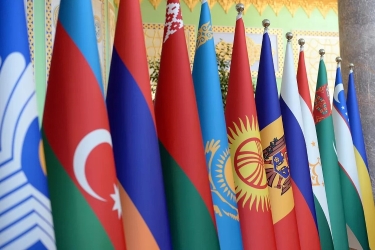
The Commonwealth of Independent States turns 35 this year. Under Turkmenistan’s chairmanship, which began on January 1, the CIS is pushing an agenda built around economic integration, digital transformation, and a loose but growing web of connections with other regional blocs.
The latest concrete step came in Moscow this week, where the CIS Economic Commission met under the chairmanship of Turkmenistan’s B.S. Berdyev to approve a package of strategic documents and lay groundwork for the next phase of the bloc’s long-term planning.
The commission signed off on cooperation frameworks covering the forestry sector, labor standards, and innovation, and advanced the goal of transport connectivity that sits at the heart of Ashgabat’s chairmanship priorities.
A notable decision was granting the “Digital Platform” project the status of a full technological platform — a modest but meaningful step toward the kind of digital integration the bloc has been promising.
The anniversary context matters. Despite external pressure, CIS member states have been posting solid growth, with the average GDP rate across the Commonwealth standing at 2.1% as of late 2025, and countries like Kyrgyzstan, Tajikistan, and Uzbekistan significantly outperforming the global average.
One milestone that has gone largely unnoticed outside the region is the shift to national currencies in mutual settlements, which reached a record 96% in 2025.
Turkmenistan’s chairmanship concept, formally published in March, is organized around five priorities: security and stability, economic and transport cooperation, digital transformation, environmental protection, and humanitarian ties.
Ashgabat has proposed declaring 2027 the CIS Year of Transport Connectivity — a nod to its ambition of turning its geographic position into a transit asset. Particular attention is being given to developing the North-South and East-West transport corridors and advancing the digitalization of transit procedures.
The bloc is also widening its aperture. At last October’s Dushanbe summit, CIS leaders established the new “CIS Plus” format and granted the Shanghai Cooperation Organisation observer status within the Commonwealth — moves designed to create more structured ties with parallel Eurasian groupings like the SCO and EAEU rather than compete with them.
The next major test will come on October 9, when the CIS Heads of State Summit is scheduled to take place in Turkmenistan itself. /// nCa, 24 April 2026