


Liliya Zhirnova
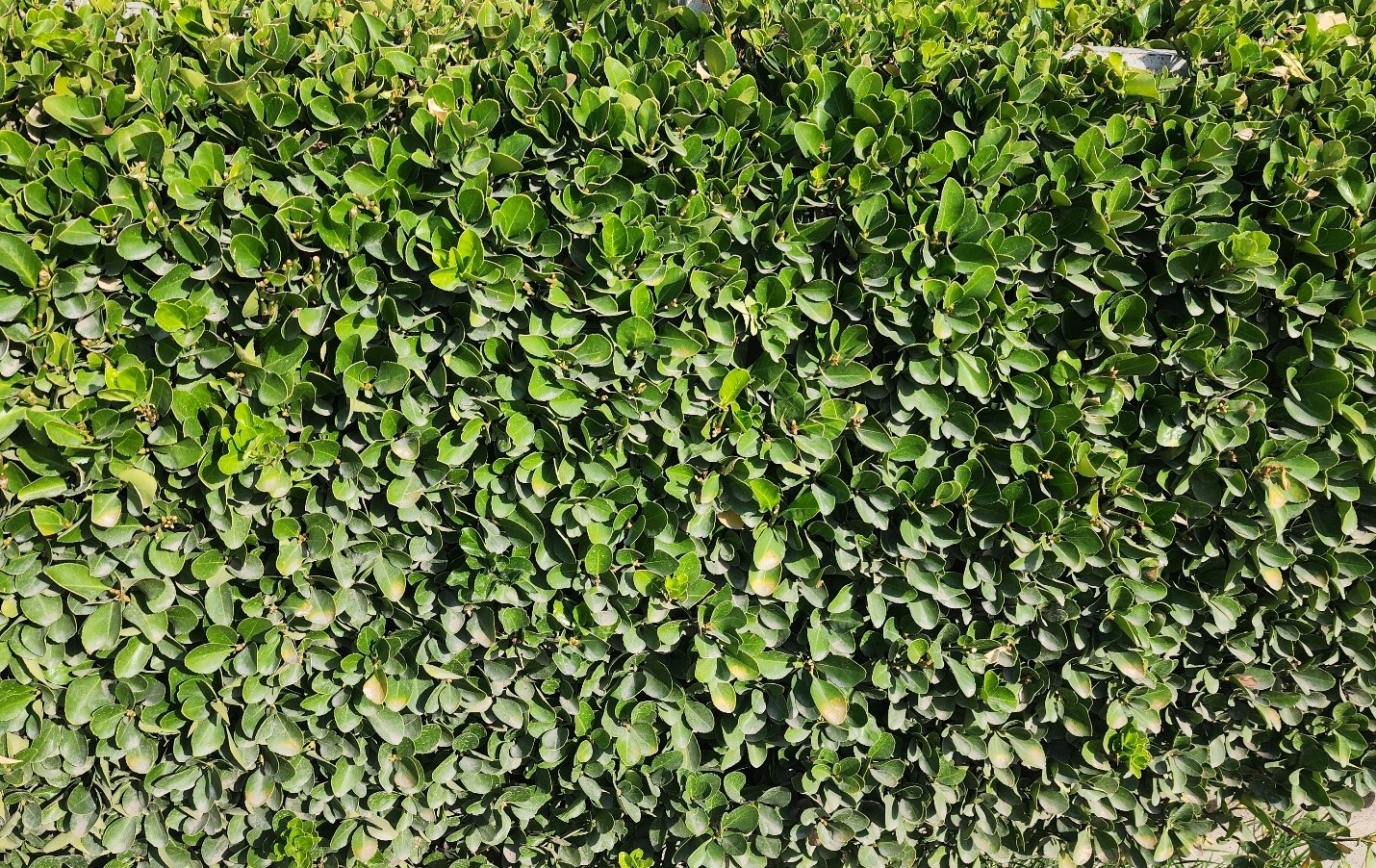
Walk down the quiet residential avenues or along the manicured courtyard borders of Ashgabat, and you will inevitably encounter crisp, densely leafed green hedges lining private homes and public gardens. Neat, glossy, and meticulously trimmed, Japanese Spindle (Euonymus japonicus) is one of the most reliable and distinctive evergreen shrubs defining the city’s green micro-landscapes.
Botanical Identity & Names
- Scientific Name: Euonymus japonicus (Family Celastraceae)
- English Name: Japanese Spindle (or Evergreen Euonymus)
- Russian Name: Бересклет японский (Beresklet yaponskiy)
- Turkmen Name: Ýapon bereskleti (also commonly referred to as Ýapon ewonimusr or simply Beresklet)
Key Characteristics & Architectural Value
Japanese Spindle is a broadleaf evergreen shrub prized for its thick, leathery, dark-green leaves with fine, serrated margins. In sunny arid climates, it develops a tight branching structure that responds exceptionally well to shearing.
Botanically, it serves as a resilient alternative to traditional boxwood, accepting frequent shaping into geometric hedges, topiary spheres, or low protective borders around suburban housing blocks and garden plots.
Ecological & Environmental Benefits
- Urban Dust Trap & Air Quality Filter: The dense, waxy cuticles of Euonymus japonicus leaves act as an efficient physical filter, capturing fine urban dust, particulate matter, and vehicle emissions. This makes it a crucial bio-barrier along residential edges.
- Microclimate Moderation: Planted as perimeter hedges, it buffers ground-level heat reflection from concrete pavements, keeping garden soil cooler and retaining moisture in surrounding flowerbeds.
- High Heat & Drought Tolerance: Once established, its robust root system makes it drought-resistant and capable of thriving under intense sun and high summer temperatures—a vital trait for urban flora in Central Asia.
- Soil Stabilization: The spreading, dense root networks prevent soil erosion along small embankments, raised garden beds, and terraced walkways.
- Shelter for Beneficial Insects: While its summer blooms are small and subtle, they provide a reliable nectar source for local pollinators. The dense year-round canopy also provides protected roosting space for songbirds in suburban neighborhoods. /// nCa, 10 November 2026