


An exhibition in Ashgabat offers a glimpse into the history of Turkmenistan through small objects of everyday life — pottery, clay figurines, coins, lamps, metalwork and fragments of architectural decoration.
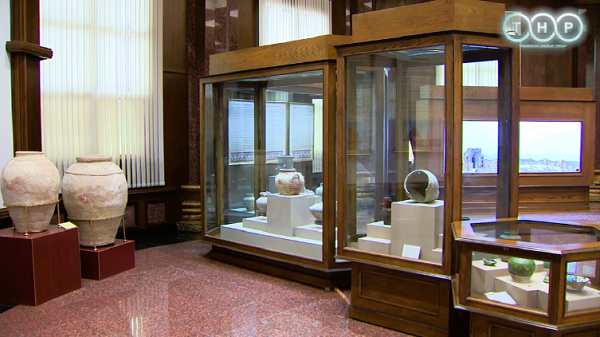
The State Museum of the State Cultural Center of Turkmenistan is presenting, for the first time, archaeological finds transferred by the Institute of History and Archaeology of the Academy of Sciences of Turkmenistan, alongside artifacts from the country’s state historical and cultural reserves, according to the Neutral Turkmenistan newspaper.
Titled ‘Historical Treasures — Mysterious Pages of Antiquity’, the exhibition spans several millennia of history in what is now Turkmenistan. Among its highlights are finds from Abiverd, Nisa and Köne-Sarahs, as well as materials unearthed at the medieval sites of Paryzdepe and Shekhrislam.
From the First Farmers to Urban Civilizations
One of the earliest sections of the exhibition is devoted to the Chalcolithic period, when ancient communities in Central Asia were already actively engaged in agriculture and developing new technologies for working with different materials.
The finds come from the territory of the Abiverd State Historical and Cultural Reserve. They include decorated pottery, small clay figurines of people and animals, miniature toys, a fragment of an ancient cart and a seal.
At first glance, these are small and relatively simple objects. Yet finds of this kind allow researchers to reconstruct episodes from the everyday lives of ancient communities: what people produced, what they believed in, which images they used in art and what technologies were available to them. They offer a glimpse not only into the practical side of life in ancient settlements, but also into a world of symbols that existed long before written sources appeared.
Nisa: Art of the Parthian Era
The finds from Nisa demonstrate a very different level of cultural development. One of Turkmenistan’s most important archaeological sites, Nisa was closely associated with the Parthian Empire.
One of the most striking objects on display is a fragment of a ceramic vessel depicting a female figure. The delicacy of the work shows that pottery in the Parthian period served purposes far beyond the purely utilitarian.
For modern researchers, such objects provide valuable evidence of the artistic ideas of the society that produced them: which human images were considered significant, how craftsmen worked with colour and form, and what artistic traditions existed in the region.
Fragments of Parthian frescoes and metopes — architectural decorative elements — are displayed alongside the pottery, offering a glimpse into the artistic treatment of buildings during the period.
Ancient Nisa therefore emerges not simply as a political centre of the Parthian Empire, but also as a place where a sophisticated urban culture flourished.
A Coin from the Age of Alexander the Great and the Ceramics of Dehistan
Another section is devoted to Köne-Sarahs, an ancient city in present-day Turkmenistan located in an area that for centuries formed part of important historical and trade routes across Central Asia.
Among the exhibits are a silver coin dating to the era of Alexander the Great, clay lamps and small animal figurines.
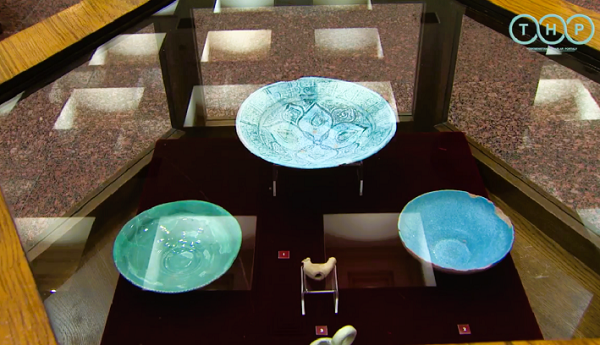
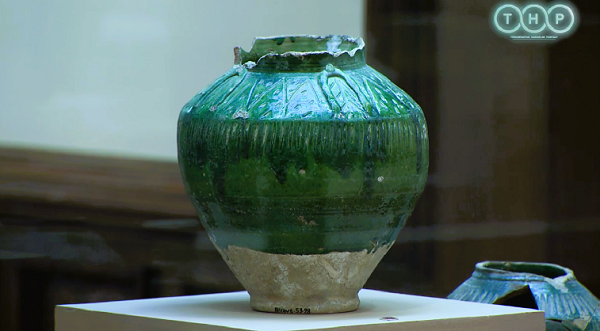
The exhibition also features ceramic vessels dating from the 10th to 12th centuries — pots, plates and dishes with a distinctive golden sheen. They are associated with the archaeological site of Dehistan in western Turkmenistan.
This pottery represents a different chapter in the region’s history — an era of developed urban centres, specialized craft production and sophisticated techniques for shaping and decorating ceramics.
Objects of Everyday Life
The exhibition is also notable for the everyday objects that offer a direct connection to the traditions of ancient life.
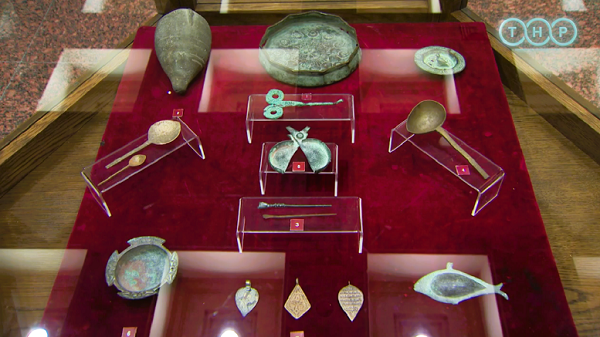
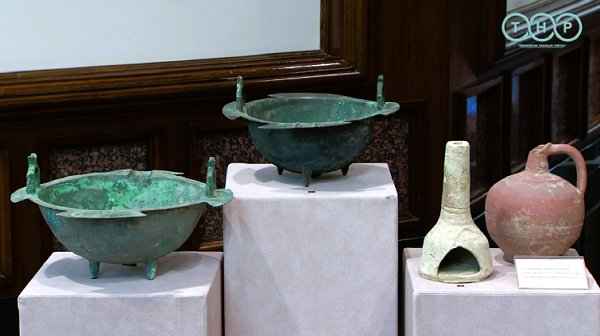
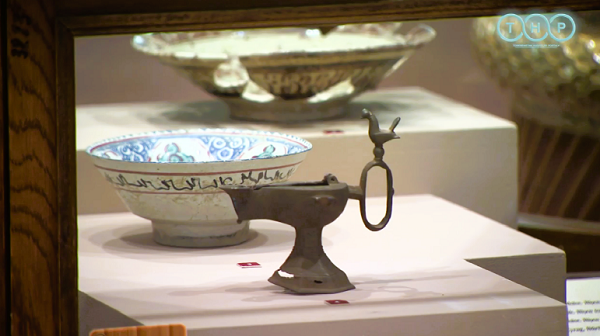
Among the medieval metalwork, a bronze crescent-shaped box decorated with carved ornament stands out. It is displayed alongside an ornamental vessel on a stand, topped with a bird figure, as well as hanging cauldrons and other objects.
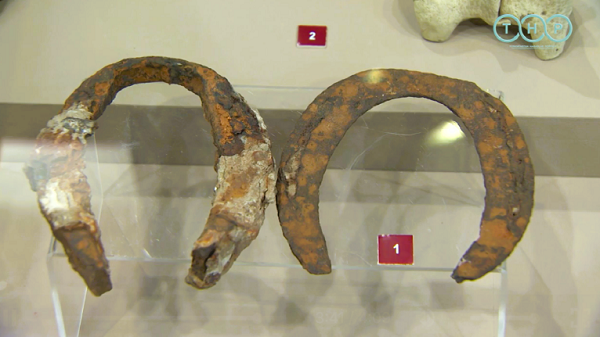
A metal horseshoe is also on display. For centuries, horse breeding played an important role in the economy and culture of the region’s population.
Architecture Preserved by Archaeology
The exhibition is complemented by examples of glazed and unglazed ceramics unearthed during excavations at Paryzdepe and Shekhrislam by specialists from the Institute of History and Archaeology of the Academy of Sciences of Turkmenistan.
The surviving architectural elements from Paryzdepe offer an insight into the sophistication of the building traditions of medieval societies in the region.
Taken together, these finds create a more complete picture of the past. Archaeology tells us not only about rulers and major historical events, but also about how people lived, built their homes, made pottery, decorated their surroundings, traded and travelled.
That is perhaps the greatest value of exhibitions like this: individual objects — a small clay figurine, a fragment of a vessel or an old coin — become pieces of a much larger story about the people and cultures that shaped the history of what is now Turkmenistan.///nCa, 24 August 2026