


Heritage tourism, enabling travellers to experience the cultural essence of a destination, from ancient ruins and monumental landmarks to living traditions, also strengthens tourism offerings. Driven by the rising demand for experiential travel and growing global efforts to preserve cultural heritage, the sector continues to expand rapidly. According to industry research, the global heritage tourism market is valued at USD 624.55 billion in 2025 and is projected to reach USD 936.97 billion by 2033. Within this expanding market, Türkiye stands out as a leading destination, where Anatolia’s vast geography, home to countless civilisations, offers an exceptionally rich historical legacy across nearly every region of the country.
Among its many standout destinations, Antalya, “Türkiye’s tourism capital”on the Turkish Riviera, emerges as a remarkable gateway to the past. Nestled at the crossroads of the ancient regions of Lycia, Pamphylia, and Pisidia, the destination offers an unrivalled journey through history, shaped by its rich archaeological heritage. From sun-drenched theatres to ornate marble ruins, Antalya unfolds as an open-air museum of ancient civilisations. Against this rich historical backdrop, here are five must-visit ancient sites in the city.
Into the Heart of Lycia with Legends of the West
You can begin your journey through Antalya’s history in the Lycian capital of Xanthos, which is on the UNESCO World Heritage List along with its sacred cult centre of Letoon. The inscriptions found in these sites were the key to deciphering the Lycian language.

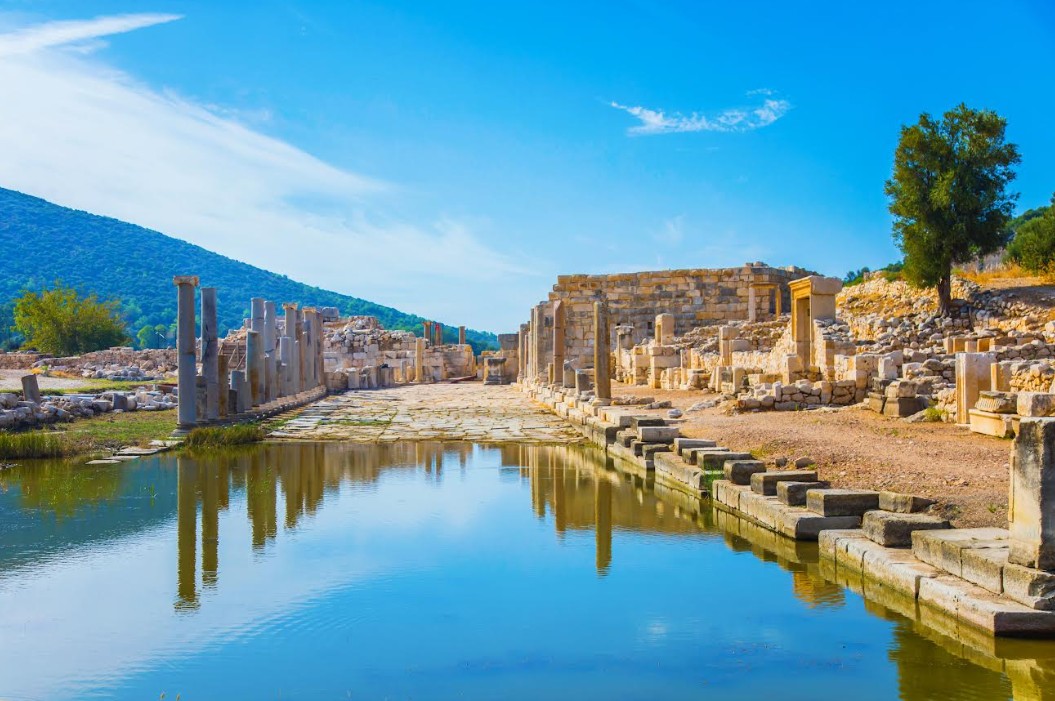
Just 15 km away lies Patara, the administrative heart of the Lycian League and the birthplace of St Nicholas, the figure who inspired Santa Claus. In addition to its stunning marvels, Patara is home to the Bouleuterion, the structure recognised as the meeting place of the Lycian League, an early example of representative democracy dating back to the 2nd century BC. The site also features a recently restored colossal lighthouse, which adds to its historical significance. Beyond its ancient monuments, Patara also stands out for its 18-kilometre beach, a protected nesting ground for Caretta caretta turtles, and its dunes.
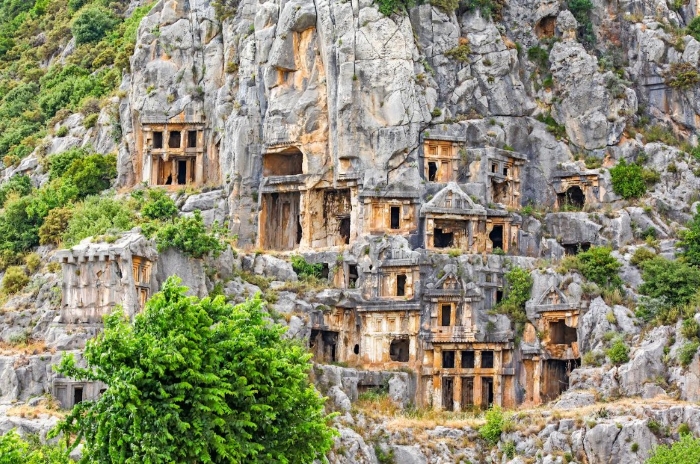
Your next stop is Myra, another vital Lycian city, mesmerising with Lycian rock-cut tombs with ornate reliefs. St Nicholas was the bishop of Myra, so you can also visit St Nicholas Church, where he performed numerous miracles.
Treasures of the East for the Pamphylian Glory
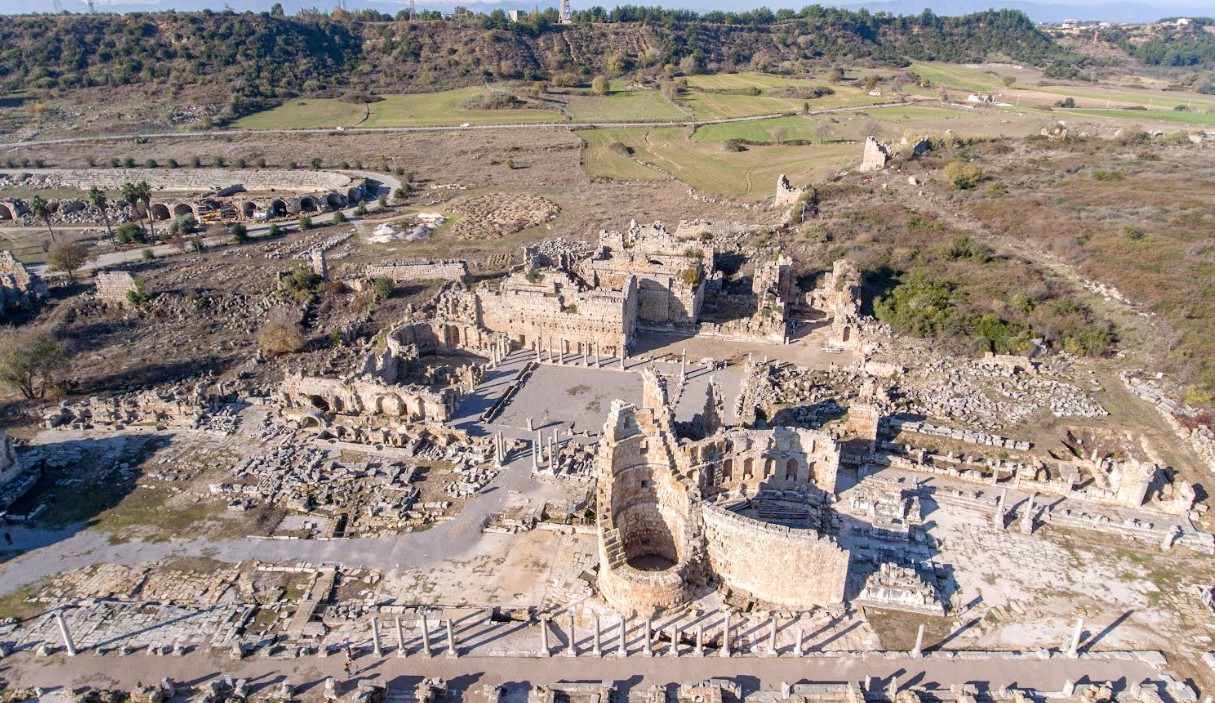
Travelling east, one of the best-preserved ancient cities in the Mediterranean, Perge, welcomes you with its collonaded streets, watchtower, Roman bathhouses, agoras, a grand theatre and a horseshoe-shaped stadium, which could once accommodate up to 12,000 spectators.

Known for its sophisticated Roman sculptures and the unique role of women in its administration, this long-established capital of Pamphylia also remains a key stop on the St Paul Way. Your journey culminates in Pamphylia’s most crucial port city, Side. You can wander through monumental ruins and witness the iconic Temple of Apollo at sunset, a true symbol of Antalya’s enduring beauty.
Ancient Magic After Dark
The best part of visiting ancient cities in Antalya is that you don’t have to rush your visit during the summer. To make the most of the summer, Aspendos, Patara andSide participate in the “Night Museums” initiative, remaining open until 10 pm. Besides, sites such as Perge, Myra, and the Side Archaeological Museum are open to visitors until 9 pm. The scope of this initiative is set to expand even further throughout 2026. Stay tuned! ///nCa, 15 April 2026 (in cooperation with the Embassy of Turkiye to Turkmenistan)