


Ma Jing, CGTN reporter
In a laboratory at the Shanghai Institute of Microsystem and Information Technology, the future of communication is being written in neural signals. Researchers has achieved a world first: a brain-computer interface (BCI) capable of decoding and synthesizing Mandarin Chinese in real-time.
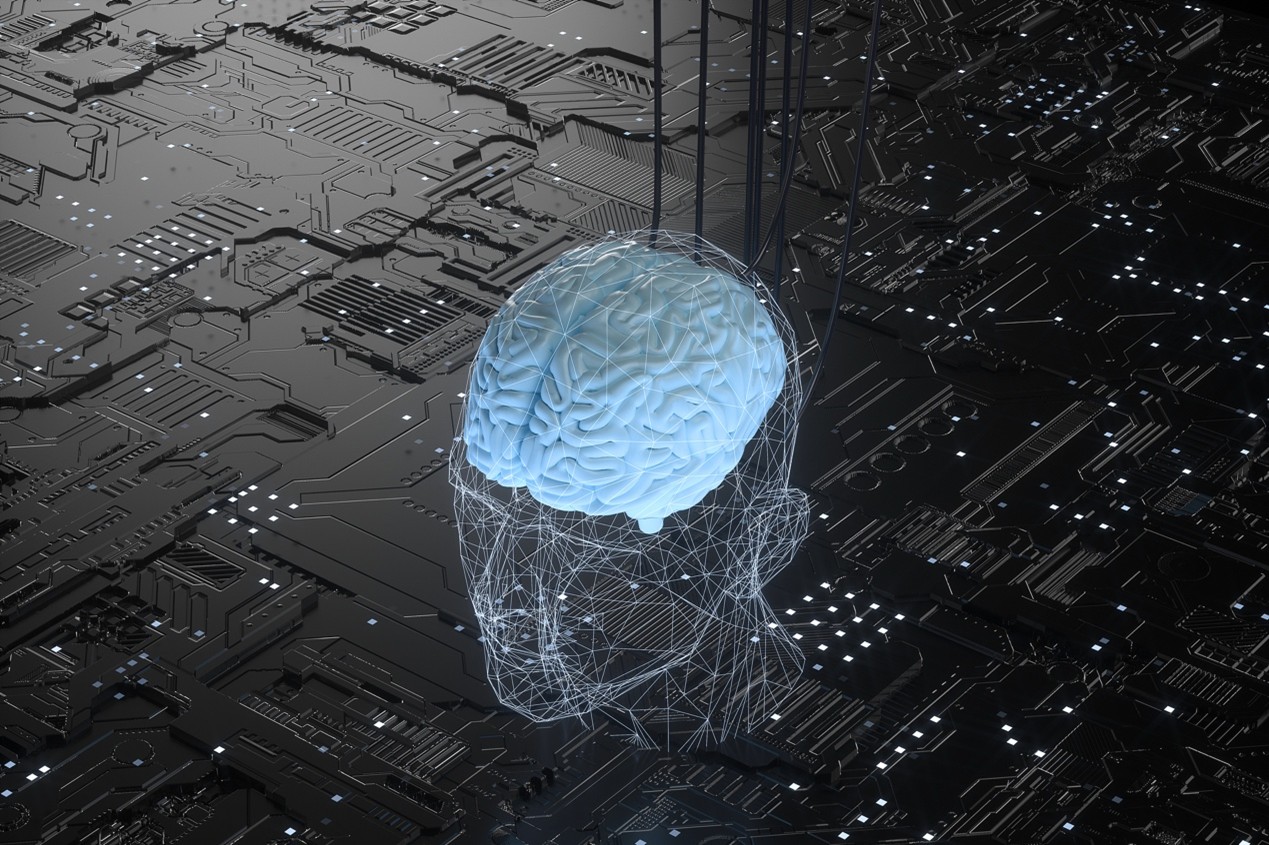
[Photo: CFP]
By capturing thoughts through flexible, high-throughput electrodes, the system allows the human mind to “speak” without moving a muscle. It is a milestone that promises to restore voices to the speech-impaired—but it also poses a provocative question for the rest of the world: In an era where a computer chip can decode our very thoughts, why are people still laboring to learn the language “the hard way”?
AI: A powerful bridge
Ahead of the 17th UN Chinese Language Day on April 20, Chinese learners from 12 countries weighed in on the AI revolution. Their consensus? Technology is a powerful bridge, but it is not the destination.
“I use AI to check the meaning and usage of new words,” says a student in Dhaka, Bangladesh. “When I ask the difference between lvxing (旅行) and lvyou (旅游), it gives me examples that make it clear immediately.”
From Thailand to France, students are no longer intimidated by the “Great Wall” of Chinese grammar. Mariam Da-O, a student in Thailand, treats AI like a constant companion. “I use it to check my sentences and practice dialogue. It’s like a friend talking to me.” In Paris, students at a Chinese school use AI to generate HSK practice exams or explain complex ancient texts.
The filtered lens: Beyond data
Yet, for all its processing power, AI often acts as a filtered lens rather than a clear window. While the Sapir-Whorf hypothesis—the idea that language shapes our perception—remains a subject of debate, many argue that language is more than just a code. Chinese, in particular, contains layers of cultural weight that are difficult to digitize. AI can expertly translate words, but it often interprets cultural context through a statistical average, sometimes missing the unique “soul” of a phrase that a human speaker feels instinctively.
Just as Brazil’s samba is more than a dance and Shakespeare is more than theater, the Chinese word “yueliang (月亮)” is more than just “moon.” In Chinese culture, it is a symbol of longing and connection. When two people gaze at the same moon from afar, they share a silent understanding—a subtlety where what is left unsaid is often more powerful than what is spoken. This is the kind of “cultural resonance” that an algorithm can identify, but only a human can truly feel.
The human touch in a language
Today, Chinese is one of the world’s most widely spoken languages. According to recent reports, Chinese is now part of the national education systems of 90 countries, with nearly 210 million learners and speakers worldwide. For many of these individuals, the goal goes beyond simple translation; it is about seeking a deeper cultural connection.
“While AI is revolutionizing language learning, learning Chinese is still a treasure trove of culture, connections, and personal growth,” says Prabhudas, an internet user. “It’s like having a key to unlock the heart of a billion people. AI can assist, but the human touch, nuances, and relationships make learning a language truly priceless.”

Beijing, April 8, 2026 – International tourists took pictures at the Palace Museum. [Photo: CFP]
From communication to connection
While AI doesn’t eliminate the value of learning, it lowers the barriers and transforms how we learn. There’s a crucial difference between using AI to communicate and using AI to learn. As Mariam Da-O summarized: “I want to learn Chinese even more now. Translation software helps, but it cannot replace real communication. If I can speak Chinese myself, I can express my feelings more freely and understand the culture more deeply.”
Today, AI can instantly explain grammar points, correct pronunciation and writing, generate example sentences tailored to your level and simulate real conversations anytime. The question is no longer “Do I need to learn Chinese?” It has become: “Now that it’s easier than ever—why wouldn’t I?”
On this UN Chinese Language Day, we are reminded that language is more than a tool for communication—it is culture, history, and human experience encoded in sound and script. AI may be our tool, our assistant, even our tutor, and we embrace and actively explore the possibilities of technology, but the depth of understanding, the joy of discovery, and the nuance of human expression come from learning and experiencing Chinese for ourselves. So as we watch a robot lift its brush in imitation, let us also pick up our own pens, speak our own words, and carry forward a tradition that is centuries old yet vibrantly alive. ///nCa, 15 April 2026