


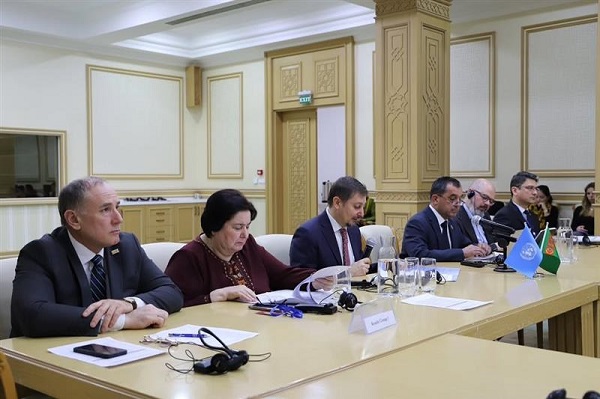
Ashgabat, 3 February 2026 — The Government of Turkmenistan and the United Nations held a Joint Results Groups Meeting today at the UN House to review progress achieved under the 2021–2025 UN–Turkmenistan Sustainable Development Cooperation Framework (UNSDCF) and to outline joint priorities for the new Cooperation Framework cycle for 2026–2030. The meeting gathered representatives from more than 30 ministries, state agencies, national institutions and the full UN Country Team.
Opening the meeting, Mr. Dmitry Shlapachenko, UN Resident Coordinator in Turkmenistan, welcomed the Government and UN partners, noting the importance of continued partnership to advance national development priorities and accelerate progress towards the Sustainable Development Goals (SDGs). He highlighted that the 2021–2025 Cooperation Framework cycle saw “progress in strengthening human rights, digital transformation, economic diversification and climate resilience, as well as expanding access to quality health, education and social protection services.”
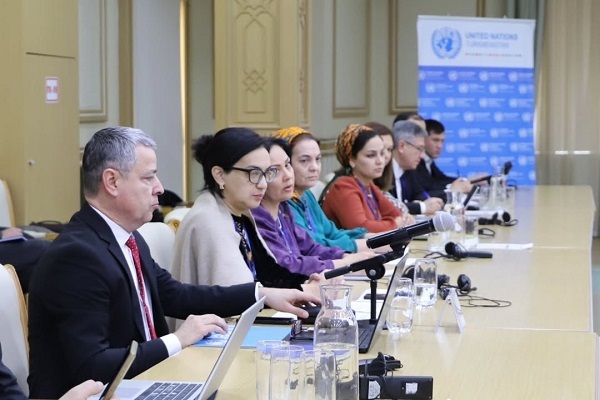
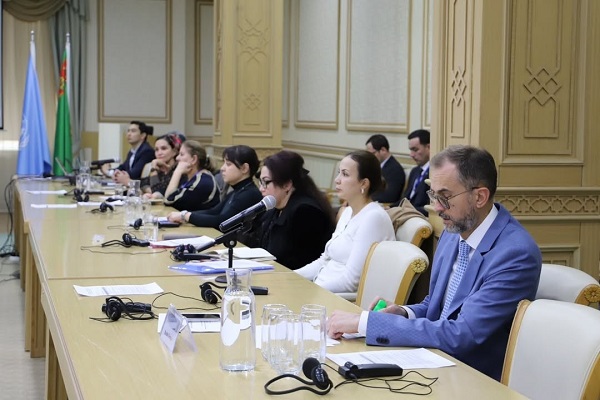
During the first part of the meeting, Results Group Co-Chairs presented achievements under the 2025 Joint Workplans, including:
- Governance, human rights and rule of law: strengthened institutional development and improved people-centred governance practices.
- Inclusive economic diversification: collaboration with national institutions to advance sustainable economic reforms and private sector engagement.
- Climate change adaptation and disaster resilience: enhanced environmental governance, resilience frameworks and climate action partnerships.
- Quality health and social protection services: joint efforts to expand access to inclusive, gender responsive and high-quality public services.
- Education and skills development: targeted support to improve relevance, quality and inclusiveness across the education sector.
Mr. Vladimir Valetka, UN Country Economist, presented the key findings of the 2025 UN Country Analysis, which provides the evidence base for the new UNSDCF and outlines emerging development trends and strategic risks.
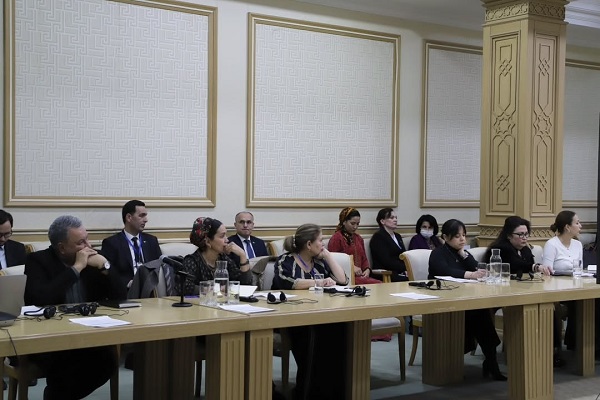
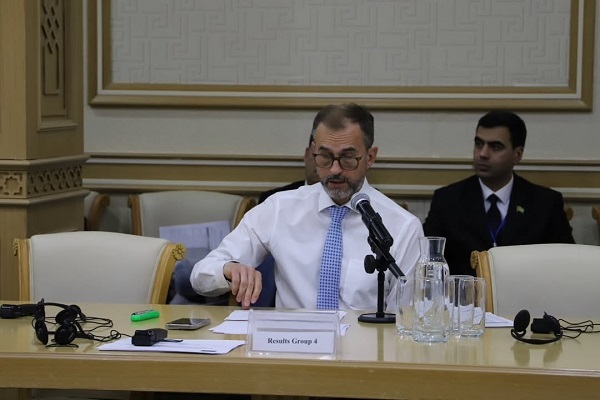
In the second part of the meeting, UN agencies and Government partners discussed Joint Workplans for 2026, aligned with the new UNSDCF 2026–2030. Presentations covered governance, economic diversification, climate resilience and disaster risk reduction, health, social services, and education, followed by discussions with sectoral ministries and UN agencies.
Mr. Chary Nurmuhammedov, the Head of UN Resident Coordinator’s Office introduced the proposed
governance structure for the new Cooperation Framework, ensuring strong accountability, transparency, and results oriented coordination to be endorsed by the Joint Steering Committee at its meeting later in February.
Mr. Maksat Keshiyev, UN Development Finance and Partnerships Officer, presented the 2025 Financial Report and the Resource Mobilization and Partnerships Strategy 2026–2030 , emphasizing the need for diversified funding to meet resource requirements and address the current funding gap of approximately 78 percent. It was also noted that following its role as the primary donor in the previous cycle, the Government is expected to maintain its significant financial support for the new UNSDCF 2026–2030.
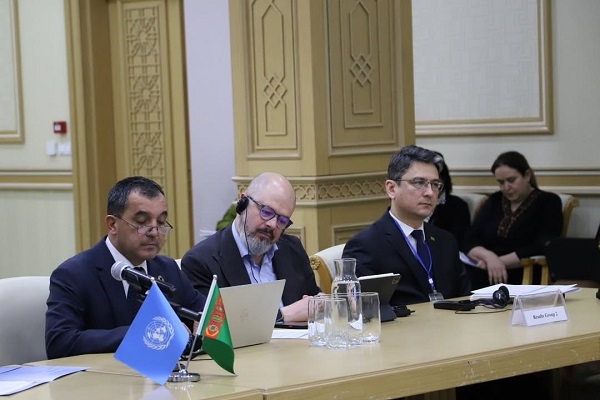
Participants reaffirmed the importance of continued UN–Government collaboration in promoting sustainable development, addressing emerging vulnerabilities, and accelerating progress toward the SDGs. The UN Resident Coordinator also announced that the outcomes of today’s discussions will be presented during the upcoming meeting of the UNSDCF Steering Committee later this month.
The United Nations reiterated its commitment to supporting Turkmenistan in delivering national priorities, advancing human rights, and enabling resilient, inclusive and sustainable development for all. ///nCa, 3 February 2026 (in cooperation with UN Turkmenistan)