


At the 64th plenary meeting of the 80th session of the UN General Assembly, the resolution “United Nations Decade of Sustainable Transport (2026–2035)” was adopted by consensus at the initiative of Turkmenistan.
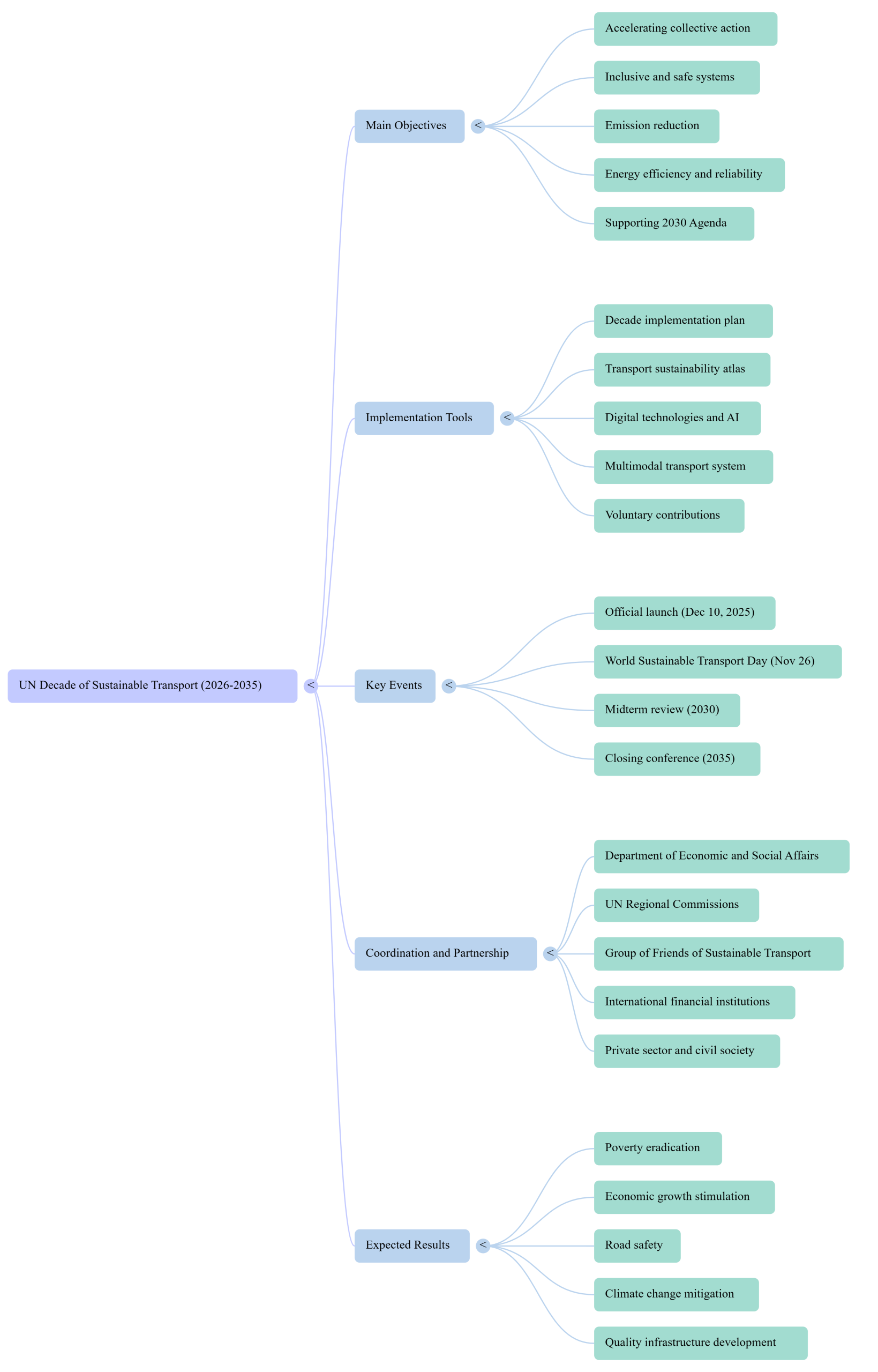
The primary purpose of the United Nations Decade of Sustainable Transport (2026–2035) is to accelerate collective action towards the formation of sustainable, inclusive, accessible, affordable, safe, and energy-efficient transport systems. The Decade aims to create low or zero-emission infrastructure worldwide, thereby supporting the 2030 Agenda for Sustainable Development.
Strategic Objectives of the Decade:
- Promoting Economic and Social Development: Transport systems should play a key role in poverty eradication, stimulating economic growth, and supporting regional connectivity and integration.
- Environmental Sustainability and Safety: Critical tasks include combating climate change, reducing environmental pollution, and ensuring road safety. The resolution emphasizes the need for enhanced coordination and synergies with the Second Decade of Action for Road Safety (2021–2030)
- Digital Transformation: The Resolution recognizes the growing role of artificial intelligence and emerging digital technologies in enhancing the efficiency, accessibility, and safety of transport systems.
- Development of Quality Infrastructure: Optimizing the development of interconnected networks (highways, railways, airways, maritime routes, and ports) and maintaining reliable, resilient, and sustainable infrastructure.
Expected Outcomes and Implementation Mechanisms:
- Monitoring and Reporting: There are plans to develop visual and data-driven tools, such as a joint Atlas of Transport Sustainability, to track progress through global, regional, and national indicators.
- International Cooperation and Resource Mobilization: The Resolution encourages international financial institutions, multilateral and bilateral donors, development banks, and the private sector to mobilize adequate resources for sustainable transport projects, especially in developing countries.
- Integration into National Plans: Member States are invited to align their national and regional strategies with the implementation plan of the Decade and integrate sustainable transport into their national development plans.
- Key Milestones: A midterm review is scheduled for 2030 as part of the Third United Nations Global Sustainable Transport Conference. In 2035, a final high-level review conference will be held to assess overall achievements and determine development vectors for the period beyond 2035.
The observance of World Sustainable Transport Day (26 November) will be utilized as an annual platform to highlight progress and announce new voluntary commitments.
In conclusion, the Decade of Sustainable Transport is comparable to a massive “operating system update” for global transport. While the system previously operated with disruptions, polluting the environment and being inaccessible to many, by 2035 the UN aims to establish new settings that will make the movement of people and goods smooth, environmentally friendly, and safe, uniting all countries into a single efficient network.
Here is a full text of the Resolution “United Nations Decade of Sustainable Transport (2026–2035)”:
///nCa, 28 December 2025