


The Termez Dialogue: Bridging Central and South Asia Through Afghan Connectivity
An Interpretive Analysis of Regional Cooperation and Security Concerns
In the ancient Uzbek city of Termez, where the Silk Road once thrived and civilizations converged for millennia, a new chapter in regional diplomacy is unfolding. The Termez Dialogue, launched from May 19 to 21, 2025, has emerged as Uzbekistan’s strategic initiative to reconnect Central and South Asia through the contentious bridge of Afghanistan.
The dialogue’s journey from its inaugural gathering in Termez to the prestigious Doha Forum in December represents both the promise and peril of regional integration in one of the world’s most volatile corridors.
The Genesis: Termez as a Historic Gateway
Euronews reports that Termez, situated on the border between Uzbekistan and Afghanistan on the bank of the Amu Darya river, has been a logistics hub for caravans traveling the ancient Silk Road. During Soviet times it was reduced to a distant outpost and served as the Red Army’s entry point to Afghanistan in 1979, but now Uzbekistan envisions the city regaining its former glory as a trade hub.
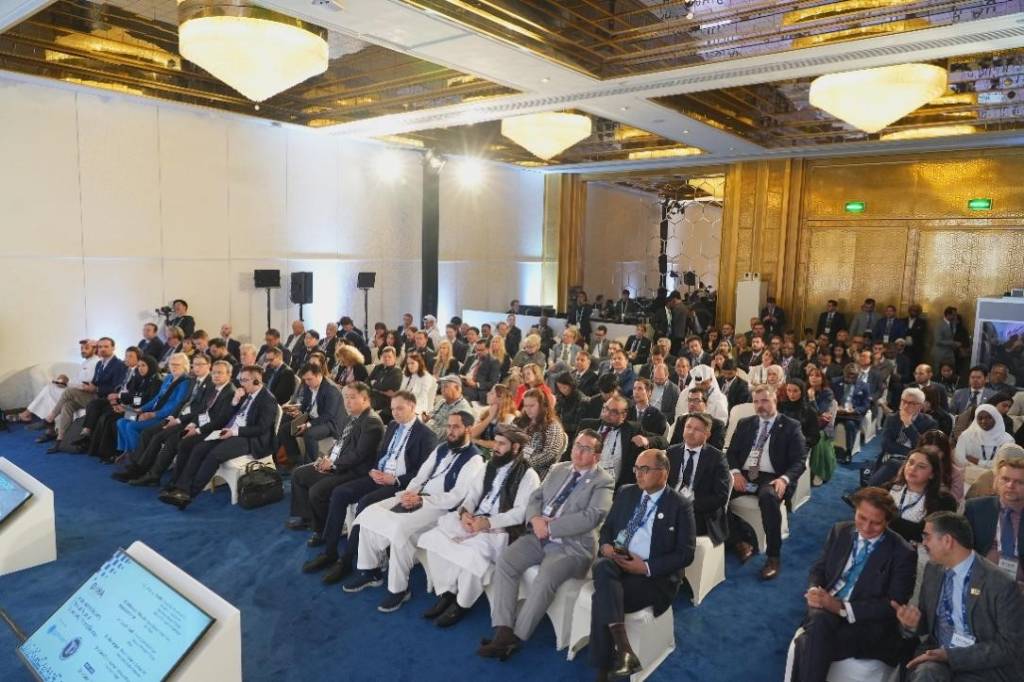
The inaugural Termez Dialogue convened approximately 200 delegates from over 20 countries, according to News Central Asia (nCa), to enhance economic, cultural, and security ties between Central and South Asia. Organized by Uzbekistan’s Institute for Strategic and Interregional Studies, Ministry of Foreign Affairs, and Chamber of Commerce and Industry, the forum emphasized infrastructure projects like the Trans-Afghan Corridor, trade expansion, and Afghanistan’s regional integration.
As The Diplomat notes, hosting the forum in Termez is especially symbolic, given this historic city’s location at the confluence of Central and South Asia. For centuries, Termez has served as the crossroads of civilizations and as the southern gateway of Uzbekistan, which opens into Taliban-controlled Afghanistan.
Presidential Vision and UN Endorsement
The Termez Dialogue serves as a permanent platform for advancing President Shavkat Mirziyoyev’s initiative to strengthen connectivity between Central and South Asia, an initiative that received international legitimacy when endorsed by a UN General Assembly resolution on July 11, 2022, UzDaily.uz reports.
Key Infrastructure Projects Discussed: The dialogue emphasized several major initiatives including the Trans-Afghan Railway Corridor connecting Termez to Pakistani ports, the CASA-1000 electricity transmission project bringing power from Kyrgyzstan and Tajikistan to Afghanistan and Pakistan, and the TAPI gas pipeline from Turkmenistan through Afghanistan to Pakistan and India.
Eldor Aripov, Director of the Institute for Strategic and Regional Studies, emphasized that the Termez Dialogue philosophy is based on President Mirziyoyev’s key foreign policy approach: stability is achieved through development, connectivity, and cooperation, not through pressure and isolation. “Peace is strengthened where jobs, transport corridors, educational opportunities, humanitarian routes, and long-term economic incentives are created,” Aripov stated.
From Termez to Doha: Elevating the Dialogue
On December 7, 2025, the Termez Dialogue found a new platform at the Doha Forum, held under the theme “Justice in Action: From Promises to Progress.” The Peninsula Qatar reports that the session, titled “Rebuilding Afghanistan through Regional Connectivity: The Termez Dialogue,” was organized by Uzbekistan’s Institute for Strategic and Regional Studies in cooperation with the Center for International and Regional Studies at Georgetown University in Qatar.
The Doha Forum, which has been held since 2002 with the support of the Government of Qatar, attracted approximately 8,000 participants from nearly 150 countries, according to Pakistan Today, including top representatives and experts from leading think tanks in the United States, the United Kingdom, Russia, the EU, the Middle East, India, Pakistan, China, Japan, and Korea.
The Participants and Their Vision
The Express Tribune reports that the dialogue was addressed by key figures including Ismatulla Irgashev, Special Representative of Uzbekistan’s President for Afghanistan; Eldor Aripov, Director of ISRS; Abdul Hai Kani, Director of the Center for Strategic Studies under the Ministry of Foreign Affairs of Afghanistan; Faisal Abdullah Al-Henzab, Special Representative of the Minister of Foreign Affairs of Qatar; and Waleed Ziad, Professor of History at Georgetown University in Qatar.
As reported by the Uzbekistan National News Agency, Abdul Hai Qanit, Director of the Center for Strategic Studies under Afghanistan’s Ministry of Foreign Affairs, praised Uzbekistan’s efforts, stating: “Uzbekistan has demonstrated a constructive approach that is most acceptable to Kabul, based not on politicizing security issues, but on economic dialogue and engagement in regional ties.”
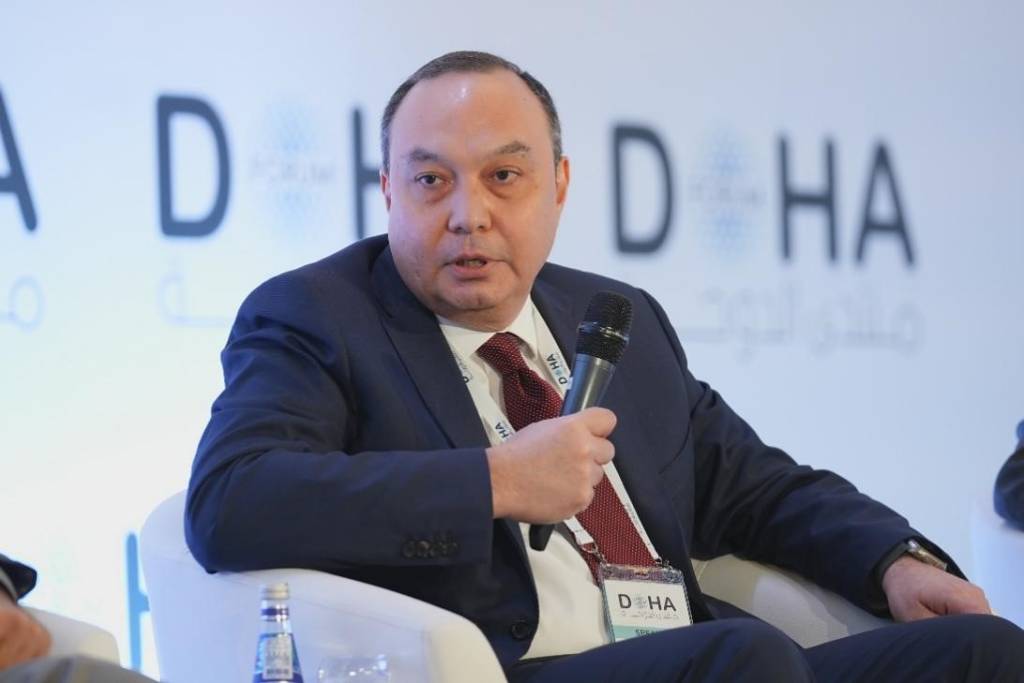
Speaking at the Doha session, Aripov explained: “Termez Dialogue is a platform which unites Afghanistan, its neighbours, and key international stakeholders to discuss connectivity between Central Asia and South Asia. In Uzbekistan, we see it as a very important initiative which could promote peace, economic development, and stronger regional cooperation.”
The Connectivity Vision: Infrastructure as Diplomacy
News Central Asia (nCa) reports that current trade between Central and South Asia stands at merely $5 billion—a figure that pales in comparison to Central Asia’s $55 billion trade with the EU. The Trans-Afghan Corridor, a railway from Termez to Peshawar, has already seen cargo volumes double from 1.8 million tonnes in 2021 to 4 million tonnes in 2024, and aims to connect Central Asia to Indian Ocean ports.
The CASA-1000 project represents another cornerstone of regional integration. Wikipedia indicates that this $1.2 billion project will export 1,300 megawatts of surplus hydroelectricity from Kyrgyzstan and Tajikistan to Afghanistan and Pakistan. Groundbreaking took place in May 2016, with completion expected by the end of 2026. As of October 2025, approximately 75% of the project covering Afghanistan has been completed.
The Turkmenistan-Afghanistan-Pakistan-India (TAPI) pipeline, another major initiative discussed, according to The Defence Horizon Journal, is expected to deliver 33 billion cubic meters of natural gas annually, generating up to $1 billion in revenue for Afghanistan alongside creating thousands of jobs.
The Economic Reality Check
News Central Asia (nCa) reports that despite challenges such as security risks and geopolitical tensions, the Dialogue established a platform for ongoing cooperation, concluding with a joint communiqué reaffirming shared goals of peace and prosperity.
However, regional representation at the inaugural Termez meeting was uneven: Central Asian deputy foreign ministers showed strong engagement, while South Asian participation was limited due to the India-Pakistan crisis in April-May 2025.
The Express Tribune reminds readers that Pakistan had been proactive in taking initiatives such as CASA-1000 and TAPI to connect Central Asian energy resources with South Asia and to help Afghanistan economically.
Afghanistan’s Positioning: From Threat to Opportunity?
Gazeta.uz reports that Afghanistan’s deputy foreign minister Mohammad Naeem Wardak emphasized at the May dialogue: “Afghanistan is ready to actively engage in all regional initiatives, including transport, infrastructure, electricity transmission, trade, education, climate change and sustainable development.”
The Express Tribune notes that Central Asian countries prefer to reach South Asia through Afghanistan as a trade bridge and to facilitate Afghan trade. These countries wish to help Afghanistan as an “opportunity” rather than a “regional threat” and want to enhance Afghanistan’s trade.
Uzbekistan’s Strategic Infrastructure Investment
Uzbekistan has made substantial investments to facilitate Afghan connectivity. Euronews reports that on a patch of land on the border, Uzbekistan built a free trade zone in 2024 for Afghan companies and a logistics center. Afghan nationals can enter the zone as part of a 15-day visa-free regime. Almost half a million Afghans have already made use of the opportunity, opening businesses thanks to simplified registration procedures and enjoying duty-free trade.
News Central Asia (nCa) further reports that the Termez Cargo Center, an international transport and logistics hub, operates on a “single window” principle, providing customs clearance, banking and tax operations, sanitary control, certification, currency exchange, transportation, and hotel services. Special attention is paid to humanitarian logistics, with cargo sent to Afghanistan and neighboring countries undergoing simplified and priority customs procedures. The center has facilitated over 144,000 tonnes of humanitarian aid since 2021.
The Broader Geopolitical Context
Aripov, speaking at the Doha Forum, noted: “We live in very difficult times with multiple conflicts occurring. Here, we see how the Qatari government invests its time and resources in diplomatic efforts to mediate conflicts, promote dialogue, peace, and understanding.” He praised Qatar’s role, particularly noting that the Qatari platform creates unique conditions for a non-politicized, professional, and open dialogue.
The Road Ahead: Promise Versus Pragmatism
The Termez Dialogue represents an ambitious vision: that ancient trade routes can be revived, that economic interdependence can overcome security fears, and that Afghanistan can transition from being a theater of conflict to a corridor of commerce.
Whether this vision materializes or remains another well-intentioned but stalled regional initiative depends largely on whether the Afghan Taliban prove willing to prioritize state-building over their current approach—and whether regional powers can find common ground on security concerns that transcend economic opportunity.
As the Termez Dialogue continues, it stands at the crossroads of hope and skepticism, much like the ancient city from which it takes its name—a place where civilizations once met in peace and prosperity, but which has also witnessed centuries of conflict and conquest. The choice of which legacy will define the dialogue’s future remains to be written. /// nCa, 19 December 2025 (photo credit – UzA.uz)