


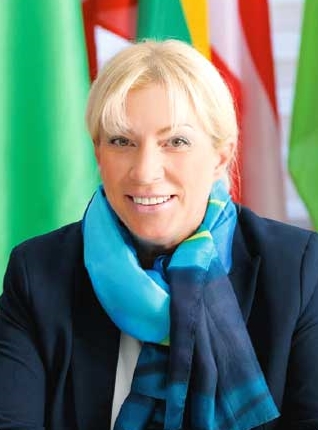
By H.E. Ms Beata Pęksa, the Ambassador of the European Union to Turkmenistan
We took another important step on our shared path when we met in Ashgabat for the 24th EU-Turkmenistan Joint Committee. The meeting on 7 November 2025, showed that the relationship is strengthening and becoming a strong platform for communication and cooperation. The Joint Committee is more than just a place to talk; it shows how committed we are to talking, respecting each other, and working together for everyone’s benefit.
The past years have not only deepened our cooperation but also demonstrated the tangible benefits of our partnership for the people of Turkmenistan and the European Union. Our work together is getting actual results and paving the way for more success, from high-level political talks to cutting-edge projects in trade, connectivity, environmental sustainability, and human development.
Building Bridges: Trade, Connectivity, and Regional Integration
This year, Turkmenistan showed how important it is becoming as a place for regional meetings. This was forcefully highlighted in March when Ashgabat hosted the 20th EU-Central Asia Ministerial Meeting, chaired by High Representative Kaja Kallas, an event that set the stage for the historic, first-ever EU–Central Asia Summit held shortly after in Samarkand.
President Serdar Berdimuhamedov gave a full and forward-looking vision for regional integration at the Samarkand Summit. His ideas, such as using the Trans-Caspian Transport Corridor and the Turkmenbashi port more as important trade routes and suggesting underwater Caspian communication cables for digital connectivity, are completely in line with the EU’s own strategic goals for the Global Gateway initiative.
In fact, Global Gateway is putting plans into action on the ground. The visit of Commissioner Jozef Síkela in March showed that the EU is serious about modernizing Turkmenistan’s infrastructure and making its logistics more efficient. Through the Trans-Caspian Coordination Platform, we are working closely with partners in Central Asia, the South Caucasus, and Türkiye to get ready for the Trans-Caspian Investors Forum later this month in Tashkent. The goal of the forum is to mobilise concrete financing for this crucial corridor.
Making sure that transportation links between Asia, Central Asia, and Europe are long-lasting will also help us grow our trade ties. With total trade exceeding 1.1 billion EUR in 2024 (Europeans exporting machinery, transport equipment, and chemicals to Turkmenistan, while importing vital mineral products), the EU is a stable and reliable partner for Turkmenistan’s economy. This economic exchange is not just about numbers; it is about creating jobs, fostering innovation, and integrating Turkmenistan into global value chains.
That is why the EU supports Turkmenistan’s accession to the World Trade Organization (WTO). Through the EU-funded Trade Information Portal and technical assistance, we are helping Turkmenistan align its trade procedures with international standards and by this to achieve a full integration into global value chains.
A Green and Sustainable Future
The urgency of the green transition has become a central pillar of our cooperation. Climate change knows no borders, and Turkmenistan’s leadership in addressing it is commendable. By promoting energy efficiency and climate-smart policies, the European Union is supporting Turkmenistan’s goals for sustainable development and ensuring that economic growth does not come at the expense of the planet.
Through programmes like “EU for a Green Turkmenistan,” we are assisting a transition toward a low-carbon, climate-smart economy. This includes practical initiatives to promote renewable energy and address the critical issue of methane-emission reduction, such as the development of a Methane Training Centre and digital systems for leak detection in gas fields. These projects are helping Turkmenistan transition to a low-carbon economy while creating local jobs and protecting the environment.
Also, the EU’s regional Team Europe Initiative on Water, Energy, and Climate Change and Turkmenistan’s water diplomacy initiatives work well together, which might lead to a lot of progress and stability in the region.
People at the Heart of Our Partnership
A strong partnership must be comprehensive, including honest and constructive dialogue on the human dimension. Our 17th Human Rights Dialogue in June howed that we are both committed to making progress. While the EU welcomes Turkmenistan’s steps in eradicating statelessness, advancing women’s and children’s rights and cooperation with the ILO regarding the eradication of the child and forced labour, we continue to stress the overarching importance of the rule of law, good governance, and respect for fundamental freedoms, including freedom of expression and unrestricted internet access, as core elements of enhanced bilateral relations.
Cultural and educational exchanges are just as important. We are investing in the next generation of leaders, innovators, and people who can connect our society by making more academic alliances and youth initiatives.
A Shared Commitment to Stability and Peace
In 2025, the relationship has matured with high-level political talks, increasing economic ties, and exciting regional collaborations. One highlight was the 8ᵗʰ Inter-Parliamentary Dialogue in February, where the European Parliament and Turkmenistan’s Mejlis exchanged views on legislation, human rights, and gender equality reforms. This dialogue strengthens our parliamentary ties and governance practices.
In a world facing unprecedented challenges, the EU and Turkmenistan stand united in our commitment to multilateralism, international law, and the principles of the UN Charter. As we condemn Russia’s war of aggression against Ukraine, we also reaffirm our shared belief in diplomacy, dialogue, and the peaceful resolution of conflicts. So, at the 24th Joint Committee meeting in 2025, which is the International Year of Peace and Trust, both sides committed to the rules-based international order that is the basis of our political dialogue.
A Call to Action
Looking ahead, the Joint Committee has made its goals clear and realistic: to promote trade and investment diversification, speed up regional connectivity, expand the green and digital transitions with a focus on job creation, improve education and cultural exchanges, and keep our constructive conversation about governance going.
The priorities for the future are clear:
- Deepening Trade and Investment: Diversifying Turkmenistan’s economy and strengthening its integration into global markets.
- Accelerating Connectivity: Expanding the Trans-Caspian Transport Corridor and digital infrastructure to boost regional trade and cooperation.
- Advancing the Green Transition: Supporting Turkmenistan’s shift to renewable energy and sustainable practices, with a focus on job creation and innovation.
- Strengthening People-to-People Ties: Enhancing education, cultural exchanges, and youth opportunities to build lasting bonds between our societies.
- Upholding Human Rights and Good Governance: Continuing our constructive dialogue to promote transparency, inclusivity, and respect for fundamental freedoms.
- Working Together for the Secure Future: Standing together defending the UN Charter and strengthening multilateralism and international law.
Together, the European Union and Turkmenistan are building a partnership rooted in pragmatism and mutual trust. By integrating Turkmenistan’s strategic vision with European expertise and resources, both sides are creating the groundwork for real advantages for people, enterprises, and future generations. This will turn cooperation into real progress and shared wealth.