


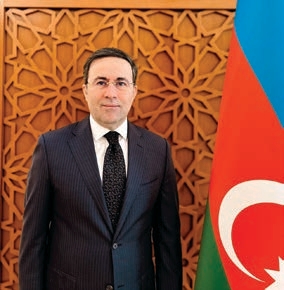
Gismat GOZALOV, Ambassador Extraordinary and Plenipotentiary of Azerbaijan to Turkmenistan
The relationship between Azerbaijan and Turkmenistan is rooted in deep historical ties, shared national values, and a sense of fraternity that has persisted through the centuries. Historical records show that the friendship between these two countries is not only shaped by political and economic interests but also by a common Turkic heritage that has endured over time. Today, this longstanding connection continues to shape their relations at the highest levels. As President of Azerbaijan Ilham Aliyev has remarked, “The Turkic world constitutes our shared family,” emphasising the unique bond that ties the two nations. Indeed, the strength of their relationship lies in this shared heritage, which has created a natural sense of unity between them. Under the leadership of President of Azerbaijan Ilham Aliyev and President of Turkmenistan Serdar Berdimuhamedov, the strategic partnership has continued advancing successfully. Both nations are actively involved in cooperation, both bilaterally and within the frameworks of various respected international organisations.
Historically positioned along the Silk Road, Azerbaijan and Turkmenistan have long been centres of trade, culture, and intellectual exchange. This rich history has strengthened the ties between the nations and laid the foundation for enduring friendship. The deep cultural and historical connections that continue today have evolved into a strong partnership between the two nations. The current strategic alliance of the countries is built on this long tradition of mutual respect and brotherhood.
After gaining independence in 1991, both states placed significant emphasis on building relations based on mutual respect and trust. A key milestone in this process came on June 9, 1992, with the formal establishment of diplomatic ties. This event marked the transformation of their age-old tradition of brotherhood into a modern framework of interstate cooperation.
On October 18, 2002, the Embassy of Azerbaijan officially began its operations at the newly established embassy in Turkmenistan. Turkmenistan had earlier began its operations at the Embassy in Azerbaijan on June 8, 1999. The diplomatic relations between the two states have since been rooted in the principles of equality, mutual respect, and trust.
A pivotal moment in the partnership was on August 8, 2017, when, in the presence of President of Azerbaijan Ilham Aliyev, and President of Turkmenistan Gurbanguly Berdimuhamedov, the “Declaration on Strategic Partnership” was signed. This historic agreement elevated their bilateral relations to the level of a strategic partnership, setting a new course for future cooperation, with the contribution of National Leader of the Turkmen people, Chairman of the Halk Maslakhaty of Turkmenistan Gurbanguly Berdimuhamedov, was instrumental in achieving this milestone.
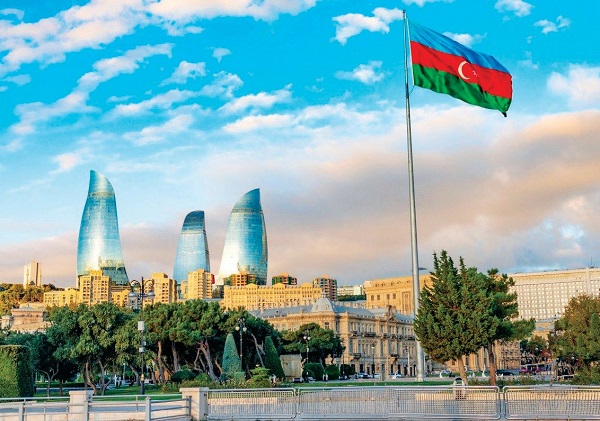
In recent years, the growth of high-level reciprocal visits, the ongoing dialogue between leaders, and the signing of numerous legal and regulatory agreements have created a strong momentum for advancing their partnership. This has played a decisive role in further strengthening their bilateral ties.
Notably, the tradition of high-level visits, which was first initiated by Heydar Aliyev, National Leader of the Azerbaijani people, on December 23, 1993, has evolved into what may now be described as a dynamic “project effect,” continually driving cooperation forward.
In a continued effort to strengthen ties between Azerbaijan and Turkmenistan, President Ilham Aliyev made a working visit to Turkmenistan on August 22, invited by National Leader of the Turkmen people, Chairman of the Halk Maslakhaty of Turkmenistan Gurbanguly Berdimuhamedov. This visit marked another important step in strengthening the warm relations between the two nations, following National Leader of the Turkmen people Gurbanguly Berdimuhamedov’s visit to Azerbaijan in July of the same year. During his visit to Azerbaijan on March 2, 2023, the President of Turkmenistan Serdar Berdimuhamedov, emphasised his country’s consistent commitment to developing bilateral relations. He noted that the political dialogue between our countries is conducted at a high level and emphasized the growing cooperation in cultural and humanitarian spheres. Within the framework of highlevel visits parliamentary cooperation and the signing of various legal documents are of great importance and have consolidated institutional foundations of the relationship and a valuable contribution to the cooperation between the two legislative bodies. A considerable milestone was the 2022 Memorandum of Understanding signed between the parliaments of both countries. Building on this momentum, on August 4, 2025, in the context of the Inter-Parliamentary Forum held in Avaza, Turkmenistan, as part of the the Third UN Conference on Landlocked Developing Countries (LLDC3), the Speaker of Azerbaijan’s Parliament Sahiba Gafarova met with the Speaker of Turkmenistan’s Mejlis. During their meeting, both sides reaffirmed the deep, enduring friendship between their countries, now formalized through legal status. Gafarova noted that the discussions had been productive and emphasised the value of such forums for exchanging ideas and experiences.
In this regard, governmental cooperation has also deepened. During the LLDC3, The Prime Minister of Azerbaijan Ali Asadov, held meetings with the National Leader of the Turkmen people, Chairman of the Halk Maslakhaty of Turkmenistan Gurbanguly Berdimuhamedov, as well as with the President of Turkmenistan Serdar Berdimuhamedov. His participation contributed to further strengthening bilateral ties. Such visits have been pivotal in reinforcing the strategic partnership between the two nations. Notably, The Deputy Chairman of the Cabinet of Ministers and Foreign Minister of Turkmenistan attended the 17th ECO Summit held in Khankendi on July 3–4, 2025, and was received by the President of the Republic of Azerbaijan Ilham Aliyev, and met with his Azerbaijani counterpart Jeyhun Bayramov.
Recently, relations have extended beyond political dialogue to encompass cooperation in economic, energy, transport, and humanitarian exchange. All these factors clearly illustrate that Azerbaijan-Turkmenistan diplomatic ties are based on a reliable, long-term, and forward-looking nature of a strategic partnership. The strategic significance of Azerbaijan-Turkmenistan relations goes beyond bilateral cooperation. It also reflected in their shared commitment to mutual support at both regional and international levels. As President Ilham Aliyev stated at a high-level meeting: “Today, based on the cultural and historical closeness of our peoples, common values, and strategic interests, we are opening a new page in the cooperation of friendly and brotherly states.” Both countries remain committed to the principles of international law, consistently aligning their positions on issues of global importance with political stability and mutual respect. Against global challenges, Azerbaijan and Turkmenistan continue to support each other in international organisations, enhancing the durability and long-term nature of their relationship.
Such cooperation has special importance for regional security, economic integration, and the protection of shared mutual interests. It is precisely these principles that have enabled beneficial cooperation within the UN, OSCE, OIC, CICA, ECO, OTS, and TÜRKSOY. Proposals and candidacies within international institutions have also been mutually supported. For instance, Azerbaijan co-sponsored Turkmenistan’s UN General Assembly resolution “The International Year of Peace and Trust – 2025.” Azerbaijan’s support for the “Permanent Neutrality of Turkmenistan” resolution, adopted on 21 March 2025 during the 61st plenary meeting of the 79th session of the UN General Assembly, stands as a key indicator of the solid and enduring friendship between the two countries. The organisation of the international forum in Turkmenistan in December 2025, dedicated to the 30th anniversary of the country’s Permanent Neutrality, is a source of great satisfaction for Azerbaijan as a brotherly nation. This event serves as a guarantee of peace, stability, and economic development in the region. Turkmenistan also supported Azerbaijan’s membership in the UN Economic and Social Council (ECOSOC) for 2025–2027. Furthermore, at the election for the UNWTO Executive Council for 2025–2029, held in Baku on 4-6 June 2025, the candidacy of the Republic of Azerbaijan was supported.
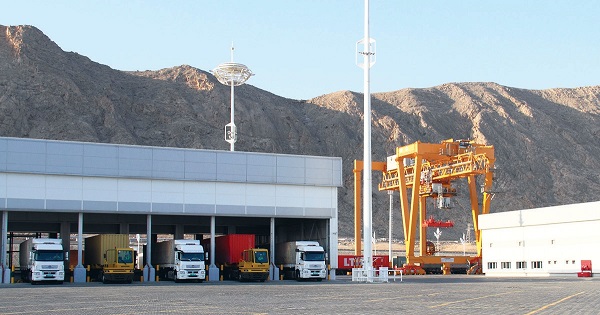
Economic cooperation is one of the key directions of interstate relations. As the National Leader of the Turkmen people, Chairman of the Halk Maslakhaty of Turkmenistan Gurbanguly Berdimuhamedov noted: “The development of trade and economic cooperation is one of the essential areas on our agenda. Significant work has already been accomplished in this direction”. Despite rich energy resources, favourable geography, and transit routes, both countries have emerged as centres for regional economic integration. Over the past seven years, trade turnover has tripled (USD 383 million in 2024), playing a pivotal role in strengthening bilateral ties through enhanced investment cooperation and the successful implementation of joint projects. Since 2007, the Azerbaijan-Turkmenistan Intergovernmental Commission has been holding regular meetings to explore opportunities in areas of mutual interest. This also provides a significant boost to the expansion of our bilateral relations across other key areas. To date, eight sessions have been held, the last one on July 28, 2025, in Baku. On August 22, 2025, the establishment of a trilateral format between Azerbaijan, Turkmenistan, and Uzbekistan in Avaza opened new regional opportunities. Cooperation in transport, energy, agriculture, and textiles helps diversify both economies and unlocks geostrategic potential.
Currently, 75 Turkmenistan-invested commercial enterprises operate in Azerbaijan. Since January 2025, Turkmenistan has also launched online sales of “Made in Azerbaijan” products. Turkmenistan’s export potential, particularly in energy, complements Azerbaijan’s advanced logistics network, creating mutual benefits. Energy, logistics, and transport cooperation have also gained strategic importance in recent years. According to the 8th meeting of the Joint Intergovernmental Commission on Cooperation in the Economic and Humanitarian Spheres held in Baku in July 2025, the parties agreed to expand collaboration in the fields outlined above. The agreement outlines the framework for collaborative initiatives in the areas of energy, trade, transport and logistics, with the aim of fostering mutual growth and enhancing regional connectivity. Another trilateral Azerbaijan–Turkmenistan–Türkiye Trilateral Summit was held in 2022, and five major agreements in energy and transport were signed, providing a structured basis for regional cooperation. These agreements enhance the efficiency of energy and logistics links.

Transit cargo between Azerbaijan and Turkmenistan has grown significantly in recent years. In the first seven months of 2025, the volume of transit transportation amounted to 1.28 million tons, which is 13% more compared to the same period of the previous year. The main share of the shipments (approximately 76%) falls on railway transport along the ‘East–West’ route. Azerbaijan and Turkmenistan are confidently advancing in addressing vital issues related to alternative energy and climate change.
It is particularly encouraging that, despite being rich in oil and natural gas, both countries remain committed to their methane emission obligations and actively contribute to climate change initiatives.
The prospect of transmitting electricity of Turkmenistan to Europe through Azerbaijan, the country’s potential accession to the green energy transmission project signed among Azerbaijan, Kazakhstan, and Uzbekistan within the framework of COP29, as well as its participation in the “Caspian-Black Sea-Europe Green Energy Corridor” under the green energy partnership will occupy a central place in the dynamic development of our bilateral relations. There is further potential for expansion of logistics infrastructure as well. The “physical backbone” of these ties is the Baku–Turkmenbashy International Sea Port line, which forms an important link in the Trans-Caspian International Transport Route (Middle Corridor). The Lapis-Lazuli corridor, connecting Afghanistan, Turkmenistan, Azerbaijan, Georgia, Türkiye, also operates through this Trans-Caspian route. It overlaps with the TRACECA corridor and promotes access to Mediterranean ports from the South Caucasus. This strategically aligns the transit and logistics policies of Ashgabat and Baku. Another milestone is the TransCaspian FO project, which will contribute to a shared consolidation, part of the “Digital Silk Way,” which establishes a new, high-capacity route for data traffic between Europe and Asia. This project carries exceptional geopolitical significance.
Meanwhile, the cultural affinity between our peoples makes a substantial contribution to advancing this multifaceted political and economic cooperation. The two peoples, connected by shared cultural values, traditions, religious closeness, and spiritual ties, have always contributed to the development of Islamic civilisation. Today, Azerbaijan and Turkmenistan pay particular attention to promoting and preserving each other’s cultural heritage. One of the clearest examples is by the initiative of the National Leader of the Turkmen People, Chairman of the Halk Maslahaty Excellency Gurbanguly Berdimuhamedov, to build a mosque in the beatiful city of Fuzuli. This project is not only a place of warship but also a symbol of friendship and spiritual solidarity between the two nations. It represents Turkmenistan’s fraternal support for Azerbaijan and contributes to the restoration of cultural life in the liberated territories. Both countries also collaborate closely within UNESCO, working together to safeguard and promote Turkic cultural heritage. Notable initiatives include joint celebrations of the anniversaries of significant intellectual figures, such as Nizami Ganjavi and Magtymguly Pyragy, which highlight the scope and depth of their cultural collaboration. Turkmenistan’s declaration of 2024 as the Year of “Fount of Wisdom – Magtymguly Pyragy” by TURKSOY, and the designation of Anev as the “Cultural Capital of the Turkic World,” received strong support from Azerbaijan. Regular organised cultural festivals, art exhibitions, and folklore events further strengthen ties between people. The closeness of traditions, music, dances, and folklore proves the depth of shared spiritual foundations. Educational and scientific cooperation also forms part of this cultural dimension. University partnerships, student exchanges, and joint academic conferences bring young generations closer. This ensures the continuity of the Azerbaijan-Turkmenistan friendship. Thus, cultural-humanitarian cooperation is a key pillar of bilateral relations. It is driven not only by political will but also by fraternal emotions deeply rooted in people’s hearts. It confirms that centuries-old cultural and spiritual bonds continue to thrive today.
A notable milestone in cultural relations is the establishment of a sister city relationship between Fuzuli and Arkadag, a step that underscores the strengthening of inter-city ties and reflects the broader cultural and political affinity between Azerbaijan and Turkmenistan. The rebuilding of Fuzuli and the modern urban model of Arkadag embody the shared vision of cooperation for the future.

The sister city relationship between Fuzuli and Arkadag transcends symbolism, embodying a cultural, political, and strategic partnership rooted in shared values, religious ties, and cooperation. It festivals, art exhibitions, and folklore events further strengthen ties between people. The closeness of traditions, music, dances, and folklore proves the depth of shared spiritual foundations. Educational and scientific cooperation also forms part of this cultural dimension. University partnerships, student exchanges, and joint academic conferences bring young generations closer. This ensures the continuity of the Azerbaijan-Turkmenistan friendship.
Thus, cultural-humanitarian cooperation is a key pillar of bilateral relations. It is driven not only by political will but also by fraternal emotions deeply rooted in people’s hearts. It confirms that centuries-old cultural and spiritual bonds continue to thrive today. A notable milestone in cultural relations is the establishment of a sister city relationship between Fuzuli and Arkadag, a step that underscores the strengthening of inter-city ties and reflects the broader cultural and political affinity between Azerbaijan and Turkmenistan. The rebuilding of Fuzuli and the modern urban model of Arkadag embody the shared vision of cooperation for the future. The sister city relationship between Fuzuli and Arkadag transcends symbolism, embodying a cultural, political, and strategic partnership rooted in shared values, religious ties, and cooperation. It builds upon the strong fraternal bond between Baku and Ashgabat, ensuring that the friendship between Azerbaijan and Turkmenistan is passed on to future generations. This initiative strengthens interstate relations, fosters unity and trust between the peoples, and paves the way for sustainable collaboration.
Azerbaijan and Turkmenistan have strengthened a strategic partnership based on deep mutual respect, cooperation. Therefore, AzerbaijanTurkmenistan relations represent a model of reliable, stable, and exemplary cooperation both within the regional framework and on the global stage. ///nCa, 30 October 2025 (originally published by ‘Türkmenistanyň daşary syýasaty we diplomatiýasy’ Magazine)