


Tariq Saeedi
As the conflict continues into its fifth week, most international reporting focuses on military movements, diplomatic statements, and economic shocks. Yet one of the quieter but more revealing stories is unfolding on the streets and in neighbourhood shops across Iran.
Ordinary citizens are finding small, practical ways to support one another amid uncertainty and hardship.
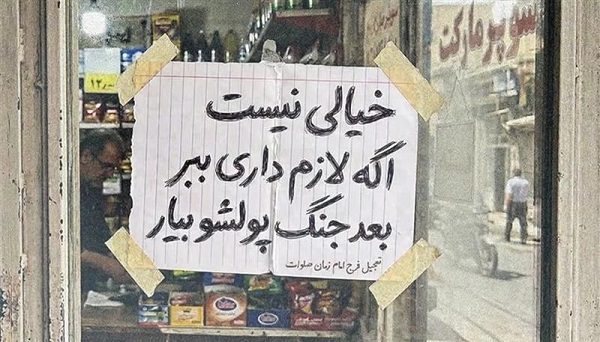
Reports and social media posts from multiple Iranian cities show a growing number of bakeries, grocery stores, and small supermarkets displaying simple handwritten signs that translate roughly as: “Take what you need now — pay after the war.” Some read “Take what you need, leave what you can,” while others simply say the shopkeeper will settle accounts once the situation stabilises.
These gestures have spread quickly enough to attract attention both inside Iran and among the diaspora, becoming a modest but visible symbol of community solidarity.
This practice echoes an earlier Iranian social movement known as the Wall of Kindness (دیوار مهربانی). The tradition began around 2015 in cities such as Mashhad, where people hung hooks and racks on public walls so anyone could leave or take warm clothes, food, or other essentials for those in need.
During the current conflict, references to the Wall of Kindness have reappeared frequently in posts and commentary, with some describing the shop signs as a modern, practical revival of that same spirit of mutual aid.
Beyond these specific initiatives, other small-scale acts of neighbourly support have been noted: volunteers helping restock shelves, informal networks sharing medicine or fuel coupons, and local groups organising assistance for families who have lost income or housing. These are not large-scale organised relief efforts; they are spontaneous, neighbour-to-neighbour responses to immediate needs.
Such trends do not erase the very real difficulties many Iranians face — rising prices, supply disruptions, and anxiety about the future. But they do illustrate a pattern we have seen in earlier parts of this series: when external pressure intensifies, many Iranians tend to draw inward toward one another.
The Hiss-e Mohasereh (sense of siege) described in the previous episode coexists with a deeply ingrained cultural reflex of hospitality and mutual help.
These everyday acts of kindness are unlikely to appear in most strategic analyses or battlefield updates. Yet they offer a glimpse into the lived experience of ordinary people navigating the conflict. In a time when much of the conversation is about power, weapons, and geopolitics, it is worth noting the smaller, quieter ways in which communities continue to look after their own.
Whether these gestures remain limited or grow into something larger will depend on how long the present situation lasts. For now, they stand as a human footnote to a larger story — a reminder that even in the middle of hardship, many Iranians continue to express care for one another in the most practical terms possible. /// nCa, 31 March 2026