


Disclaimer: For the purposes of confidentiality, all names referenced herein have been changed.
When Maksat was taken to the juvenile department after a street fight, it could have been the beginning of a long road of trouble. Like many children who find themselves in trouble with the law, Maksat wasn’t “spoiled” – he simply grew up without support, in a family overwhelmed by difficulties.
At home, Maksat’s mother worked long hours to support the family, and his father, unsettled by employment and alcohol abuse, became increasingly distant. Maksat and his older brother spent most of their time outdoors, and strolling, minor misbehaviors, and begging passersby for money became a norm. One day, an argument escalated into a fight—and the boy came to the attention of the police.
But instead of punishment, Maksat received something much more important – a chance.
From police registration to a support plan
After registering with the inspectorate, Maksat was included in the diversion program – a system that allows children to avoid formal criminal prosecution, receiving in return support, mentoring, and specialist assistance.
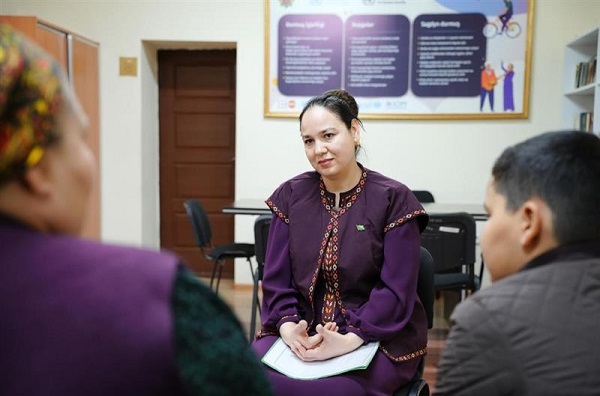
An interdepartmental team — a juvenile affairs inspector, psychologist, and social worker – joined forces to support him and his family, aware that a difficult journey lay ahead.
The inspector became a mentor to the boy, meeting regularly to discuss his behavior and help him set realistic goals. The psychologist helped Maksat understand his feelings, taught him to control his anger, and express his emotions verbally rather than through actions. The social worker worked closely with the parents to restore stability at home and navigate daily challenges, including administrative tasks and finding temporary work.
The Family Resource Assessment (FRA) was a critical turning point. Instead of focusing on failures, the FRA revealed hidden strengths. This revelation was powerful. It shifted the family’s narrative from “we are the problem” to “we have strengths we’ve forgotten.”
Heal the family to help the child
The changes didn’t happen immediately. During joint meetings, Maksat’s mother admitted for the first time that she hadn’t realized how much her absence was impacting her son. Family therapy with the family helped her consider finding a job with a flexible schedule so she could spend more time with the children. After several months of counseling, the father found temporary work and became more involved in the family’s life. Gradually, the home became filled with trust and warmth.
Maksat gradually started to change. He stopped fighting and skipping school. Teachers noticed that the boy had become calmer and more focused, and he showed an aptitude for computer science and foreign languages.
His family’s struggles may not vanish overnight. Yet the boy once known for street fights and truancy is now charting a new path.
He began attending school more regularly, not because he was forced to, but because he could express himself there. Helping his mother was no longer just a duty, but an act of love.
Maksat’s story does not end with a dramatic finale, but with a new beginning. He now sees more opportunities in life, while the team of specialists continues supporting Maksat and his family to help make their life better.
What do diversion measures provide?
Maksat.’s story demonstrates that diversion of juveniles from formal justice is a powerful tool for re-education through support and restoration as long as the right support structures are in place.
This approach allows us to see the child as an individual capable of change when provided with the right support and care.
Diversion measures do not eliminate accountability — they transform consequences into opportunities for growth. By engaging families, schools, and communities, these programmes help children in conflict with the law develop responsibility, rebuild trust, and successfully reintegrate into society. For Maksat, this was a new beginning. And for those around him, it was an example of how one child can avoid a path to reoffending.
The Ministry of Internal Affairs and the Ministry of Labour and Social Protection of the Population, with the support of UNICEF, are advancing the application of diversion measures for minors away from formal justice processes so that every child who comes into conflict with the law receives not only justice, but also understanding, support, and a real chance to start life anew. ///nCa, 4 March 2026 (in cooperation with UNICEF Turkmenistan)